


Description
Brad PC104-DPIO DRL-DPM-BKF | Profibus DP Scanner Card | Available Now
Architect’s Product Breakdown
The Brad Communications PC104-DPIO DRL-DPM-BKF functions as a dedicated communication bridge, embedding Profibus DP master or slave capabilities straight into stackable PC/104 industrial computers. Built specifically for space-constrained rack layouts, this module eliminates the need for bulky external gateways by slotting directly onto the internal parallel stack bus. It processes network traffic independently, freeing the host processor from heavy protocol overhead during high-speed cyclic data exchanges.
Engineers frequently deploy this card in legacy embedded controllers, mobile test rigs, and specialized industrial machinery where standard DIN-rail gateways cannot fit. Firmware management on these units requires attention to specific protocol stack revisions (DP-V0, DP-V1, and DP-V2) depending on whether you are polling remote I/O drops or communicating upstream with a supervisory controller. When planning a lifecycle upgrade or replacing a failed unit in an older rack, matching the exact suffix variant is mandatory to prevent backplane pin mismatches and communication timeouts during initialization.
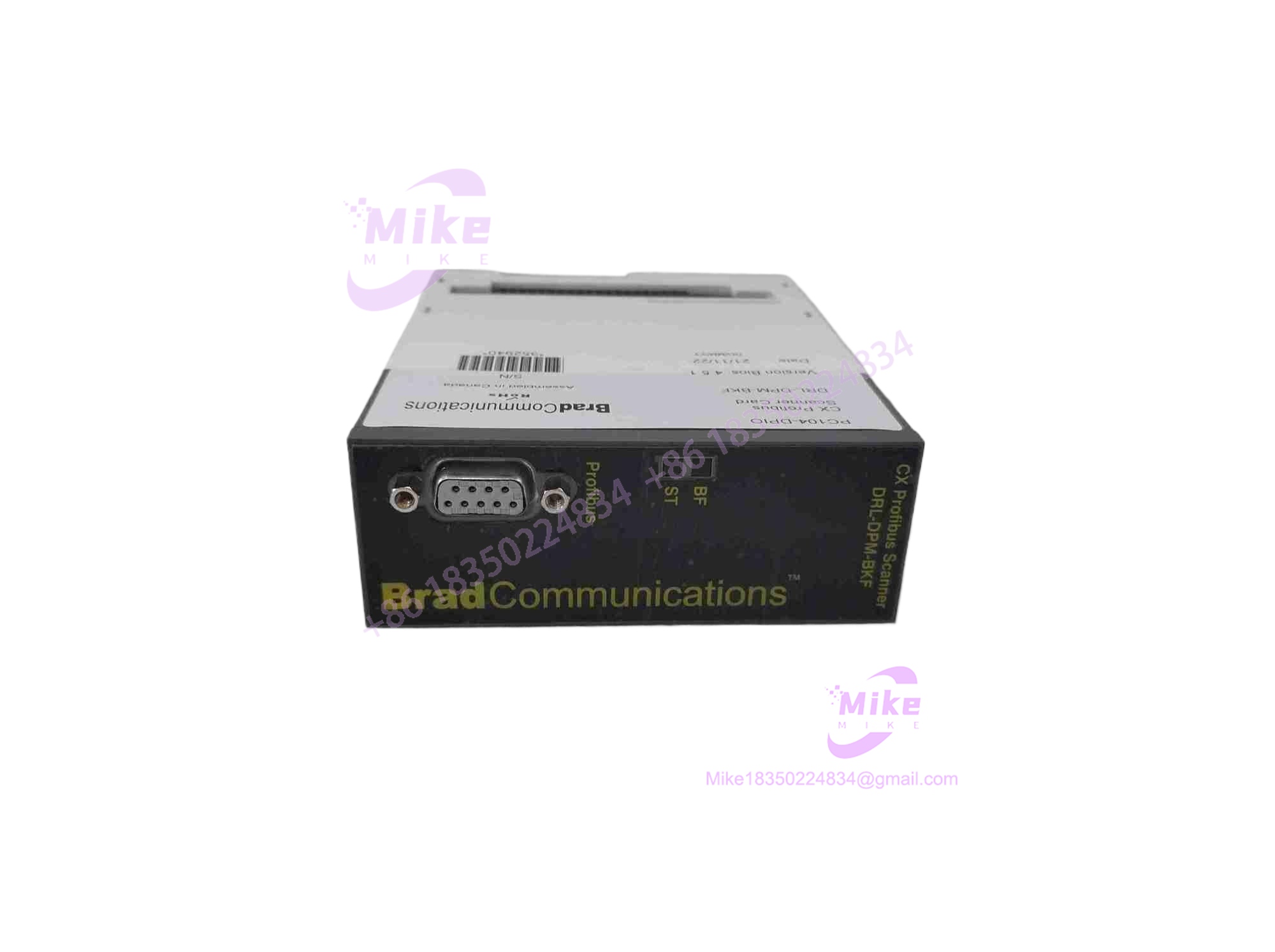
DRL-DPM-BKF
Key Technical Specifications
| Parameter | Specification |
| Form Factor | PC/104 stackable module (90 mm x 96 mm) |
| Bus Interface | PC/104 parallel bus (8/16-bit) |
| Supported Protocols | Profibus DP-V0, DP-V1, DP-V2 |
| Data Transmission Rate | Up to 12 Mbps (Auto-baud detection) |
| Network Capacity | Up to 127 nodes per master channel |
| Physical Interface | 9-pin D-SUB female connector |
| Power Requirements | +5V DC via PC/104 bus backplane |
| Operating Temperature | -20°C to +60°C |
| Diagnostic Indicators | On-board status and error LEDs |
Field Engineer’s Pitfall Guide
- WARNING: Bus Pin Stacking Damage. Align the PC/104 pins carefully before applying pressure. Bent pins on legacy stacking headers cause intermittent short circuits on the 5V rail, which can fry the host CPU board instantly.
- WARNING: Firmware Revision Discrepancies. Swapping an older hardware revision with a newer DRL-DPM-BKF variant can cause configuration tool handshaking failures if the driver DLLs on the host embedded OS do not match the on-board ASIC firmware.
- WARNING: Termination and Shielding Oversights. Failing to ground the Profibus cable shield at both ends of the cabinet creates noise susceptibility at 12 Mbps, resulting in random telegram drops.
- Field Anecdote: I spent an entire night shift troubleshooting a phantom drop out on a packaging line because a technician replaced a failed PC104-DPIO card without checking the onboard jumper settings for bus termination, flooding the network with framing errors until the master locked out the node entirely.
QA & Testing SOP
- Visual & Origin Verification: Inspect the PCB for corrosion, solder bridge defects, and verify original OEM factory markings and serial tracking labels.
- Live Test Bench Environment: Mount the card onto a validated PC/104 test rack powered by an isolated regulated 5V DC power supply.
- Diagnostics & Handshake Testing: Execute loopback scripts and establish a live Profibus DP master-slave poll against a known reference node to verify packet integrity at 12 Mbps.
- Packaging: Discharge static safely, enclose the unit in anti-static metallized shielding bags, and pack with high-density foam to prevent transit damage to the stacking pins.
Technical FAQ
Can I hot-swap this module while the system power is active?
No. The PC/104 bus architecture lacks the physical pin sequencing and electrical isolation required for live insertion. Inserting or removing the card with power applied will destroy the host interface buffers.
Does the module retain its configuration after a complete power loss?
The card relies on the host system software to download the network configuration (GSD files and parameter blocks) during the initialization sequence upon boot-up. It does not store persistent master configuration data locally.
What operating systems are supported by the driver packages for this card?
Standard drivers historically target embedded real-time operating systems and legacy Windows environments (such as Windows XP Embedded or older DOS/QNX kernels) used in industrial PC/104 stacks. Verify your OS kernel version before deployment.
Are DRL-DPM-BKF units interchangeable with standard PCI-based Profibus cards?
No. While the communication controller ASIC is similar, the physical form factor, address mapping, and backplane bus protocol differ entirely from standard PCI or PCIe slots.





