


Description
Bently Nevada 3500/53 | Relational Dynamic Indicator Module
Architect’s Product Breakdown
The Bently Nevada 3500/53 acts as the central logic-solving and relay-driving backbone for turbine, compressor, and generator protection schemes. Installed within the standard 3500 rack backplane bus, this module receives channel-level and rack-level alarm status flags to execute user-programmed Boolean statements—such as AND, OR, and NOT gates—before tripping external safety interlocks or emergency shutdown systems. It bypasses the need for external hardwired logic relays by combining multiple alarm criteria into localized output channels.
Integrating this card requires careful configuration through the 3500 Rack Configuration Software, mapping inputs precisely to monitor modules across the backplane. Field wiring connects directly to the associated I/O module mounted at the rear of the chassis. Engineers must account for terminal block ratings and inductive kickback suppression when driving heavy solenoid valves or PLC digital inputs directly from the relay contacts to prevent premature contact pitting.
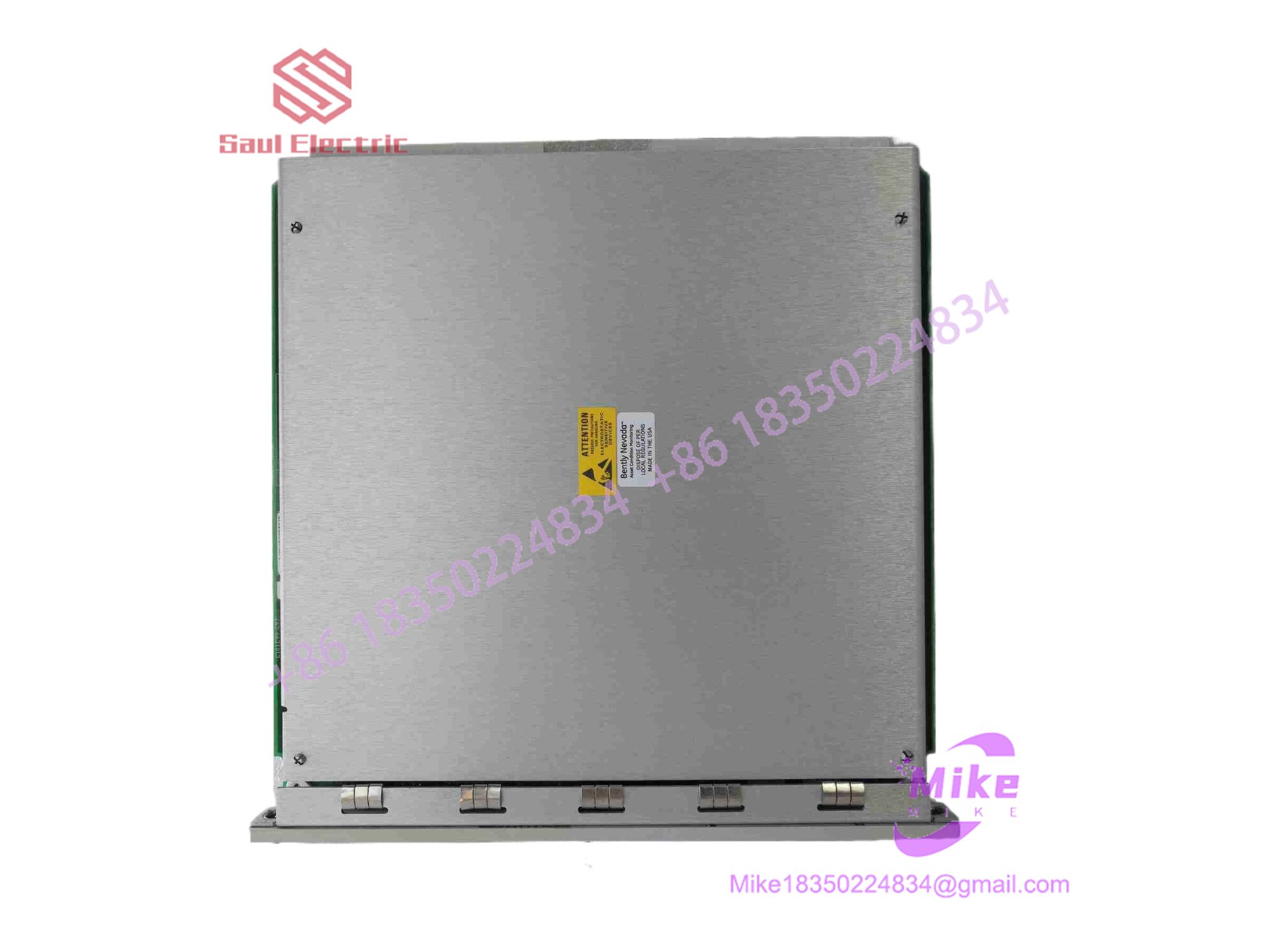
3500/53
Key Technical Specifications
| Parameter | Specification Data |
| Module Type | Relational Output Module (4-Channel) |
| Power Consumption | 4.4 Watts typical |
| Relay Type | Form C (SPDT) relays |
| Contact Rating (Resistive) | 5 A at 250 VAC / 30 VDC |
| Contact Rating (Inductive) | 2 A at 24 VDC / 0.5 A at 120 VAC |
| Logic Execution Time | Synchronized with rack scan cycle |
| Operating Temperature | -30^\circC to +65^\circC |
| Storage Temperature | -40^\circC to +85^\circC |
| Relative Humidity | Up to 95%, non-condensing |
| Physical Dimensions | Standard 3500 rack slot width |
Field Engineer’s Pitfall Guide
- Inductive Load Arcing: Driving large pilot solenoids directly without flyback diodes or RC snubber networks will weld the relay contacts shut within months. Always use interposing relays for heavy inductive loads.
- Forgotten I/O Module Pairing: Attempting to configure the 3500/53 without installing the matching rear I/O termination module will result in persistent configuration errors and communication timeouts across the rack bus.
- Logic Mapping Mismatches: I have seen plants experience delayed turbine trips during commissioning because the Boolean AND/OR gates were inverted in the software configuration tool. Always simulate rack alarms manually and verify contact state changes at the terminal block before rolling out to production.
QA & Testing SOP (Transparency)
- Visual & Origin Inspection: Verification of OEM anti-tamper seals, serial number plate integrity, and backplane pin alignment.
- Bench Test Environment: Insertion into a live 3500 test rack powered by verified system power supplies.
- Diagnostic Handshake: Firmware version validation, rack communication bus verification, and front-panel LED status check (OK, TX/RX, Relay Status).
- Relay Actuation Test: Manual forcing of each of the four channels via configuration software to verify contact closure and electrical continuity under load.
- Packaging: Antistatic ESD shielding encased in custom high-density foam packaging to prevent transit damage.
Technical FAQ
- Can I hot-swap this module while the machine is running? Yes, the 3500 rack architecture supports online insertion and removal of the 3500/53 module without powering down the rack or disrupting neighboring monitor cards.
- How many relays does a single module provide? The module features four independent Form C programmable relay outputs on its rear I/O card.
- Does the module retain its configuration after a complete power loss? Yes, user-defined logic and setpoints are stored in non-volatile flash memory on the module, requiring no backup battery.
- What is the difference between standard and metered I/O options for this module? The relational output module pairs with a dedicated I/O module type designed specifically for relay wiring termination and hardware jumper settings.





