


Description
Bently Nevada 3500/33 | 16-Channel Relay Module Core Category
Dynamic Product Introduction
Managing high-density alarm and shutdown logic across complex turbomachinery trains often requires more output capacity than standard 4-channel relays can provide, pushing cabinet space limits to the extreme. The Bently Nevada 3500/33 relay module solves this spatial constraint by packing 16 independent, fully programmable relay channels into a single high-density front and rear card set.
Outperforming legacy discrete relay racks through integrated backplane communication and advanced software voting logic, this module delivers flexible, space-saving trip execution without sacrificing reliability. Reliability engineers depend on its extensive channel matrix to configure intricate cross-channel voting combinations, securing absolute asset protection across large-scale industrial compressor and turbine installations.
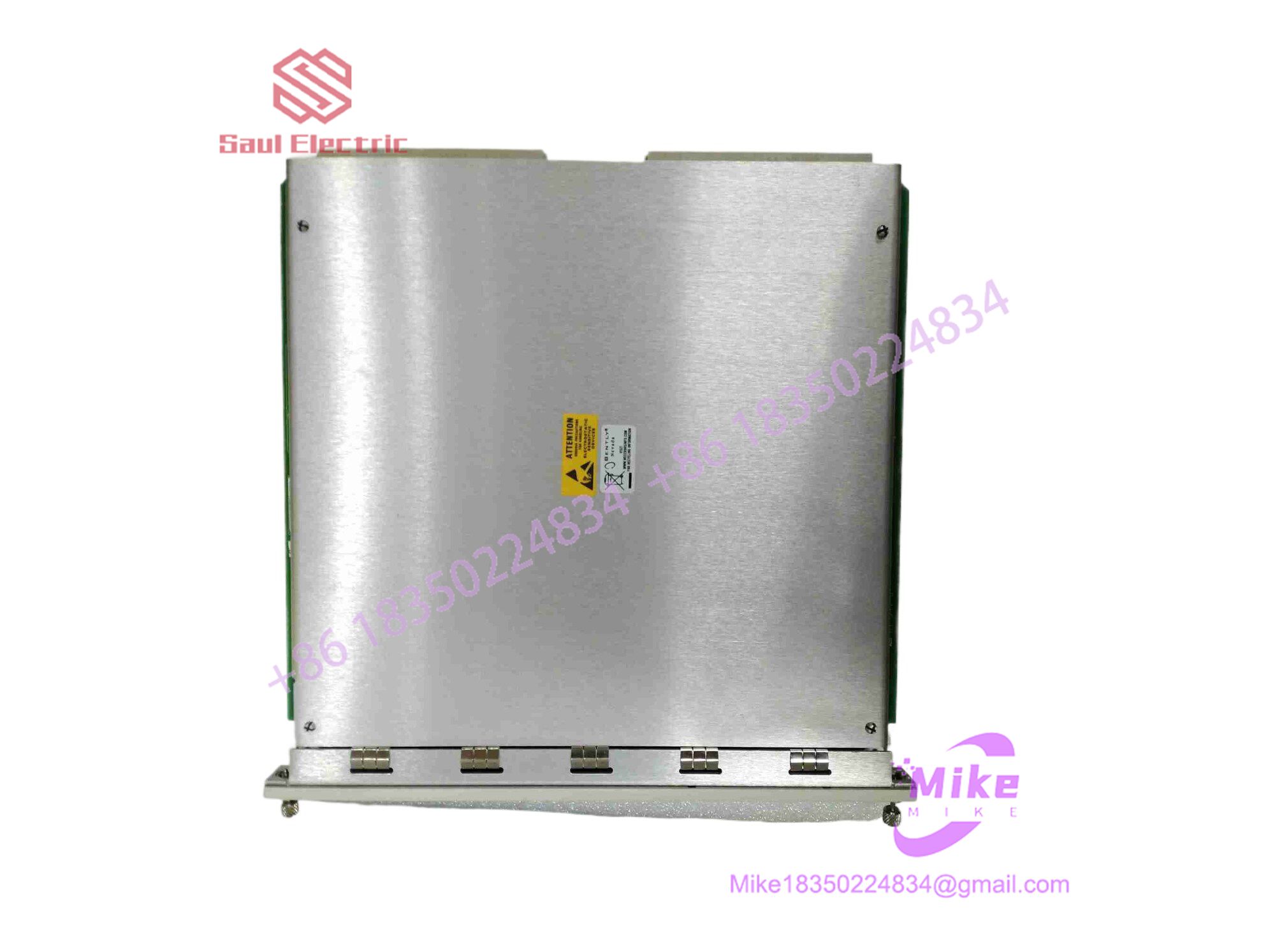
3500/33
Key Technical Specifications
| Core Parameter | Technical Specification |
| Product Identifier | 3500/33 (16-Channel Relay Module Family) |
| Channel Capacity | 16 independent relay output channels per module |
| Relay Contact Rating | Form C relay contacts rated for up to 2A at 30 VDC or 250 VAC |
| Voting Logic | Software-programmable logic combining Alert, Danger, and OK statuses across all rack monitor cards |
| Operating Modes | Programmable as normally energized, normally de-energized, latched, or unlatched |
| Slot Requirement | Occupies any available monitor/relay slot in the 3500 rack |
| Operating Temperature | -30^\circC to +65^\circC (-22^\circF to +149^\circF) |
| Agency Approvals | CSA, ATEX, IECEx hazardous area compliant options available based on suffix |
Global Sourcing & Live-Test SOP (Transparency Core)
Deploying high-density replacement relay modules into safety-critical shutdown loops requires stringent verification protocols to ensure complete electrical integrity:
- Inbound Verification: Incoming front cards and high-density rear I/O terminal assemblies undergo microscopic inspection of pin integrity, relay coil continuity, and board-level isolation clearances.
- Live Simulation: Modules are installed into a fully powered 3500 test backplane coupled with simulated multi-channel monitor alarm streams.
- Diagnostics: Technicians execute full matrix actuation sweeps across all 16 channels, verifying contact resistance limits, response timings, and software voting execution over a 24-hour thermal burn-in cycle.
- Final Prep: Terminal blocks are fitted with protective safety covers, and modules are hermetically sealed in heavy-duty anti-static barrier packaging.
The Field Engineer’s Pitfall Guide
❗ Inductive Load Arcing and Contact Degradation: Connecting unsuppressed inductive loads (such as large solenoid valves or heavy motor contactors) directly to the high-density 3500/33 relay contacts without external flyback diodes or RC snubbers will rapidly pit and weld the contacts shut. (I’ve seen emergency trip loops fail to clear because welded relay contacts kept a shutdown valve energized after a trip command was issued.)
❗ Software Voting Misconfiguration: Failing to properly verify software voting assignments in the 3500 configuration utility can lead to unintended overlapping trips or unassigned relay channels during an emergency event.
❗ High-Density Wiring Errors: Because the rear I/O module manages 16 separate channels in a confined footprint, mislabeling or miswiring terminal connections during a hurried outage can cross-wire critical safety trips.
Intent-Driven FAQ
How many independent relay channels are contained on a single 3500/33 module?
Each 3500/33 module features 16 independent relay output channels, offering four times the output density of standard 4-channel 3500/32 modules.
Can the 3500/33 relay module be hot-swapped in a live protection rack?
Yes, the 3500/33 module is designed to be hot-swapped in a running rack without disrupting the core monitoring functions of adjacent cards, provided precautions are taken regarding connected external trip loops.
Are these 3500/33 modules supplied factory-sealed or as surplus stock?
Inventory batches feature a mix of verified factory-sealed surplus (unused) and fully bench-tested secondary stock, with complete electrical test history documented on every order.
What is the primary advantage of upgrading from a 3500/32 to a 3500/33 relay module?
The 3500/33 provides significantly higher channel density (16 relays vs 4 relays), saving valuable rack slots in installations that require extensive discrete alarm and trip outputs.





