

Description
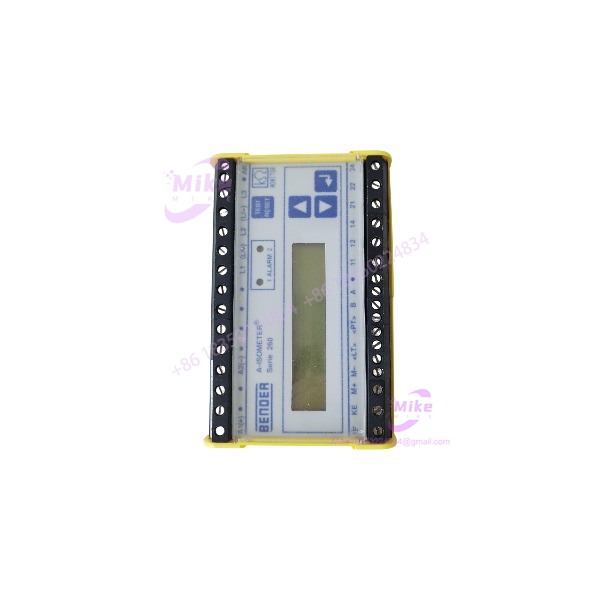
Bender IRDH265-2 | Insulation Monitoring Device
Product Introduction
An insulation fault in an unearthed power system can remain undetected until a second fault creates a more serious operating problem. The Bender IRDH265-2 belongs to the ISOMETER IRDH265 insulation-monitoring family, designed to monitor insulation resistance in unearthed AC and DC systems and provide an early warning when insulation deteriorates.
The IRDH265 family supports adjustable alarm thresholds, automatic adaptation to system leakage capacitance, connection monitoring, and an RS-485 interface. However, the precise ordering suffix IRDH265-2 could not be matched confidently to a standard documented supply-voltage variant. Buyers should verify the complete nameplate, supply requirements, and configuration before treating this unit as a direct replacement.
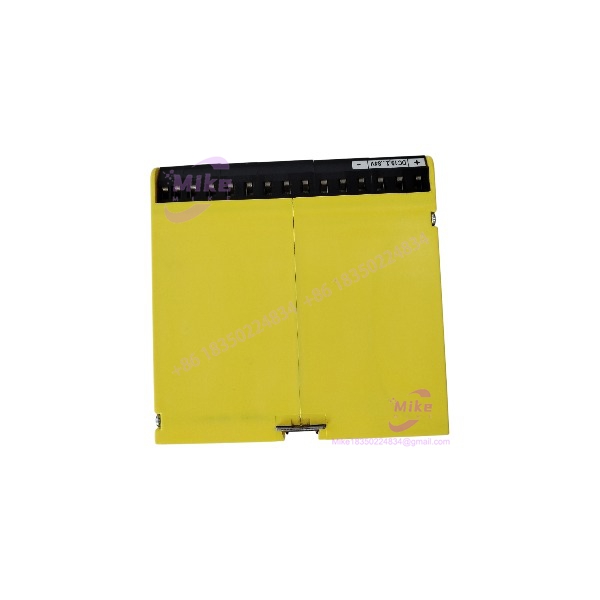
IRDH265-2
Key Technical Specifications
- Manufacturer: Bender
- Model: IRDH265-2
- Product Family: ISOMETER IRDH265
- Device Category: Insulation monitoring device
- Monitoring Purpose: Insulation resistance monitoring in unearthed power systems
- Supported System Types: IT AC, IT AC with galvanically connected DC circuits, and IT DC (family-level)
- Monitored AC Voltage Range: Up to 793 V nominal, depending on model configuration
- Monitored DC Voltage Range: Up to 650 V nominal, depending on model configuration
- Response Thresholds: Two adjustable alarm thresholds; family documentation specifies 10 kΩ to 990 kΩ for applicable variants
- Measuring Principle: AMP (Adaptive Measuring Pulse) is documented for the family; confirm the exact unit configuration
- Communication Interface: RS-485, family-level feature
- Mounting: DIN rail or screw mounting for standard housing
- Supply Voltage: Not verified for the exact -2 suffix
- Operating Temperature: Family documentation lists -10°C to +55°C for standard versions; verify the applicable variant
These are -family specifications, not a complete confirmation of the -2 suffix. Do not use family-level voltage or supply data as a substitute for checking the actual unit’s nameplate and manual.
Global Sourcing & Live-Test SOP
For insulation-monitoring equipment, functional verification must be performed using a controlled test setup. A visual inspection alone does not establish measurement accuracy or alarm performance.
Incoming Verification
- Confirm l model marking on the device.
- Photograph the front panel, nameplate, terminal markings, and manufacturer labels.
- Record the serial number, article number, and hardware revision where available.
- Inspect the housing, display, terminals, and mounting hardware for damage or corrosion.
Authenticity and Configuration Review
- Compare the nameplate and article number with Bender documentation.
- Verify the required auxiliary supply voltage before applying power.
- Confirm the intended monitored system type and voltage range.
- Check the alarm response settings and any stored configuration, where accessible.
Functional Validation
- Power the device only with the verified supply voltage.
- Verify startup, display operation, and available self-test functions.
- Test insulation-monitoring response using an appropriate controlled test setup.
- Verify alarm relay operation and RS-485 communication, if applicable.
- Record the test setup, measured response, configuration, and results.
- Do not claim live testing, calibration, or alarm verification unless those procedures were actually completed.
ESD / Packaging and Shipment
- Protect the device from impact, moisture, and contamination.
- Secure the terminals and housing against shipping damage.
- Include only accessories explicitly identified in the sale.
- Preserve inspection photos and test records for traceability.
Field Engineer’s Pitfall Guide
- ❗ Verify the exact supply voltage. The family includes multiple supply-voltage variants. Do not enen based solely on another model’s supply rating.
- ❗ Match the monitored system and configuration. IT AC, IT DC, and AC systems with connected DC circuits have different application considerations. Confirm the unit’s supported voltage range and configuration before installation.
- ❗ Do not assume alarm settings are factory-default. Response thresholds and other operating parameters may be configurable. Verify the stored settings and confirm they suit the target system before placing the monitor into service.
Intent-Driven FAQ
Q1: What is thr used for?
It is identified as part of the Bender insulation-monitoring family, which monitors insulation resistance in unearthed electrical systems. Confirm the exact suffix and configuration before installation.
Q2:e monitor both AC and DC systems?
The family supports unearthed AC and DC monitoring. The exact operating range and configuratioe should be verified from its nameplate and applicable documentation.
Q3: What supply voltage e require?
The exact supply voltage for the -2 suffix has not been verified. Check the unit’s nameplate before connecting power.
Q4: e provide alarm relays?
The family has two adjustable alarm response thresholds and associated alarm functions. Confirm the exact unit’s configuration and relay operation during inspection.
Q5e compatible with every installation?
No universal interchangeability should be assumed. Confirm the complete model, supply voltage, monitored system requirements, and terminal configuration against the installed device.
Q6e hot-swappable?
Do not assume hot-swap capability. Follow the applicable electrical isolation and OEM installation procedures.
Q7: What should I verify before purchasing as ?
Request clear nameplate photos, confirm the exact supply-voltage variant, inspect terminal and housing condition, and ask for documented functional test results if operational performance is a purchase requirement.





