

Description
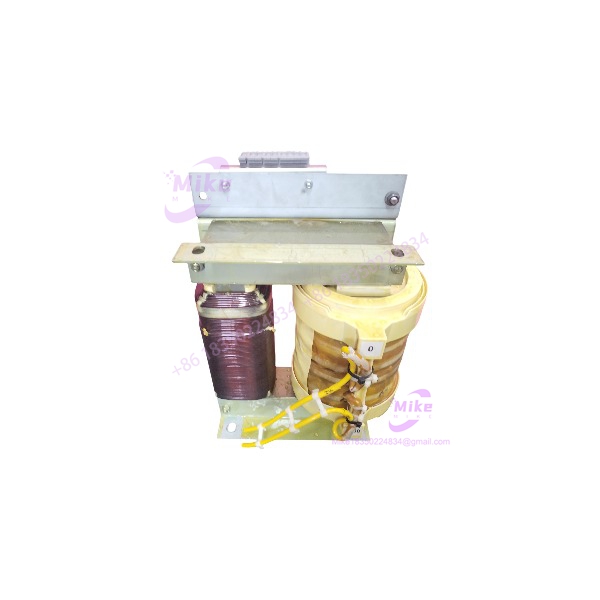
ABB PU180/63E 3BHB039404R0001 | AC 800PEC / PEC800 Power Unit
Dynamic Product Introduction
When high-power medium voltage drives (MVD) or megawatt-scale excitation converters trip offline, the root cause often traces back to gate signal degradation between the central controller and the semiconductor firing stacks. Standard control boards lack the galvanic isolation and drive energy needed to fire massive IGCT or IGBT assemblies under high di/dt switching stresses. The ABB PU180/63E 3BHB039404R0001 operates directly within ABB’s AC 800PEC power electronics platform to deliver fast, highly synchronized trigger pulses while isolating sensitive processing logic from power stage noise.
Designed to operate in harsh electrical environments like wind turbine converters, rolling mills, and utility-scale rectifiers, the PU180/63E converts digital firing commands into robust gate drive signals while continuously monitoring stack status. (Honestly, preventing false overcurrent trips by keeping gate firing pulses clean under high electrical noise saves plant operators from unnecessary, costly downtime.) Featuring rugged industrial construction and integrated fault feedback loops, the 3BHB039404R0001 maintains stable power conversion—though long-term reliability relies on keeping fiber-optic interfaces clean and cooling airflow uninhibited.
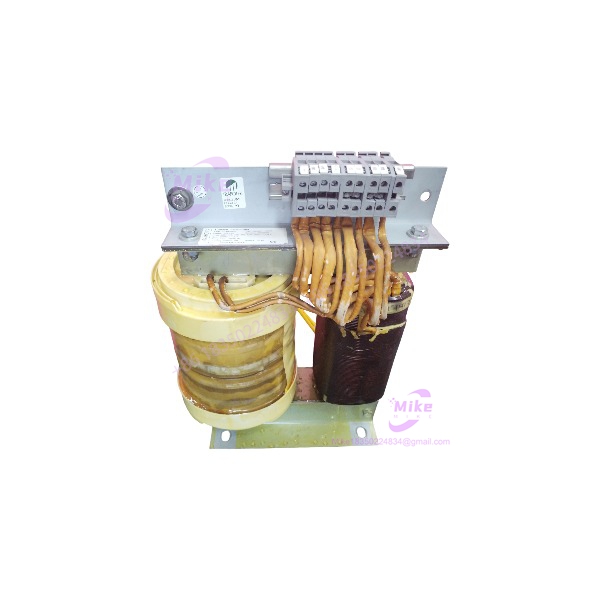
PU180/63E 3BHB039404R0001
Key Technical Specifications
- Manufacturer & System Platform: ABB / AC 800PEC & Large Drives Controller Architecture
- Hardware Model / Catalog No.: PU180/63E
- Global Part Number: 3BHB039404R0001
- Primary Application: Gate pulse distribution, switching interface, and power stage monitoring for heavy AC/DC power converters
- Signal Transmission: Optical / Fiber-optic channel options to ensure complete galvanic isolation between high-voltage power components and low-voltage control racks
- Diagnostic Features: Onboard gate supply voltage monitoring, pulse status feedback, thermal fault feedback, and status LEDs
- Power Stage Compatibility: Engineered for interfacing with ABB IGCT, IGBT, or thyristor semiconductor assemblies
- Protection Circuitry: Built-in desaturation detection and fast shutdown interlock signals
- Operating Ambient Temperature: 0°C to +60°C (32°F to 140°F) continuous operational range
- Enclosure Rating & Form Factor: PCB modular assembly designed for direct installation within ABB power electronics subracks
Global Sourcing & Live-Test SOP (Transparency Core)
Procuring secondary-market or surplus high-power converter hardware requires strict electrical validation before installing components into an active medium-voltage drive. Every ABB PU180/63E 3BHB039404R0001 module entering inventory undergoes a comprehensive five-stage bench qualification process:
- Inbound Verification: Serial numbers, batch tracking codes, and PCB revision numbers are cross-referenced against ABB factory production logs. We inspect the multi-layer circuit board for trace damage, verify that optical transmitters/receivers are free of dust or physical fractures, and check power resistors for thermal stress.
- Live Simulation: The PU180/63E module is mounted into an AC 800PEC test subrack powered by a regulated 24 VDC auxiliary power feed and interfaced with a signal generator setup.
- Diagnostics & Gate Pulse Verification: Gate firing pulses are commanded across all driver channels at full operational frequency. Using a multi-channel digital storage oscilloscope, we verify pulse rise and fall times, amplitude stability, and timing symmetry across high-side and low-side driver channels.
- Galvanic & High-Voltage Isolation Soak: High-voltage insulation testing is conducted to verify isolation integrity between control interface terminals and high-power gate supply paths.
- Final Prep: Optical ports are fitted with protective dust caps, terminal headers are cleaned with electronic contact cleaner, and the PU180/63E is sealed inside heavy-duty anti-static moisture-barrier packaging.
The Field Engineer’s Pitfall Guide
❗ Contaminating Optical Transceiver Ports During Installation: Never touch or leave the fiber-optic connector ports exposed to ambient dust during field replacement. Dust particles or oil mist inside the optical receiver of the PU180/63E attenuate the light signal, leading to corrupted gate timing, missing firing pulses, and instant converter phase-asymmetry faults.
❗ Ignoring Gate Power Supply Voltage Drop: Verifying AC 800PEC system logic power is not enough; always measure the dedicated DC supply voltage feeding the PU180/63E gate driver channels under switching loads. A sag in gate supply voltage causes incomplete semiconductor turn-on, forcing IGBTs/IGCTs into linear conduction mode where thermal breakdown occurs in milliseconds.
❗ Hot-Swapping Under Live Auxiliary Power: Never unseat or reconnect the PU180/63E board while auxiliary DC power or high-voltage DC bus potential is present on the drive stack. Pulling the module under power can trigger floating gate states, causing complementary semiconductors in a phase leg to turn on simultaneously and shoot through the DC bus.
Intent-Driven FAQ
Q: What is the main functional role of the PU180/63E in an ABB AC 800PEC drive system? The PU180/63E acts as the critical bridge between the central processor logic and the high-power semiconductor switching devices. It translates low-level control commands into high-current gate firing signals while feeding real-time status and fault feedback back to the AC 800PEC controller.
Q: Are the model numbers PU180/63E and 3BHB039404R0001 interchangeable? Yes. PU180/63E is the functional model designation printed on the front plate or PCB silk screen, while 3BHB039404R0001 is ABB’s official 12-digit global ordering part number. They refer to the exact same hardware component.
Q: How can I verify if a field-installed PU180/63E module has a blown gate driver output? With power completely isolated and discharged, disconnect the output leads to the power semiconductors. Using a digital multimeter, check for short-circuit resistance readings across the output driver channels. A short or zero-ohm reading between gate and emitter/cathode outputs indicates a damaged gate stage.
Q: Can the PU180/63E be repaired down to the component level in the field? Field component repairs are strongly discouraged. Due to the high-voltage isolation requirements and tight timing tolerances demanded by heavy power electronics converters, damaged PU180/63E boards should be replaced with factory-tested units to prevent catastrophic failure of expensive semiconductor stacks.
Q: What precautions should be taken when storing spare PU180/63E boards on-site? Store spare PU180/63E modules in their original anti-static moisture-barrier bags inside a temperature-controlled environment (-20°C to +70°C). Keep optical dust covers installed on all fiber-optic ports until the moment the module is secured inside the drive rack.





