


Description
ABB CM10 | ControlMaster 1/8 DIN Universal Process Controller
Dynamic Product Introduction
Process loops drifting outside tight tolerances waste raw materials and trigger costly quality audits. Upgrading legacy panel indicators to an advanced ABB CM10 controller introduces crystal-clear digital visibility and reliable loop stability directly onto the control room fascia.
Unlike archaic analog meters or monochrome single-line displays, this unit leverages a vibrant 2.2-inch TFT screen paired with flexible software building blocks. Deploying a fresh CM10 unit yields an immediate leap in operator usability, cutting configuration time through plain-text menus while supporting advanced auto-tuning routines for complex thermal and pressure profiles.
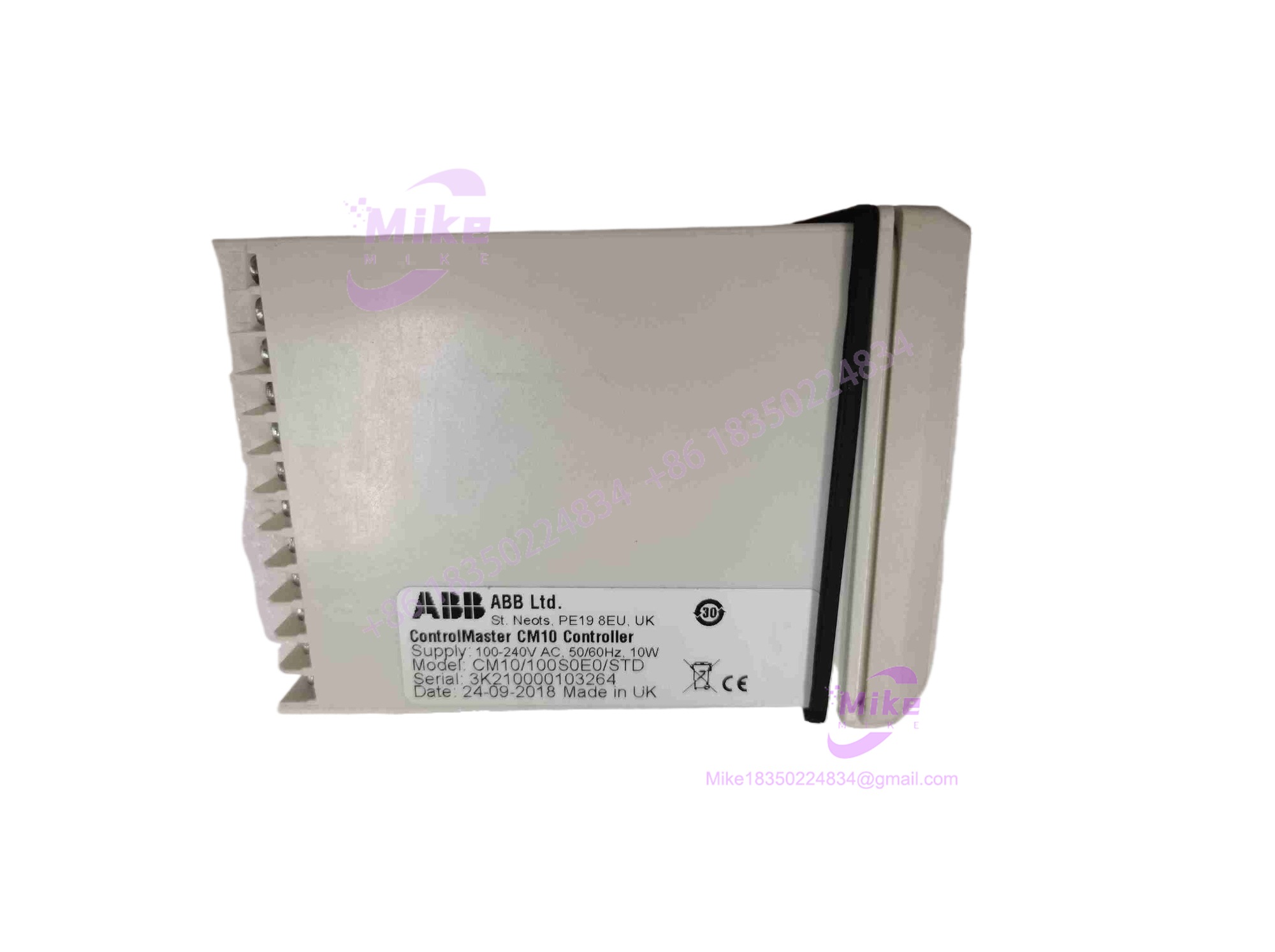
CM10
Key Technical Specifications
| Core Parameter | Technical Specification |
| Product Model | CM10 (ControlMaster) |
| Manufacturer | ABB |
| Form Factor | 1/8 DIN Panel Mount (IP66 / NEMA 4X front face) |
| Display Type | 5.5 cm (2.2 in.) TFT High-Definition Color LCD |
| Control Algorithms | On/Off, Time Proportioning, Analog PID, Motorized Valve Control |
| Input Channels | Universal analog input (thermocouple, RTD, mA, mV, volts) |
| Communication Options | Modbus RTU (RS485) and Ethernet / Modbus TCP |
| Power Supply | 85 to 265V AC or 24V DC variants |
| Operating Temperature | -20°C to +55°C industrial ambient range |
| Diagnostic Features | Built-in loop performance monitoring and text error logs |
Global Sourcing & Live-Test SOP (Transparency Core)
Acquiring panel instrumentation through surplus or secondary channels demands strict quality validation to ensure dependable field operation.
- Inbound Verification: Incoming CM10 shipments undergo exterior chassis examination, terminal block integrity checks, and laser barcode tracking against official factory records.
- Live Simulation: Units are bench-mounted on a specialized testing rig, powered through standard AC/DC rails, and connected to calibration source generators to verify signal conversion accuracy.
- Diagnostics: Engineers inject varying milliamp and thermocouple inputs while executing full-scale display sweeps, validating Modbus register mapping and Ethernet packet response times.
- Final Prep: Hardware units receive a complete firmware audit, static-dissipative wrapping, and secure boxing to prevent mechanical shock during transit.
The Field Engineer’s Pitfall Guide
❗ Terminal Block Wiring Shifts: Pulling an older controller variant and forcing terminal blocks onto a newly sourced CM10 without checking pin-out revisions can short internal power rails. I’ve seen technicians fry analog input channels simply because a previous revision mapped terminal wiring differently.
❗ Panel Cutout Gasket Degradation: Failing to inspect the neoprene gasket during front-facia insertion compromises the IP66 seal. If moisture bypasses the bezel in washdown-heavy chemical environments, internal board corrosion will follow rapidly.
❗ Communication Baud Rate Mismatches: Forgetting to match the replacement unit’s RS485 Modbus parameters to the wider DCS polling schedule will lock the instrument out of supervisory control networks. Always verify configuration maps using ConfigPilot software before final panel lock-down.
Intent-Driven FAQ
Will I lose my custom control configuration if I swap the hardware?
Yes, device configurations reside in internal non-volatile memory. If you are replacing a failed unit, you must flash the saved configuration file via an offline tool or re-enter parameters manually via the front keypad.
Are these units original factory sealed or surplus stock?
Sourced inventory consists of both factory-sealed original boxes and rigorously tested surplus items. Every single unit undergoes bench calibration and signal validation prior to dispatch.
Can I upgrade communication protocols post-purchase?
Hardware slots support software-enabled feature expansions, though adding Ethernet capabilities depends on whether the specific internal board variant includes the physical network transceiver port.
What tools are required to configure the unit locally?
Configuration can be handled entirely via the front-panel tactile buttons using intuitive text-based menus, or more rapidly through ABB’s PC configuration software suite using an interface cable.
What kind of warranty accompanies a replacement process controller?
All supplied units include a 1-year operational warranty covering component health, display stability, and signal processing accuracy.
What specific process variable—such as temperature, flow, or pressure—are you planning to manage with this controller?





