


Description
Invensys Triconex BI01 | Digital Input / Bus Module
Product Introduction
When a safety-instrumented emergency shutdown system encounters internal communication bottlenecks, entire process loops face unexpected trips. The Triconex BI01 is not a standard commercial I/O card; it functions as a specialized internal system sub-assembly built to maintain rigorous data-path integrity across fault-tolerant Tricon architecture.
—though your mileage may vary depending on chassis backplane revision levels—expect strict deterministic performance designed to handle critical messaging without introducing loop latency. It slots directly into dedicated internal control slots, preserving the triple-modular redundancy framework demanded by high-risk industrial facilities.
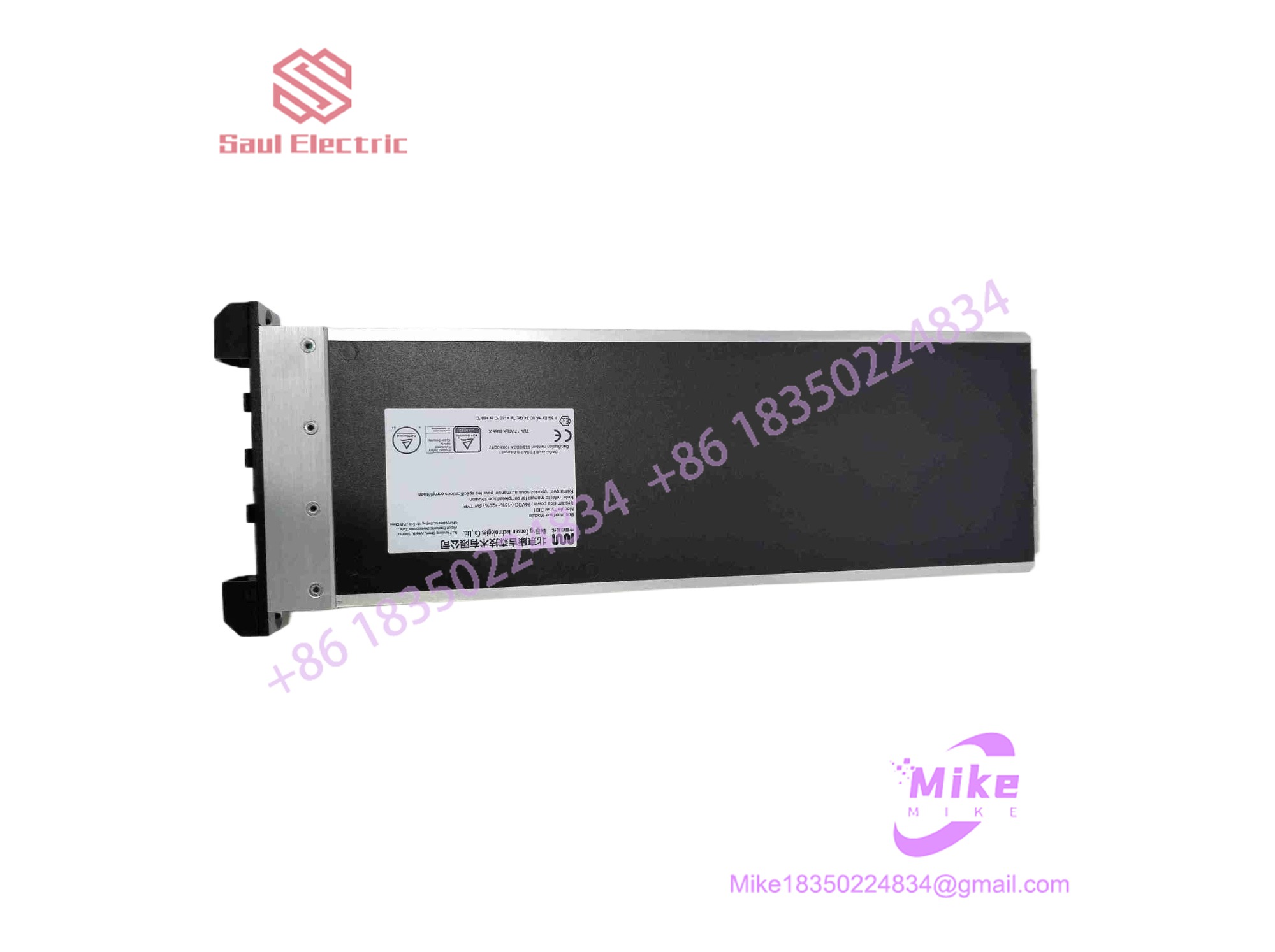
BI01
Key Technical Specifications
| Parameter | Specification |
| System Architecture | Triple Modular Redundancy (TMR) compatible |
| Module Classification | Internal Bus / Interface Sub-Assembly |
| Mounting Interface | Dedicated Tricon Main/Expansion Chassis slot |
| Operating Temperature | 0^\circC to +60^\circC (32^\circF to 140^\circF) |
| Storage Temperature | -40^\circC to +85^\circC (–40^\circF to 185^\circF) |
| Relative Humidity | 5% to 95% (non-condensing) |
| Enclosure Type | Open-style industrial circuit board module with shielding |
| Status | Specialized Legacy / Surplus Component |
Application Scenarios & Pain Points
- Petrochemical Emergency Shutdown (ESD) Systems: Refineries requiring continuous uptime use specialized internal interface cards to prevent single-point communication failures across redundant logic solvers.
- Offshore Oil & Gas Fire & Gas (F&G) Panels: Maintains reliable backplane handshakes between processor slices and regional I/O racks in high-vibration marine environments.
- Power Generation Turbine Control: Ensures deterministic data transmission speeds during rapid load rejections where millisecond execution windows are mandatory.
QA & Live Testing SOP (Trust Signal)
We evaluate high-integrity safety system hardware under strict fault-tolerance benchmarks before dispatch:
- Visual & Microscopic Trace Inspection: Inspected for gold-finger wear, micro-cracks on surface-mount joints, and correct conformal coating protection against corrosive atmospheres.
- Static Power Rail Verification: Resistance checks are performed across onboard power traces to rule out internal short circuits prior to powering.
- Chassis Integration Simulation: Inserted into a controlled test rack to verify backplane bus handshakes, register communication stability, and hardware ID recognition.
- ESD Shielding & Packaging: Sealed inside heavy-duty anti-static moisture-barrier bags flanked by high-density cushioning to eliminate transit damage.
Field Engineer’s Pitfall Guide
- ❗ Hot-Insertion Risks: Never seat or unseat internal system boards into a powered Tricon chassis unless explicitly permitted by the specific hardware revision guidelines; doing so can corrupt backplane logic lines or trigger false trip sequences.
- ❗ Backplane Pin Alignment: Take care when guiding the board into internal card cage slots; forcing a misaligned connector can bend delicate backplane pins and compromise redundancy paths.
- ❗ Revision Level Mismatch: Always verify that replacement internal modules match your exact system firmware and hardware revision tree to prevent bus communication timeouts.
Intent-Driven FAQ
Is the BI01 a standard field I/O module?
No. The BI01 designation typically points to an internal system sub-assembly or bus-interface component rather than a standard field-wiring digital/analog input module.
Does this module support Triple Modular Redundancy (TMR)?
Yes. All core hardware components within the Tricon platform are engineered to operate within the strict fault-tolerant TMR architecture framework.
How do I verify compatibility with my existing Tricon chassis?
Cross-reference the part number and hardware revision suffix against your system’s bill of materials or consult the specific Tricon planning and installation guide for your chassis generation.
Are these units original manufacturer surplus?
Yes. These legacy components are sourced from verified industrial surplus, fully tested, and prepared for immediate deployment in critical spare inventories.
What precautions are necessary when handling this circuit board?
Always use a grounded ESD wrist strap and static-safe mat to prevent electrostatic discharge from damaging sensitive onboard logic microprocessors.





