Description
ProSoft MVI69-PDPMV1 | Profibus Master Module New In Stock
Architect’s Product Breakdown
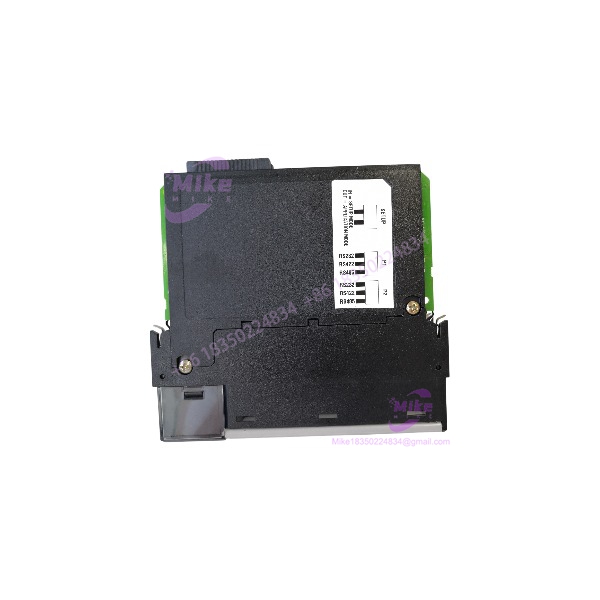
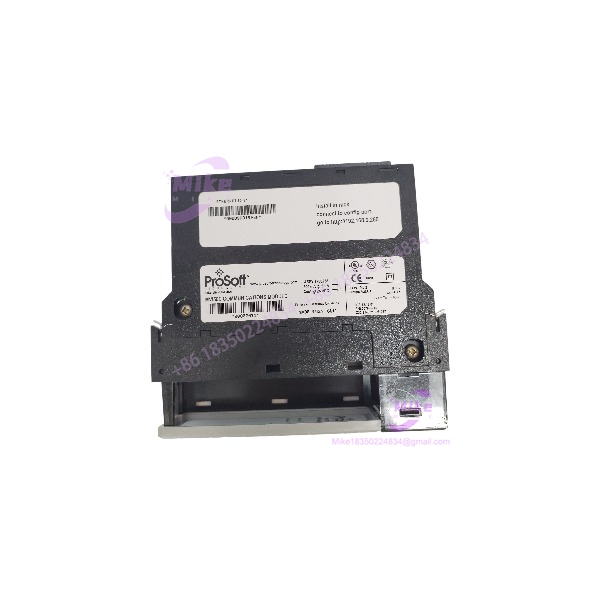
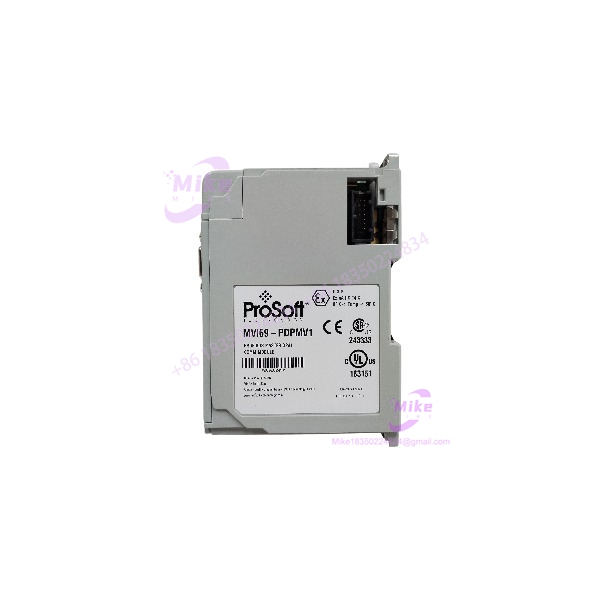
The MVI69-PDPMV1 bridges the operational gap between Rockwell automation controllers and decentralized field instrumentation running on the PROFIBUS standard. Installed directly into a 1769 backplane rack, this communication module manages network traffic independently, offloading master polling tasks from the primary processor to maintain deterministic logic execution times.
Cabinet design engineers must calculate power draw carefully before deployment. This hardware demands 800 mA at 5 VDC from the backplane and carries a strict power supply distance rating of two slots when paired with specific processor controllers, meaning it must sit immediately adjacent to eligible power sources. Firmware configuration relies on specialized utility software that maps network inputs and outputs into controller tags via structured ladder logic Add-On Instructions.
Replacing legacy control cards with this module requires careful attention to backplane current constraints, especially in tighter rack footprints where total available milliamps are limited. Integrating this interface successfully modernizes legacy network segments without requiring a complete controller rip-and-replace cycle.
MVI69-PDPMV1
4. Key Technical Specifications
| Technical Parameter | Specification Detail |
| Part Number | MVI69-PDPMV1 |
| Manufacturer | ProSoft Technology / Allen-Bradley Platform |
| Backplane Current Load | 800 mA max @ 5 VDC |
| Power Supply Distance Rating | 2 slots (requires positioning near rack power supply) |
| Communication Protocols | PROFIBUS DP-V0 and DP-V1 Master |
| Supported Slaves | Up to 125 PROFIBUS slaves per module |
| Data Capacity | Up to 1536 cyclic input bytes and 1536 cyclic output bytes |
| Transmission Speed | Up to 12 Mbps (auto-baud detection) |
| Physical Ports | One DB-9F optically isolated RS-485 port; One RS-232 configuration port |
| Operating Temperature | 0°C to 60°C (32°F to 140°F) |
| Enclosure Type | Single-slot 1769 modular chassis fit |
Field Engineer’s Pitfall Guide
- WARNING: Power Budget Overload on Restricted Racks. Placing this hardware on low-amperage racks without verifying the 800 mA draw will trigger a system fault or crash the backplane bus. Always verify available current before mounting.
- WARNING: Distance Rating Violations. Failing to observe the distance rating of two slots from the power supply introduces voltage drop anomalies on the internal bus, causing intermittent communication dropouts.
- WARNING: Termination Resistor Omissions. Leaving out physical termination resistors at both ends of the RS-485 trunk line corrupts data packets at high transmission speeds (12 Mbps), resulting in cyclic redundancy check faults.
Field Anecdote: I once watched a commissioning team spend two grueling shifts troubleshooting random network timeouts on a water treatment line. The module model was identical to their plant standards, but they had slotted it in slot position five on an extended rack layout without checking distance limitations. The resulting backplane power starvation caused sporadic handshaking drops until we relocated the unit back to slot two.
QA & Testing SOP (Transparency)
- Visual & Origin Inspection: Every unit undergoes microscopic inspection of PCB traces, OEM hologram seals, and serial number verification against factory databases to prevent counterfeit circulation.
- Live Test Bench Environment: The hardware is mounted onto a verified 1769 test rack powered by calibrated supplies to validate thermal stability and operating limits.
- Diagnostics & Handshake Verification: Technicians execute live I/O simulation sweeps, testing the optical isolation circuit and verifying error-free packet transmission across full baud rate ranges up to 12 Mbps.
- Configuration & Packaging: Operational parameters are cleared, and units are sealed inside moisture-barrier anti-static bags alongside protective termination accessories.
Technical FAQ
Can I hot-swap this communication module while the process process is running?
No. The 1769 backplane architecture and this module do not support physical hot-swapping under power. Removing or inserting the unit while energized can damage the internal bus drivers and corrupt processor memory.
What software is required to configure the network layout?
Configuration requires dedicated network setup utility software that downloads configuration files directly through the front diagnostic port using a serial connection before ladder logic execution begins.
Does this hardware retain its configuration during a complete power loss?
Yes. User configurations and network parameters are stored in non-volatile flash memory alongside a backup lithium battery system that preserves operational data states during extended outages.
Is this specific model compatible with older processor revisions?
It integrates cleanly with standard processors running compatible operating firmware, provided the controller supports the corresponding Add-On Instructions for data mapping.