


Description
Vibro-Meter CMC16 | VM600 Condition Monitoring Card
Dynamic Product Introduction
Rotating turbomachinery running at high loads generates subtle high-frequency vibration signatures that precursors standard analog meters miss entirely. Introducing a verified Vibro-Meter CMC16 card into a VM600 rack restores absolute diagnostic clarity to plant condition-monitoring networks.
Unlike basic protection modules that only track overall vibration levels, this intelligent processing node executes real-time time-domain to frequency-domain conversions and transient event logging. Deploying a fresh CMC16 unit yields a profound leap in early fault detection accuracy—isolating bearing wear, gear meshing anomalies, and rotor imbalance long before catastrophic mechanical failure occurs.
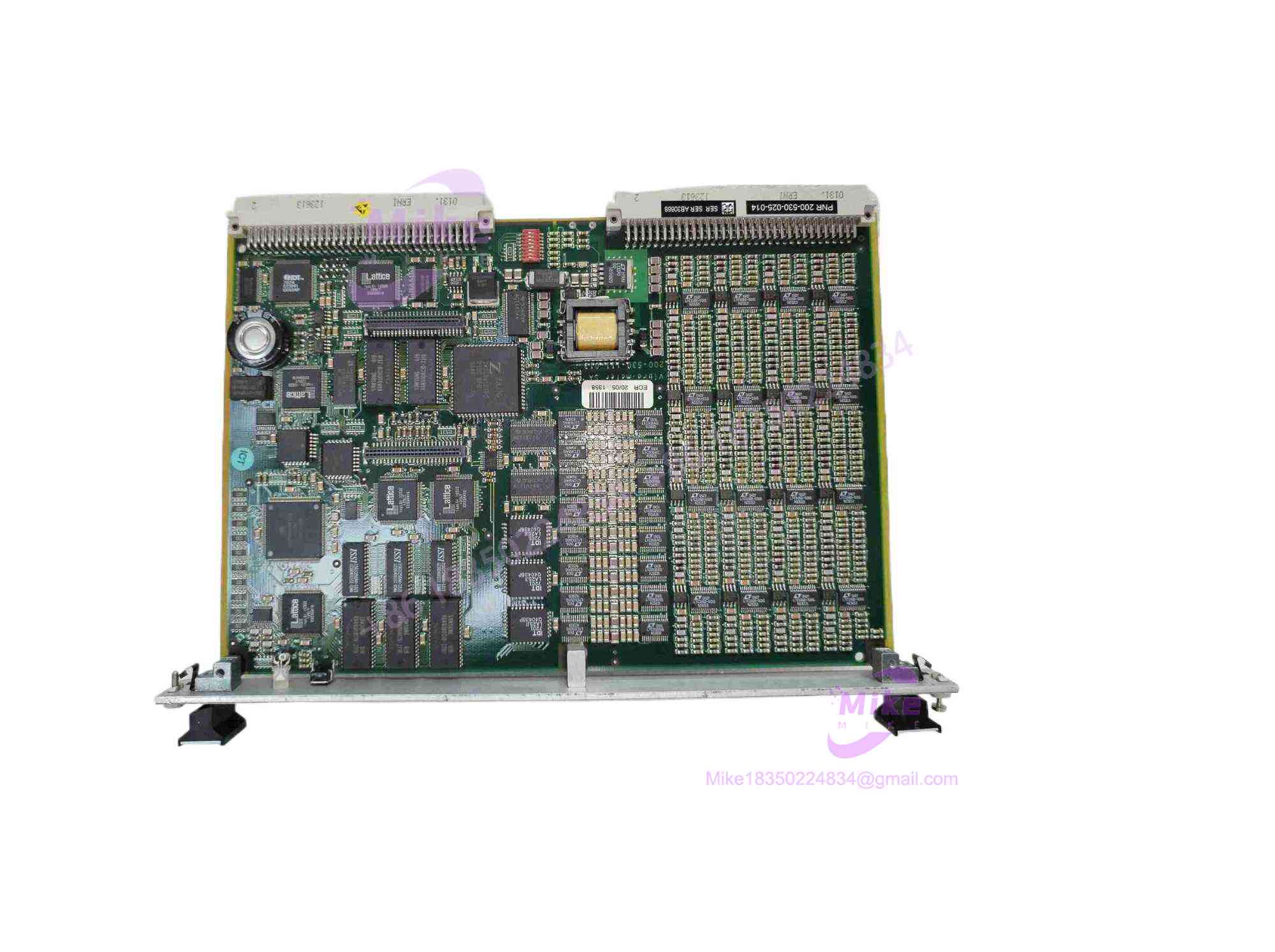
CMC16
Key Technical Specifications
| Core Parameter | Technical Specification |
| Product Model | CMC16 (VM600 Condition Monitoring Card) |
| Manufacturer | Vibro-Meter (Meggitt Sensing Systems) |
| System Architecture | VM600 6U VMEbus Rack-Mounted Subsystem |
| Dynamic Input Channels | Up to 16 configurable channels (via companion IOC16T card) |
| Signal Processing Core | Motorola DSP / On-board micro-controller architecture |
| Frequency Range & Resolution | 0 to 20 kHz span, 400-line FFT resolution |
| Sampling & Conversion | High-speed multi-channel A/D conversion with anti-aliasing filters |
| Backplane Power Demand | 5V DC \pm5% (Nominal 15W operational draw) |
| Operating Temperature | -25°C to +65°C industrial rack environment |
| Physical Dimensions | 6U Eurocard format (262 mm × 20 mm × 187 mm; ~0.35 kg) |
Global Sourcing & Live-Test SOP (Transparency Core)
Sourcing precision condition-monitoring hardware from secondary or surplus markets requires an uncompromised verification framework to ensure absolute data integrity.
- Inbound Verification: Every incoming CMC16 unit undergoes high-magnification optical inspection of the VMEbus connector pins and laser traceability checks against official Meggitt factory production ledgers.
- Live Simulation: Technicians mount the card into an authentic VM600 6U test chassis powered by regulated system rails to verify backplane bus handshakes and clock synchronization.
- Diagnostics: Engineers inject calibrated multi-frequency AC waveforms and simulated tachometer pulse trains across the inputs, validating FFT spectral output accuracy and data bus integrity over a 24-hour thermal soak.
- Final Prep: Hardware units undergo firmware version logging, static-dissipative wrapping, and vacuum sealing inside heavy-duty moisture-barrier ESD shielding bags.
The Field Engineer’s Pitfall Guide
❗ Firmware Revision Mismatches: Sliding a newly sourced CMC16 card with an unaligned embedded software version into an active VM600 rack can trigger communication faults across the CPU M module interface. I’ve seen plant reliability teams lose an entire diagnostic window because an updated card rejected the system-wide configuration container.
❗ Companion IOC Card Misalignment: Forgetting that the relies on its associated terminal input card (such as the IOC16T) for signal routing and EMC protection can lead to phantom noise spikes. Always verify that both slot positions share matching revision baselines and proper grounding straps.
❗ VMEbus Backplane Insertion Stress: Forcing the 6U card into the rack without aligning the top and bottom guide rails can bend delicate internal pins on the backplane connector. Always ease the module along the chassis slots smoothly before engaging the front-panel locking screws.
Intent-Driven FAQ
Will swapping this module cause a loss of historical trend data?
Active historical trend data and long-term diagnostic archives are typically stored on the supervisory server running VibroSight or software rather than locally on the card itself. However, local configuration parameters must be re-pushed or verified after a hardware replacement.
Are these units original factory sealed or surplus stock?
Sourced inventory pools span both factory-sealed original boxes and fully tested, certified surplus hardware. Every single unit undergoes rigorous bench calibration and frequency response testing prior to dispatch.
Can this module interface directly with third-party software packages?
The hardware is tightly integrated into the proprietary ecosystem, communicating primarily via the rack’s processing architecture and specialized software suites designed for machinery protection.
What tools are required to verify module communication locally?
Configuration, health monitoring, and real-time spectrum verification are handled via the system’s designated engineering software interface connected through the rack’s communication gateway.
What kind of warranty accompanies a replacement condition monitoring card?
All supplied units carry a comprehensive 1-year operational warranty covering component health, digital signal processor stability, and backplane communication reliability.
Are you setting up this module in a greenfield rack installation or swapping a failed unit in an active turbomachinery train?





