


Description
TMEIC ARND-3120 | Medium Voltage Inverter Gate Control Board
Product Introduction
When a heavy-duty medium-voltage drive drops an entire power phase because of a failing internal gate board, lost production hours accumulate rapidly. The TMEIC ARND-3120 is not a generic control component; it is an engineered high-reliability circuit board built explicitly to command power electronics within TMEIC and legacy Toshiba industrial inverter cells. Designed to slip directly into the card racks of high-voltage modular power stages, this unit handles the precise task of translating central processor commands into isolated, high-speed gate pulses while continuously monitoring local thermal and voltage parameters.
Operating at the physical core of massive motor control loops, the board minimizes switching skew and voltage sag—though your mileage may vary depending on cell cabinet air filtration and overall ambient operating temperatures. It brings complex medium-voltage drives back to peak operational status without forcing an entire power house rip-and-replace.
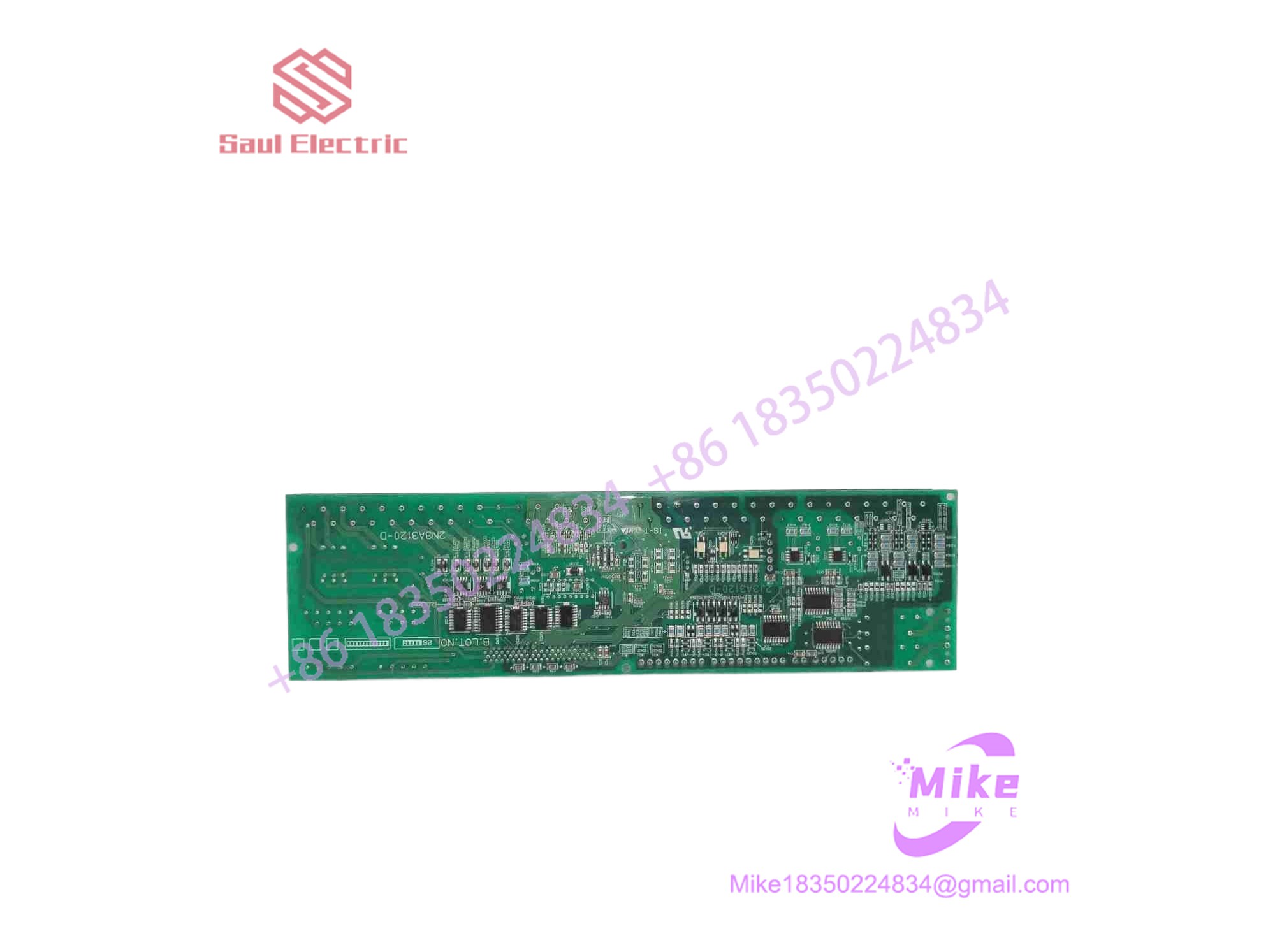
ARND-3120
Key Technical Specifications
| Parameter | Specification |
| Manufacturer / Brand | TMEIC (Toshiba Mitsubishi-Electric) |
| Series / Model | ARND Series (ARND-3120 Power Cell Board) |
| Module Type | Inverter Gate Drive Interface & Control Circuit Board |
| Isolation Rating | High-voltage optical and galvanic separation barriers |
| Diagnostic Indicators | Onboard status LEDs for power rail health, communication, and fault states |
| Mounting Architecture | Plug-in standoff / backplane card format inside inverter power cells |
| Operating Temperature | 0°C to 50°C industrial environment thresholds |
| Enclosure Protection | Open-board PCB design with heavy-duty industrial conformal coating |
Application Scenarios & Pain Points
- High-Capacity Compressor Station Drives: A natural gas pipeline compressor station in the Gulf Coast kept tripping on phase-imbalance faults during high-torque loading until swapping in a verified TMEIC ARND-3120 board, which stabilized internal gate timing.
- Heavy Metals Rolling Mill Inverters:
- Without ARND-3120: Aging interface boards suffered from component thermal degradation, causing erratic gate signals and nuisance drive lockouts.
- With ARND-3120: High-grade optical isolation and precision surface-mount components eliminate electrical feedback, ensuring uninterrupted continuous operation.
- Harsh Industrial Enclosures: Housed inside large primary drive cabinets subjected to continuous mechanical resonance, the board’s secure mounting standoffs and robust trace layout prevent micro-fractures.
QA & Live Testing SOP (Trust Signal)
Medium-voltage drive circuit boards require meticulous bench validation before installation into high-consequence environments. Every TMEIC unit processed through our facility undergoes a strict evaluation protocol:
- Visual & Optical Authentication: Inspected under magnification for component thermal wear, electrolytic capacitor health, trace integrity, and clean solder joints.
- Bench Power-Up & Rail Verification: Energized on a variable test rig to monitor initial soft-start behavior, DC-to-DC conversion stability, and internal power rail output tolerances.
- Signal & Switching Check: Verified using precision scopes to ensure gate-firing and logic transmission paths switch cleanly without jitter or attenuation.
- Protective Packaging: Sealed in heavy anti-static shielding bags and packed in custom cut-foam containers to prevent static discharge and transit shock.
Field Engineer’s Pitfall Guide
- ❗ High-Voltage Stored Energy Hazards: Never touch circuit board components or terminal points immediately after cutting main power to the drive cell. Capacitive storage on linked power stages retains lethal voltages for several minutes.
- ❗ Conformal Coating Damage: Avoid using aggressive solvents when cleaning dust out of the cabinet. Damaging the factory conformal coating can cause arcing when exposed to high humidity and industrial particulate.
- ❗ Fiber Optic & Cable Seating: When reconnecting internal communication or gate-trigger ribbons, ensure connectors are fully clicked and locked. A partially seated plug will trigger immediate communication faults on startup.
Intent-Driven FAQ
Is the TMEIC a direct drop-in replacement for older Toshiba-labeled boards?
Yes, as TMEIC formed as a joint venture combining the industrial systems divisions of Toshiba and Mitsubishi, many legacy Toshiba power cell parts map directly to modern TMEIC part numbers like the .
Are these units supplied as New Surplus or refurbished working pulls?
We maintain inventory in both factory-sealed New Surplus (NSMP) packaging and thoroughly bench-tested, certified working pulls backed by an extensive operational warranty.
What causes the board’s internal protection or fault circuits to trigger?
Common triggers include severe input line surges, failing electrolytic capacitors elsewhere in the power cell, or ambient operating temperatures exceeding standard design limits.
Does the board require specialized programming or configuration before installation?
Typically, the functions as a hardware control and interface board operating via hardwired signals and backplane traces, requiring no software programming prior to drop-in installation.





