

Description
SEW Eurodrive MXA81A-100-503-00 | MOVIAXIS Axis Module Inverter Drive
Dynamic Product Introduction
Mid-production servo trips in multi-axis automation lines usually stem from thermal fatigue or current overload on downstream axis units. When high-duty cyclic motion demands relentless torque delivery, standard variable frequency drives choke on heat generation and bus ripple. The SEW Eurodrive MXA81A-100-503-00 axis module is built specifically for these multi-axis architectures, delivering up to 250 A of peak acceleration current without destabilizing the shared DC link rail.
Unlike standalone drives that clutter control cabinets with individual mains rectifiers, this unit snaps directly into a shared MOVIAXIS® DC bus block. Its compact book-style footprint optimizes enclosure volume while handing motor control duties to an internal 32-bit motion engine. Interfacing through MOVITOOLS® MotionStudio, the MXA81A-100-503-00 provides sub-millisecond current loop response, allowing complex multi-axis motion curves to execute with extreme positioning repeatability.
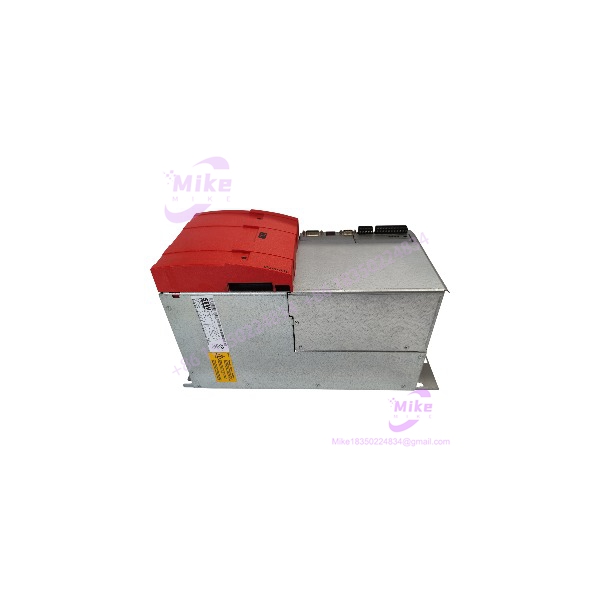
MXA81A-100-503-00
Key Technical Specifications
- DC Link Input Voltage: 560 VDC (480 VDC to 680 VDC nominal operating range)
- Nominal Output Current (I_N): 100 A RMS
- Maximum Peak Current (I_{max}): 250 A RMS (up to 250% rated load)
- Output Voltage Range: 0 V to V_{in} AC 3-phase
- Output Frequency Range: 0 Hz to 599 Hz
- Nominal Motor Power Rating: ~56 kW (75 HP)
- Internal 24V Electronics Supply: 24 VDC (\pm 15\%) via system backplane jumper bar
- System Cooling Method: Internal forced-air cooling fan assembly
- Enclosure Protection Rating: IP10 / NEMA 1
- Weight: 21.0 kg (46.3 lbs)
- Module Dimensions (W x H x D): 150 mm x 465 mm x 255 mm
- Software Environment: MOVITOOLS® MotionStudio
Global Sourcing & Live-Test SOP (Transparency Core)
Procuring surplus or secondary market stock for a high-power servo drive like the SEW Eurodrive MXA81A-100-503-00 requires strict verification steps to ensure you do not receive damaged or stressed IGBT blocks.
- Inbound Inspection & Paperwork: We check the aluminum chassis and internal heatsink for thermal discoloration or mechanical stress. Drive serials and hardware matrix codes are cross-referenced against SEW production batch databases to ensure authenticity.
- DC Bus Isolation & Diode Testing: Before applying voltage, technicians use high-precision multimeters to measure resistance across the DC link terminals (+R, -R, +UG, -UG) and output phase terminals (U, V, W). This step catches shorted IGBT freewheeling diodes or gate driver failures early.
- Live Test Bench Simulation: The unit mounts into a dynamic MOVIAXIS® multi-axis test rig powered by an MXM master supply module. The MXA81A-100-503-00 is linked to an SEW CMP/DS series servomotor equipped with an absolute resolver/encoder.
- Full-Load Diagnostic Run: Using MOVITOOLS® MotionStudio, we upload standard motor parameter sets and perform a 24-hour cyclic thermal burn-in under a continuous 100A current load. Gate firing symmetry, brake chopper output switching, and encoder feedback handshakes are continuously logged.
- ESD Safe Sealing: Diagnostics data and parameter dumps are saved. The drive is cleared of transient faults, reset to factory shipping parameters, and sealed in static-shielding material with desiccant.
The Field Engineer’s Pitfall Guide
- ❗ Swapping DC link copper busbars out of sequence will arc and destroy terminals: When installing or replacing an MXA81A-100-503-00 on a live backplane array, the DC link jumper rails (+UG/-UG) and 24V electronics supply bars must be seated and torqued cleanly. Loose busbar screws create micro-arcing under 100A operating loads, which quickly degrades the terminal block and causes overvoltage trips across adjacent drives.
- ❗ Forgetting to transfer the encoder option card causes immediate axis faulting: The MXA81A-100-503-00 relies on internal option slots (such as HIPERFACE®, resolver, or SSI encoder interface cards). Replacements shipped as bare power units lack these cards. I’ve seen plant technicians waste half a shift troubleshooting an “Axis 3 – Encoder Communication Timeout” error simply because they forgot to swap the option card from the dead unit into the replacement chassis before mounting it.
- ❗ Mismatching 24V supply wiring across master and axis modules trips internal fuses: SEW updated the 24V electronics and brake supply port (X5a/X5b) wiring guidelines for MOVIAXIS® arrays. Connecting 24V logic power without following the updated separate-wire protocol between the MXM master module and the MXA81A-100-503-00 can overload the 24V bus trace, blowing internal logic power fuses during heavy motor brake actuation.
Intent-Driven FAQ
Can I replace an MXA81A-100-503-00 with a lower current module like the MXA81A-064-503-00?
Only if your peak and continuous current demands fall safely below 64 A. Downsizing the drive module without recalculating motor acceleration torque curves risks immediate overcurrent trips (F01) during rapid speed ramps.
Do I need to reconfigure the drive parameters after swapping the unit?
Yes. The MXA81A-100-503-00 stores parameters internally, but you can transfer the settings effortlessly. If your system uses an standard MOVIAXIS® controller card or fieldbus gateway, you can push the saved parameter file directly to the replacement unit using MOVITOOLS® MotionStudio over Ethernet or System Bus.
What is the primary difference between MXA80A and MXA81A variants?
The key difference lies in hardware revisions and integrated safety option card support. The MXA81A series offers updated internal bus topologies and enhanced functional safety integration (such as Safe Torque Off / STO relays) compared to older MXA80A builds.
Is it safe to hot-swap this module while the shared DC bus is energized?
Never. You must disconnect the main AC supply to the power supply module, wait at least 10 minutes for the internal DC bus capacitors to discharge below 50 VDC, and verify with a meter before unbolting the MXA81A-100-503-00.
Does this drive support standard asynchronous AC induction motors or only servomotors?
The supports both. It is designed to control permanent magnet synchronous servomotors (like the SEW CMP/DS series) as well as standard asynchronous induction motors operating in V/f, VFC, or vector control modes.





