


Description
EtherWAN EMC1600 | 16-Bay Media Converter Chassis Spec
Product Introduction
When a central communications room runs out of rack space and media converters turn into a tangled bird’s nest of loose power adapters, network reliability drops fast. The EMC1600 is not a flimsy desktop hub; it is a heavy-duty, 16-bay industrial chassis built to clean up control room cabling while maintaining absolute uptime for mission-critical Ethernet links.
Engineering teams drop this 2U enclosure directly into standard 19-inch racks to aggregate disparate fiber and copper media extensions. Operating without centralized power redundancy means a single wall-wart failure can take down multiple plant segments—a vulnerability eliminated the moment you centralize distribution through the EMC1600 power architecture.
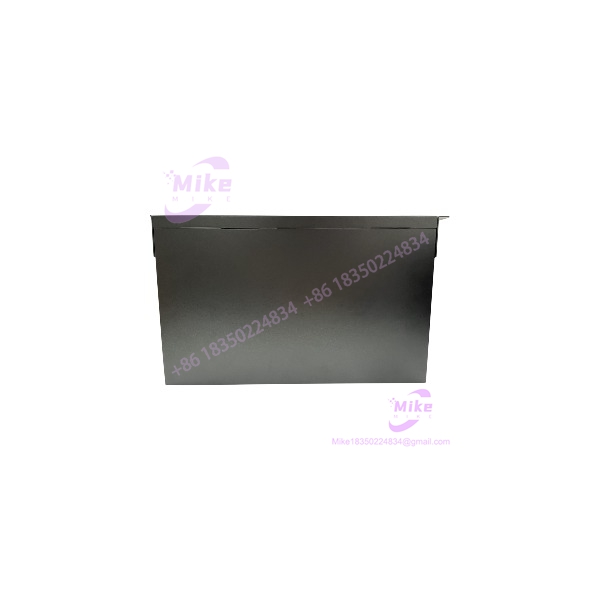
EMC1600
Key Technical Specifications
- Chassis Capacity: Up to 16 individual slots for hot-swappable media converters and Ethernet extenders.
- Enclosure Dimensions: Standard 19-inch rack-mount size, two-unit height (440 x 276 x 90 mm).
- Chassis Weight: Approximately 6.8 kilograms fully loaded without optional power modules.
- Power Input Options: Universal 100-240 VAC internal power supply or dedicated DC options depending on configuration.
- Over-Current Protection: Each individual bay features dedicated fused isolation to prevent a single card failure from taking down the entire backplane bus.
- Operating Temperature Range: 0 degrees Celsius to 45 degrees Celsius ambient environment tolerance.
- Cooling Mechanism: Natural convection chassis design backed by internal thermal zoning.
- Status Signaling: Front-panel LED indicators tracking individual power rail status and system health.
Application Scenarios & Pain Points
- Control Room Cable Consolidation: Maintenance techs often waste hours tracking down individual desktop power bricks behind crowded panels; housing everything inside the EMC1600 reduces troubleshooting time to seconds.
- Wastewater Treatment Facility Upgrade: A municipal water plant kept experiencing lightning-induced power surges on remote fiber loops until they centralized protection through the isolated bays of the EMC1600.
- High-Density Fiber Distribution: Managing thirty distinct fiber links across a manufacturing floor requires robust density control that standard desktop enclosures simply cannot handle without overheating.
QA & Live Testing SOP (Trust Signal)
We inspect every incoming chassis on a dedicated test bench, verifying backplane continuity and power rail stability under full load. First, we examine the physical enclosure for structural alignment and ensure all internal slot guides are unbent. Next, we install test load modules into every single bay of the EMC1600 to verify that the redundant power supply units share the electrical load correctly without voltage sag. Finally, we pack the chassis using heavy-duty anti-static wrapping and custom-molded foam to ensure zero shipping damage.
Field Engineer’s Pitfall Guide
- ❗ Power Redundancy Mismatch: Never mix mismatched AC and DC power supply modules in the dual bays simultaneously unless the backplane distribution board has been explicitly jumpered for mixed-source inputs.
- ❗ Slot Over-Current Limits: Avoid forcing non-compatible legacy modules into specialized slots, as doing so can trip the internal slot fuses and require physical bench repairs.
- ❗ Rack Ventilation Clearance: Do not sandwich this high-density enclosure directly between high-heat amplifiers without leaving at least 1U of empty space above for thermal relief.
Intent-Driven FAQ
- Can I hot-swap individual media converter cards while the chassis is powered?
Yes, the is engineered with individual bay isolation, allowing you to swap out failed modules without dropping power to neighboring links.
- Are redundant power supplies included with the base unit?
Standard configurations include dual power supply slots, but check your specific order details to confirm whether single or redundant power modules are pre-installed.
- Is this chassis compatible with older third-party converter modules?
It is specifically designed to house and power selected EtherWAN media converters and Ethernet extenders matching the internal pinout standards.
- What maintenance is required for the internal cooling layout?
The chassis relies on passive convection cooling, meaning there are no internal fans to replace, though you should periodically check for dust accumulation around the side vents.
- How do I verify if a specific bay has tripped its over-current fuse?
Monitor the front-panel status indicators, which display real-time power rail health for each individual active slot.





