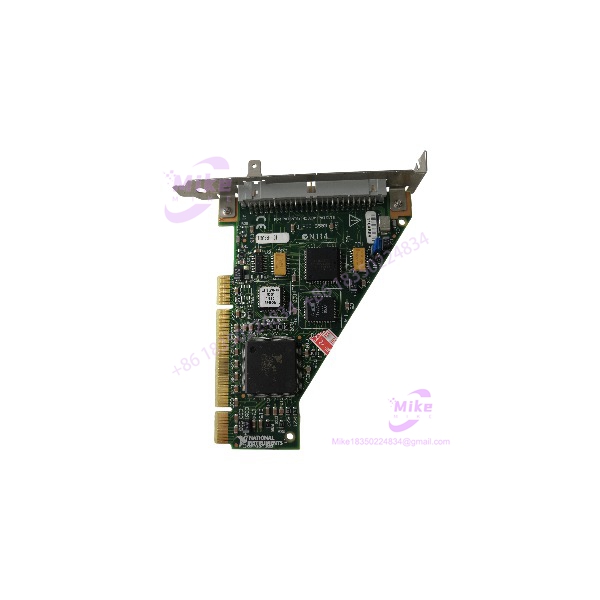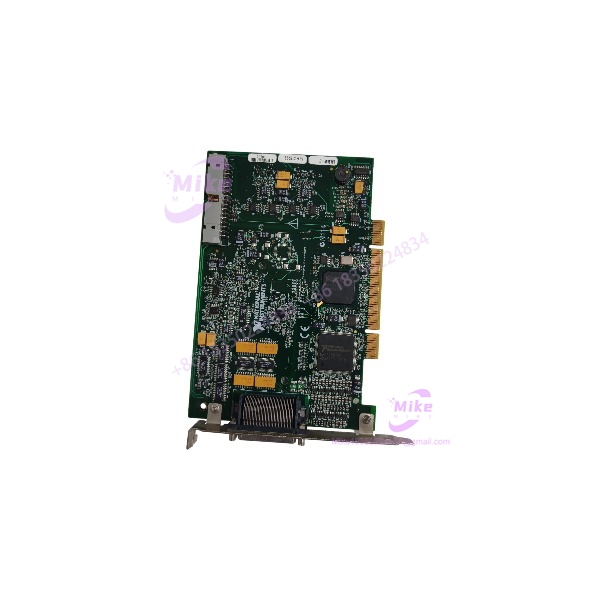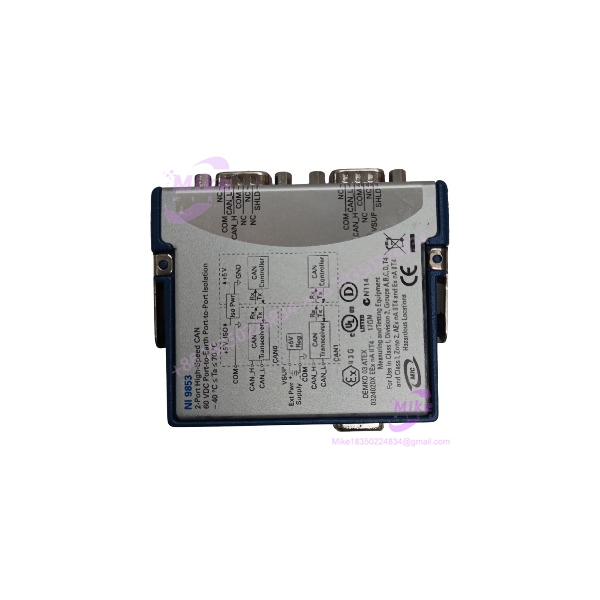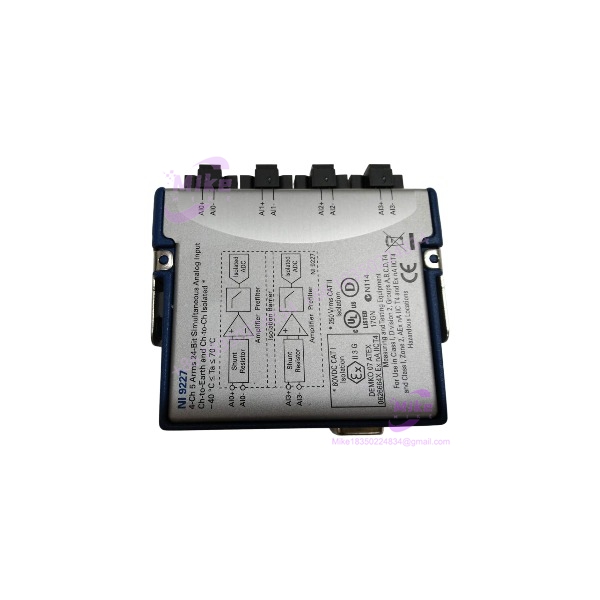

Description
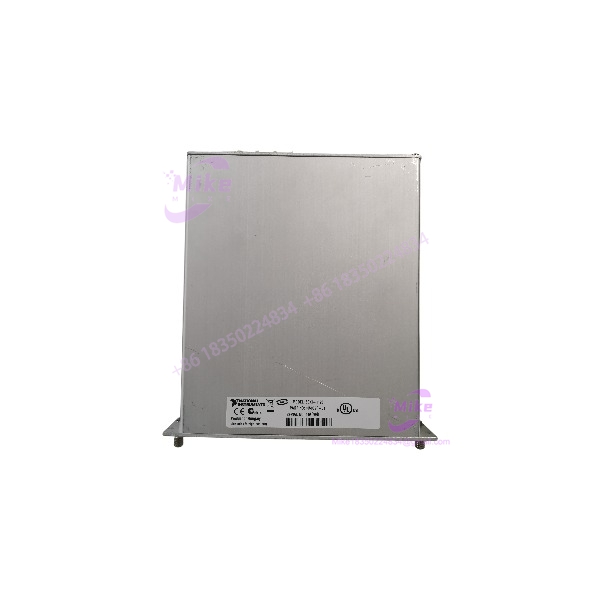
National Instruments SCXI-1125 | 8-Channel Isolated Analog Input Module
Dynamic Product Introduction
Finding legacy signal conditioning modules that maintain tight noise margins in dirty electrical environments is a constant headache for test cell engineers. When ground loops and high common-mode voltages start corrupting microvolt-level transducer readings, swapping unisolated hardware for the SCXI-1125 provides an instant hardware-level defense. The SCXI-1125 acts as an analog front-end shield, blocking up to 300 Vrms of continuous common-mode voltage across each of its eight differential channels before high-frequency noise ever touches your data acquisition card.
By moving gain stage amplification and filtering right to the sensor interface, the SCXI-1125 drastically improves system signal-to-noise ratios compared to direct-to-card wiring. Each channel features individually configurable hardware filters and programmable gain amplifiers, allowing a single board to process microvolt strain signals alongside 300 V power rail monitor lines simultaneously. Rather than overhauling an entire legacy SCXI chassis setup when individual channels fail or drift, sourcing a drop-in SCXI-1125 module keeps established DAQ racks running without requiring software architectural re-engineering.
SCXI-1125
Key Technical Specifications
- Number of Input Channels: 8 differential, individually isolated channels
- Input Voltage Range: Configurable from ±2.5 mV to ±300 V full-scale
- Maximum Working Isolation: 300 Vrms channel-to-channel and channel-to-ground (CAT II)
- Filter Cutoff Frequencies: Dual jumper/software programmable low-pass filter settings at 4 Hz and 10 kHz
- Gain Range Options: Programmable software gains from 1 to 2000
- Output Voltage Range: ±5.0 V multiplexed output sent to the main DAQ card backplane
- Calibration Support: Onboard EEPROM for self-calibration constants and offset corrections
- Multiplexing Architecture: Multiplexes 8 isolated inputs into 1 analog DAQ channel
- Operating Temperature Range: 0 °C to 50 °C ambient
- System Compatibility: Fits standard SCXI chassis (such as SCXI-1000, SCXI-1001, and PXI-1050)
Global Sourcing & Live-Test SOP (Transparency Core)
To guarantee that surplus or replacement SCXI-1125 modules perform to factory tolerances in high-stress test environments, every unit undergoes an extensive multi-step bench validation routine before deployment.
Inbound Verification
Upon intake, technicians log serial numbers and cross-reference PCB revisions against OEM hardware volatility records. The board undergoes a high-magnification optical inspection to verify trace integrity, checking specifically for cracked solder joints around high-voltage isolation transformers, swollen decoupling capacitors, or heat stress around the signal routing relays.
Live Simulation
The module is installed into an authentic SCXI chassis powered by a stabilized linear power supply. The SCXI-1125 backplane bus connector is engaged to verify chassis address decoding and control signal line handshakes across the backplane.
Diagnostics & Burn-In
- I/O Full-Scale Simulation: A precision voltage calibrator injects step voltages across all eight channels—ranging from 10 mV micro-signals up to 250 V high-pot tests.
- Bandwidth & Filter Check: Signal generators feed sine waves through the module while monitoring response cutoffs at both 4 Hz and 10 kHz filter modes to verify corner-frequency roll-offs.
- Common-Mode Rejection Test: A 300 Vrms common-mode offset is applied between isolated channels to verify zero signal bleeding or ground-loop leakage.
- 24-Hour Thermal Run: The assembly operates under full electrical load inside a thermal chamber at 45 °C for 24 hours to trigger latent component thermal failures.
Final Prep
The unit undergoes a self-calibration routine via NI-DAQmx or traditional SCXI calibration VIs. Calibration constants are saved directly into the onboard EEPROM, after which the board is vacuum-sealed in static-shielding ESD packaging with fresh desiccant.
The Field Engineer’s Pitfall Guide
❗ Firmware Driver Mismatches & DAQmx Legacy Shifts: Upgrading your host PC from legacy NI-DAQ (Classic) to modern NI-DAQmx can render your chassis mapping invisible if the device routing isn’t configured manually. —In field deployments, technicians often assume a dead SCXI-1125 when the driver simply fails to auto-detect legacy SCXI chassis addresses over older PCI or PXI control modules. Always verify that your chassis ID DIP switches on the backplane match the logical chassis numbers configured in Measurement & Automation Explorer (MAX).
❗ Incorrect Terminal Block Compatibility & Attenuation: Wire routing mistakes frequently happen when attaching terminal blocks like the SCXI-1320 or SCXI-1327. Mixing up attenuating vs. non-attenuating terminal blocks changes the voltage divider math before signal enters the SCXI-1125 module. I’ve seen plants waste days troubleshooting saturated data channels simply because someone wired a high-voltage line into a non-attenuated terminal block, overdriving the input amplifier stage.
❗ Jumper-Selectable Filter Mismatches: While gains can be set programmatically, certain physical revisions of the SCXI-1125 require hardware jumper repositioning on the PCB to switch between the 4 Hz and 10 kHz hardware filter modes. If your application expects a fast dynamic response (like transient pressure spikes) but the board jumpers are physically locked into 4 Hz mode, your readings will look artificially smooth, completely masking high-frequency signal events.
Intent-Driven FAQ
Q: Can I hot-swap the SCXI-1125 module while the SCXI chassis is powered on?
A: No. SCXI chassis backplanes do not support hot-swapping signal conditioning modules. You must shut down power to the chassis before inserting or removing the SCXI-1125. Removing the board while live can cause backplane voltage transients, potentially damaging both the module bus drivers and adjacent modules.
Q: Will I lose my channel configuration or gain settings if the power drops?
A: No. Software configures the SCXI-1125 through the NI-DAQmx driver stack during task initialization. While the hardware gain and filter settings return to default states when powered down, your host program reinstructs the SCXI-1125 amplifiers automatically as soon as the DAQ task starts executing.
Q: How does the SCXI-1125 handle 300 V isolation if my DAQ card is only rated for 10 V?
A: The SCXI-1125 provides channel-to-channel and channel-to-ground isolation directly on the module. The high input voltages are attenuated, isolated, and amplified before being multiplexed into a buffered ±5 V output range suitable for standard analog DAQ input cards.
Q: Since National Instruments has marked the SCXI line as legacy/obsolete, how can I secure long-term replacements?
A: While NI no longer manufactures new SCXI chassis hardware, fully tested, refurbished, and calibrated SCXI-1125 modules remain widely available through industrial automation surplus suppliers. Working with specialized stocking vendors provides access to functional replacements with full testing documentation and extended warranties.
Q: What terminal blocks are recommended for high-voltage measurements on the SCXI-1125?
A: For high-voltage differential signals up to the full 300 Vrms rating, use screw-terminal blocks designed for isolation, such as the SCXI-1320 or SCXI-1327. Always verify that the insulation rating of your field wiring matches or exceeds the highest potential voltage present in your test harness.