

Description
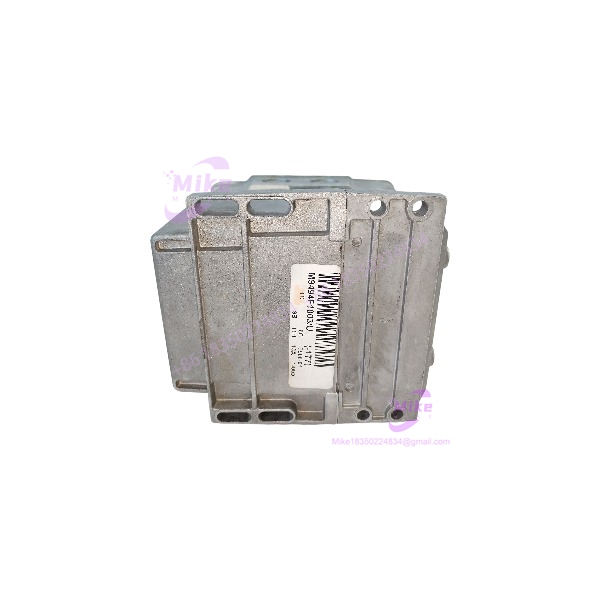
Honeywell M9494F1003 | 24V 300 lb-in Actuator
Dynamic Product Introduction
In a burner control system, an actuator that moves in the wrong direction, stalls under load, or fails to track its control signal can disrupt the entire firing-rate sequence. The Honeywell M9494F1003 addresses this application with a proportional rotary motor designed to position combustion-related valves and dampers.
Part of the Modutrol IV family, the M9494F1003 uses a 135-ohm proportional input and delivers up to 300 lb-in. of rated torque. Its adjustable 90° or 160° stroke allows it to accommodate different mechanical travel requirements (provided the connected linkage and driven equipment are compatible). Two internal auxiliary switches support control or indication functions within the application.
For legacy boiler rooms and industrial burner systems, the value is straightforward: retaining a compatible actuator can avoid unnecessary mechanical redesign. However, this is not a universal 0–10 VDC or 4–20 mA actuator. The M9494F1003’s input method, supply voltage, travel, and non-spring-return behavior must match the existing control scheme.
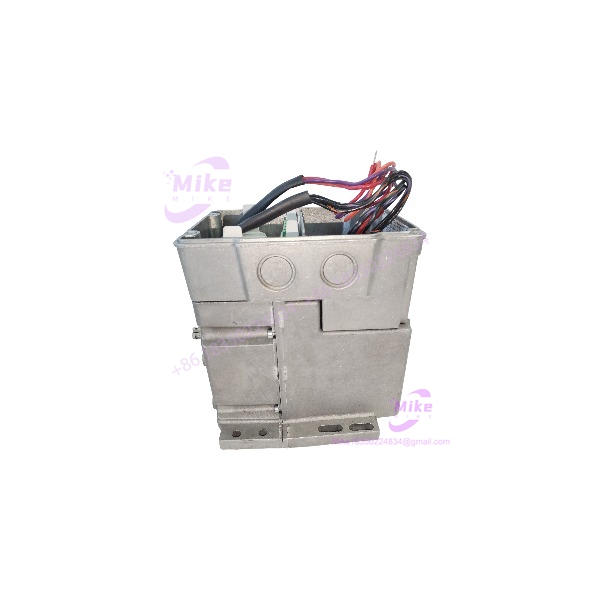
M9494F1003
Key Technical Specifications
- Manufacturer: Honeywell
- Model: M9494F1003
- Product family: Modutrol IV
- Application: Flame Safeguard proportional firing-rate control
- Supply voltage: 24 VAC
- Input signal: 135 ohms
- Rated torque: 300 lb-in. (34 Nm)
- Breakaway torque: 600 lb-in. (68 Nm)
- Return type: Non-spring return (NSR)
- Adjustable stroke: 90° or 160°
- Operating time: 60 seconds for 90°; 107 seconds for 160°
- Auxiliary switches: 2 internal switches
- Switch rating: At 120 VAC, 7.2 A full-load and 43.2 A locked-rotor; at 240 VAC, 3.6 A full-load and 21.6 A locked-rotor, with 40 VA pilot-duty rating
- Ambient temperature: -40°F to +150°F (-40°C to +66°C)
- Shaft: Double-ended, 3/8-inch square
Specifications are drawn from Honeywell combustion catalog data and published product information. Confirm the exact nameplate and applicable documentation before installation.
Global Sourcing & Live-Test SOP (Transparency Core)
The M9494F1003 is a combustion-control actuator, not a general-purpose positioning motor. A meaningful acceptance test must establish both electrical operation and mechanical response.
The following is a recommended procurement and inspection SOP. It is not a claim that the specific eBay-listed unit has been tested or authenticated.
Inbound Verification
For each incoming Honeywell :
- Photograph the nameplate, model number, serial number, and manufacturer markings.
- Record the seller’s condition declaration: new, unused, surplus, or refurbished.
- Review available OEM purchase records and traceability documents.
- Inspect the housing, shaft, terminal compartment, connectors, and mounting points.
- Check for corrosion, evidence of overheating, damaged seals, or unauthorized repair.
- Confirm that the unit is the 24 VAC —not a visually similar Modutrol IV variant.
Factory-sealed status should be accepted only when the packaging and traceability support that claim. A seller’s “new surplus” designation does not establish operational condition.
Live Simulation and Functional Testing
A suitable bench setup should include an isolated 24 VAC supply, a compatible 135-ohm proportional control source, appropriate test instrumentation, and a safe mechanical test fixture.
A qualified technician should:
- Verify the nameplate voltage before energizing the motor.
- Inspect the shaft and mechanical travel for binding.
- Apply the specified control input using the appropriate test method.
- Confirm motor response and direction of travel.
- Check movement through the configured stroke.
- Verify the two auxiliary switches against their documented operating positions.
- Record any abnormal noise, hesitation, excessive backlash, or inconsistent positioning.
A Fluke multimeter can help verify supply voltage and electrical continuity, but it cannot independently establish rated torque or positioning accuracy.
Diagnostics and Extended Run
For a surplus intended for industrial combustion duty, the acceptance record should distinguish basic movement testing from a full mechanical performance test.
Where appropriate, document:
- Supply voltage under operation.
- Input-to-position response.
- 90° or 160° stroke configuration.
- Travel time.
- Auxiliary-switch operation.
- Repeatability across multiple operating cycles.
- Abnormal heating, noise, or mechanical resistance.
A 24-hour heat run may be included in a buyer-specific acceptance plan, but it should not be represented as a Honeywell-mandated test unless the applicable OEM documentation requires it.
Important: Bench testing an actuator does not establish that the complete burner management system is safe to operate. Combustion-system commissioning and safety interlock verification must be performed separately by qualified personnel.
Final Preparation
Before shipment, the supplier should provide:
- Photographs of the actual unit.
- Confirmed model and serial number.
- Documented condition and test results.
- Details of any missing accessories.
- Written warranty and return terms.
Protect the actuator against impact, moisture, and contamination during shipping. Secure the shaft and mechanical components against damage, and maintain unit-level traceability between inspection and dispatch.
The Field Engineer’s Pitfall Guide
❗ Warning 1: Do Not Confuse 135-Ohm Control With a Voltage Input
The uses a 135-ohm proportional control input. It is not a direct substitute for a 0–10 VDC or 4–20 mA actuator without a properly engineered interface.
I’ve seen actuator replacements stall at commissioning because the replacement was selected by torque and mounting dimensions alone. Verify the controller’s output type and wiring before connecting the motor.
❗ Warning 2: Non-Spring Return Means No Automatic Spring-Driven Return
The is a non-spring-return actuator. Do not assume it will automatically drive the connected valve or damper to a safe position when power is lost.
For combustion applications, verify the required failure position and the complete burner safety sequence. If the original motor was spring-return, substituting an NSR model without engineering review can fundamentally change the system’s behavior.
❗ Warning 3: Verify Stroke, Linkage, and Auxiliary-Switch Operation
The supports 90° and 160° travel configurations. A replacement with the wrong stroke setting or incompatible linkage can prevent a valve or damper from reaching its required position.
Check mechanical travel, shaft engagement, switch settings, and the driven equipment’s limits before commissioning. Do not assume that similar Modutrol IV housings guarantee identical field performance.
Intent-Driven FAQ
Q1: Is the Honeywell discontinued?
A major HVAC parts distributor lists the as discontinued, with a discontinuation date of December 25, 2023. Remaining stock may still be available through surplus and aftermarket channels, but confirm current OEM support and regional availability before planning a long-term maintenance strategy.
Q2: Can I replace my existing with another Modutrol IV motor?
Not automatically. The replacement must match the required supply voltage, control input, torque, travel, return behavior, and auxiliary-switch requirements. The Modutrol IV family includes variants with different electrical and mechanical characteristics. Confirm the complete model suffix before ordering.
Q3: Does the operate on 120 VAC?
No. The is specified as a 24 VAC motor. Do not apply 120 VAC directly to it. Verify the nameplate and wiring documentation before energizing any surplus unit.
Q4: Can I use the with a 4–20 mA controller?
Not as a direct connection. The is designed for a 135-ohm proportional control input. A signal-conversion interface may be possible, but it requires engineering verification of the control characteristics, travel behavior, and fail-state requirements.
Q5: Does the return to its starting position when power is lost?
No spring-driven return is provided. The is a non-spring-return model. The final position after power loss depends on the actuator’s mechanical design and operating conditions; do not treat it as a fail-safe spring-return device.
Q6: What warranty applies to a surplus ?
Warranty coverage depends on the seller and the specific sale terms. A surplus actuator should not automatically be assumed to carry a Honeywell factory warranty. Obtain written confirmation of the warranty period, DOA coverage, return window, and exclusions before placing the order.
Q7: What should I request before buying a used ?
Request a clear nameplate photograph, confirmation of the 24 VAC configuration, the seller’s condition declaration, and a functional test report showing actual motor movement and auxiliary-switch checks. For critical burner applications, also request return terms and confirm that the actuator’s control input, stroke, and failure behavior match the installed equipment.
Procurement Conclusion
The Honeywell is a 24 VAC, 300 lb-in. Modutrol IV proportional firing-rate motor with a 135-ohm input, two auxiliary switches, and non-spring-return operation.
Its discontinued status makes traceability, condition verification, and warranty clarity particularly relevant to surplus procurement.
Before purchasing, confirm the exact model, input method, mechanical travel, and failure behavior against the existing installation. A successful bench movement test is useful—but it is not a substitute for verifying the complete combustion-control application.





