

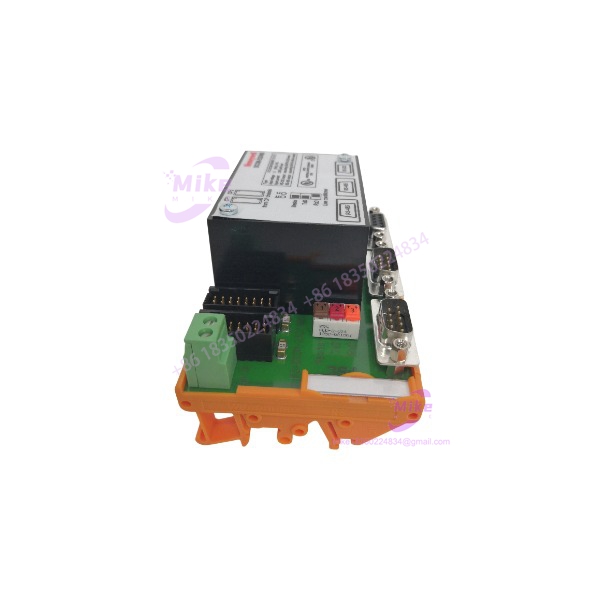
Description
Honeywell FC-DCOM-232/485 | Safety Manager Interface
Dynamic Product Introduction
A serial communication fault in a Safety Manager installation can be deceptively difficult to isolate. The PLC or safety controller may be healthy, the field device may be healthy, and yet the link remains dead because the communication FTA, wiring polarity, termination, or protocol mode does not match the original installation.
The Honeywell FC-DCOM-232/485 is the Safety Manager communication interface designed for this job. Honeywell documents the FC-DCOM-232/485 and FS-DCOM-232/485 as the same DCOM communication FTA type family, supporting both EIA/TIA-232 and EIA/TIA-485-A electrical interfaces. RS-232 communication is specified through 250 kBaud, while the RS-422/485 interface reaches 2 MBaud and supports transparent, FM0, FM1, or Manchester-coded operation.
That 2 MBaud ceiling is not a generic “serial port” specification. The communication path is part of the Safety Manager architecture and may be driven by one or a redundant pair of Universal Communication Units. Honeywell specifically documents the DCOM interface for RS-422/485 connections and Safety Manager communication applications.
The physical hardware is compact—approximately 110 × 70 × 61 mm—and mounts on TS32 or TS35 × 7.5 DIN rail, using approximately 117 mm of rail length.
For an existing installation, the FC-DCOM-232/485 is therefore a replacement-oriented component rather than something to substitute casually with a generic RS-485 converter.
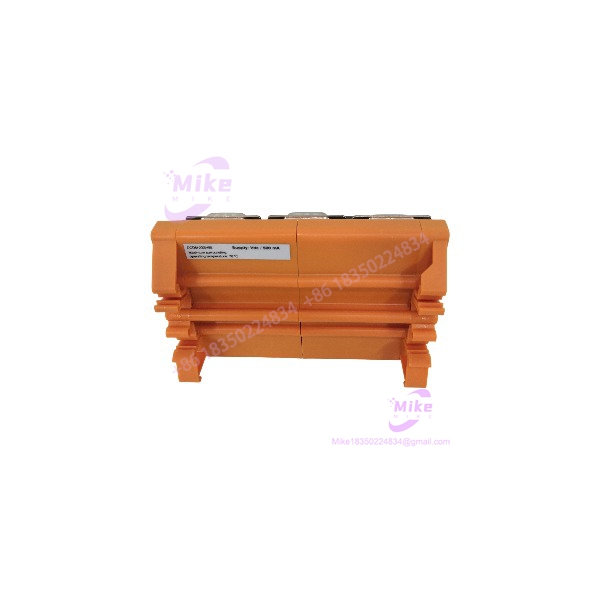
FC-DCOM-232/485
Key Technical Specifications
- Manufacturer: Honeywell
- Model: FC-DCOM-232/485
- System: Honeywell Safety Manager
- Functional type: DCOM Communication FTA
- Related type number:
- Input voltage: 5 VDC ±5%
- Maximum input current: 500 mA
- Power source: Supplied by Safety Manager Control Processor(s)
- RS-232 electrical standard: EIA/TIA-232
- RS-232 baud rate: 0–250 kBaud
- RS-422/485 electrical standard: EIA/TIA-485-A
- RS-422/485 baud rate: 0–2 MBaud
- RS-422/485 modes: Transparent, FM0, FM1, or Manchester coded
- Module dimensions: 110 × 70 × 61 mm
- Terminal dimensions: 6 × 57 × 47 mm
- DIN rail: TS32 / TS35 × 7.5
- Rail length required: 117 mm
- Documented approvals: CE, TUV, UL, FM
The distinction between and FC-DCOM-485 is important. The former provides both RS-232 and RS-422/485 functionality; the latter is a different configuration intended for RS-422/485 communication. Do not order by the general term “DCOM” alone.
Global Sourcing & Live-Test SOP
For a used , I would not accept a simple continuity test as evidence of functionality. This is an active communication interface, and the meaningful test is a communication test under the correct Safety Manager environment.
Inbound Verification
Record the following immediately:
- FC-/485 identification
- Type/version markings
- Serial number
- Terminal assembly condition
- PCB condition
- Connector condition
- DIN-rail mounting hardware
- Signs of corrosion or contamination
- Evidence of previous repair
Honeywell’s documentation identifies and as type numbers for this communication FTA. Both identifiers should be reconciled against the physical unit and procurement record before installation.
Live Simulation
The preferred acceptance test uses an authentic Safety Manager test environment.
Verify:
- 5 VDC supply stability
- Module recognition
- RS-232 transmit/receive operation
- RS-422/485 transmit/receive operation
- Differential polarity
- Communication mode
- Baud-rate configuration
- Error-free data transfer
- Extended communication stability
A loopback test alone is insufficient. The interface should be tested against the type of communication equipment used by the customer’s actual installation.
Diagnostics
Use a calibrated multimeter to verify the regulated 5 VDC ±5% supply before stressing the communication interface. Honeywell specifies a maximum input current of 500 mA, supplied by the Control Processor(s).
For RS-422/485 testing, verify differential A/B or equivalent signal assignment according to the actual installation documentation. Check cable shielding, termination, grounding, and polarity.
If the application uses Manchester, FM0, or FM1 coding, validate the appropriate mode rather than treating the module as a conventional transparent RS-485 converter.
Final Prep
Record:
- Module identification
- Version/revision
- Supply-voltage measurement
- RS-232 test result
- RS-422/485 test result
- Baud-rate range tested
- Communication mode tested
- Physical condition
- Any observed limitations
Package the module in ESD-safe material and protect the terminal assembly from impact.
For this specific used listing, the seller currently describes the unit as fully operational and lists 5 VDC ±5% / 500 mA maximum input specifications. The listing also shows a 30-day return period.
The Field Engineer’s Pitfall Guide
❗ Do Not Treat RS-232 and RS-485 as Interchangeable
The contains different physical communication interfaces. RS-232 is intended for a fundamentally different electrical topology than differential RS-422/485.
I’ve seen troubleshooting teams replace a failed RS-485 path with a cheap RS-232 converter because both were described as “serial.” The software configuration looked correct; the electrical layer was completely wrong.
❗ Verify the Communication Mode Before Blaming the Cable
The FC-/485 supports RS-422/485 operation up to 2 MBaud, including transparent, FM0, FM1, and Manchester-coded modes.
If the original application uses one of the coded modes, a basic RS-485 analyzer may show activity without producing useful application-level communication. Capture the original configuration before swapping hardware.
❗ Check Differential Polarity and Termination
A replacement module can be electrically healthy and still produce zero useful communication if the field wiring has reversed differential conductors or incorrect termination.
In field deployments, I verify the actual terminal assignment against the wiring drawing before changing software parameters. Do not start changing baud rate, parity, or protocol settings until the physical layer has been proven.
Intent-Driven FAQ
What exactly is the Honeywell FC-/485?
The is a Safety Manager communication Field Termination Assembly. It provides both RS-232 and RS-422/485 communication interfaces for the Honeywell Safety Manager architecture.
What is the maximum baud rate of FC-/485?
The documented maximum is 250 kBaud for RS-232 and 2 MBaud for RS-422/485. The RS-422/485 interface also supports transparent, FM0, FM1, and Manchester-coded operation.
Can I replace FC-/485 with FC-DCOM-485?
Do not assume so.
provides both RS-232 and RS-422/485 functionality, while FC-DCOM-485 is an RS-422/485-oriented configuration. The correct replacement depends on the interface actually used by the Safety Manager installation.





