


Description
Honeywell CC-TAIX01 | 16-Channel Precision Analog Input IOTA Specs
Dynamic Product Introduction
Auditing an overcrowded marshalling cabinet while chasing intermittent signal drift can exhaust even the most seasoned instrumentation tech. When legacy input bases experience component aging, the resulting measurement errors ripple straight through to the control displays.
Enter the Honeywell CC-TAIX01, a robust Input/Output Termination Assembly engineered to anchor high-integrity analog data acquisition within Series C frameworks. By providing a structured physical interface for 16 separate loops, this CC-TAIX01 hardware base eliminates messy point-to-point wiring hazards. Facilities upgrading to this termination architecture experience cleaner loop isolation and faster hardware swaps—though this strictly depends on precise backplane keying.
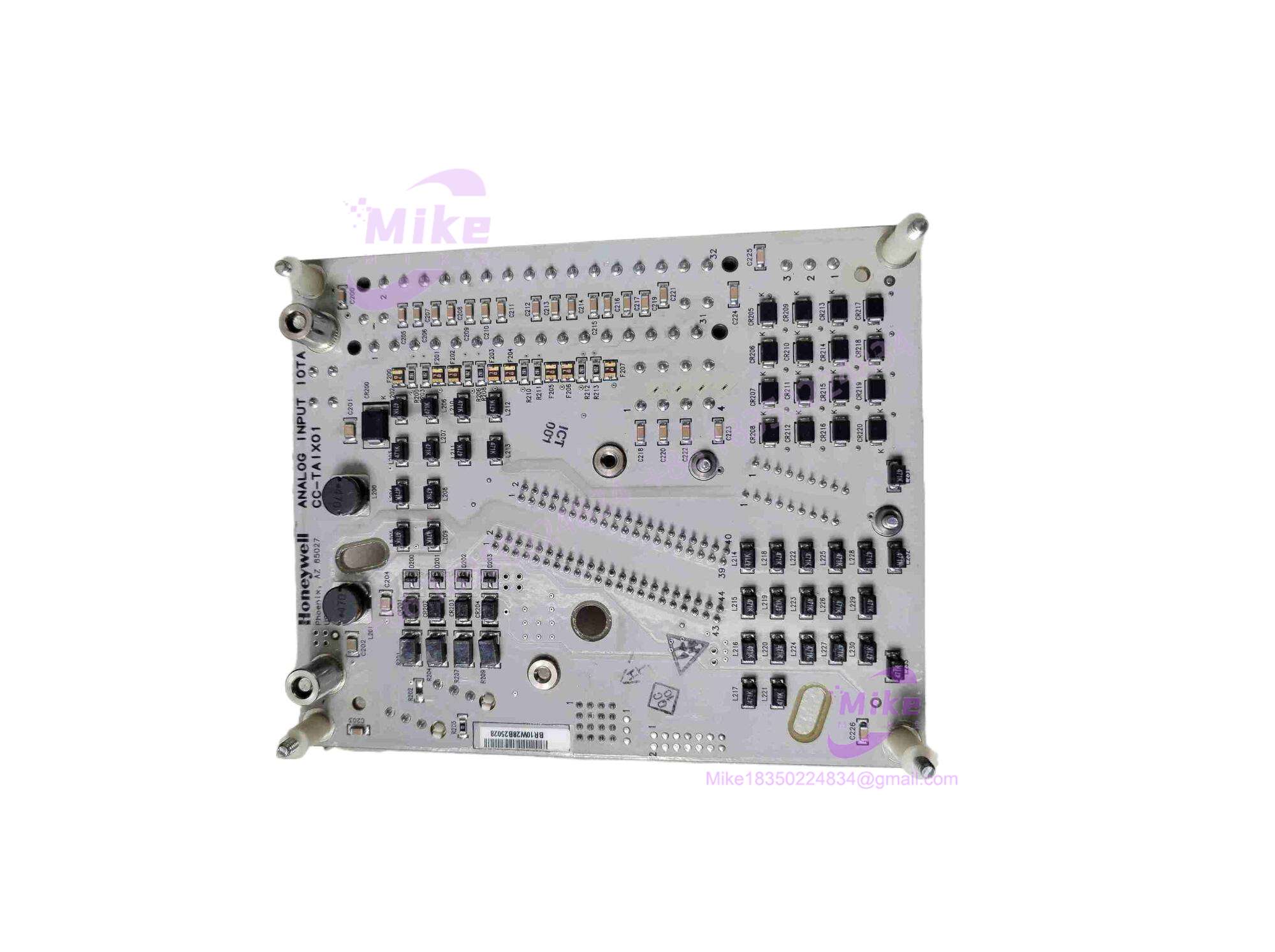
CC-TAIX01
Key Technical Specifications
| Core Parameter | Technical Specification |
| Module Series | Series C |
| Product Type | Analog Input IOTA Base |
| Channel Capacity | 16 Analog Input Channels |
| Operating Voltage | 24 VDC |
| Current Consumption | 0.320 A @ 24 VDC |
| Heat Dissipation | 2.464 Watts |
| Input Signal Compatibility | Standard Analog Transmitters / Sensors |
| Operating Temperature | -40°C to +70°C |
| Mounting Architecture | Series C Chassis / DIN Rail Backplane |
| Shipping Weight | ~2.0 kg (Including Packaging) |
Global Sourcing & Live-Test SOP (Transparency Core)
Procuring surplus or replacement automation hardware demands an uncompromising quality control pipeline. In field deployments, dropping an untested board into a live rack can trigger catastrophic controller faults.
- Inbound Verification: Every incoming shipment of the CC-TAIX01 undergoes meticulous customs documentation review alongside high-magnification holographic serial number checks to block gray-market counterfeits.
- Live Simulation: Technicians mount the CC-TAIX01 hardware onto an authentic Series C test bench to verify backplane pin alignment and mechanical latching integrity.
- Diagnostics: Engineers execute full-scale loop resistance testing, check channel isolation using calibrated multimeters, and run a 24-hour thermal heat run to flush out infant mortality defects.
- Final Prep: Once cleared, the unit is logged by revision level, packed in anti-static shielding, and vacuum-sealed for storage.
The Field Engineer’s Pitfall Guide
❗ Terminal Fastener Torque Failures: Overtightening field wire clamp screws on the CC-TAIX01 during installation can crack the underlying terminal housing block. I’ve seen plants spend hours tracing intermittent open circuits because a technician stripped a connection terminal under excessive torque.
❗ Shield Grounding Omissions: Failing to properly tie incoming analog signal cable shields to the designated ground bar on the CC- chassis invites severe electromagnetic interference (EMI) into sensitive loops.
❗ Series C Latching Misalignment: Forcing the matching analog input module onto the CC- base without verifying proper keying pins can bend backplane pins, instantly compromising module communication.
Intent-Driven FAQ
- Will I lose my configuration logic if I swap out a faulty CC- assembly?
No. The termination assembly is a passive physical connection base; control logic and channel configurations reside in the system controller database.
- Does the CC- support loop power distribution for 2-wire transmitters?
Yes, the base supplies proper operating power routing to drive connected analog field transmitters safely.
- Can this IOTA support redundant module configurations?
This specific part number is designed for standard non-redundant architectures. Verify your system node redundancy requirements before installation.
- What maintenance tools are required to verify terminal integrity locally?
A calibrated digital multimeter is necessary for measuring loop voltage drops and verifying continuity across input channels.
- Are factory-sealed units supplied with updated hardware revisions?
Surprise inventory often ships with baseline factory hardware revisions. Always cross-check the CC- build level against your system engineering requirements before final commissioning.





