


Description
Honeywell 51301874-100 | LE Mux Board, New Surplus
Architect’s Product Breakdown
The Honeywell 51301874-100 (originating from the Measurex automation lineage) functions as a dedicated thermocouple multiplexer board designed to acquire precision temperature and low-level millivolt signals in harsh industrial processing environments. Its primary responsibility is filtering, switching, and conditioning analog inputs before passing them downstream to the central processing rack. Maintaining high common-mode rejection ratio and thermal stability is critical for preventing reading drift across continuous thermal processing applications.
Integrating or replacing this legacy card requires strict attention to cold-junction compensation and signal shielding. Instrument technicians must ensure that thermocouple extension wires are terminated precisely to the correct block channels to avoid measurement offsets. Because these boards handle sensitive analog inputs, any degradation in cabinet grounding or shielding integrity will immediately introduce electrical noise and erratic process variable fluctuations.
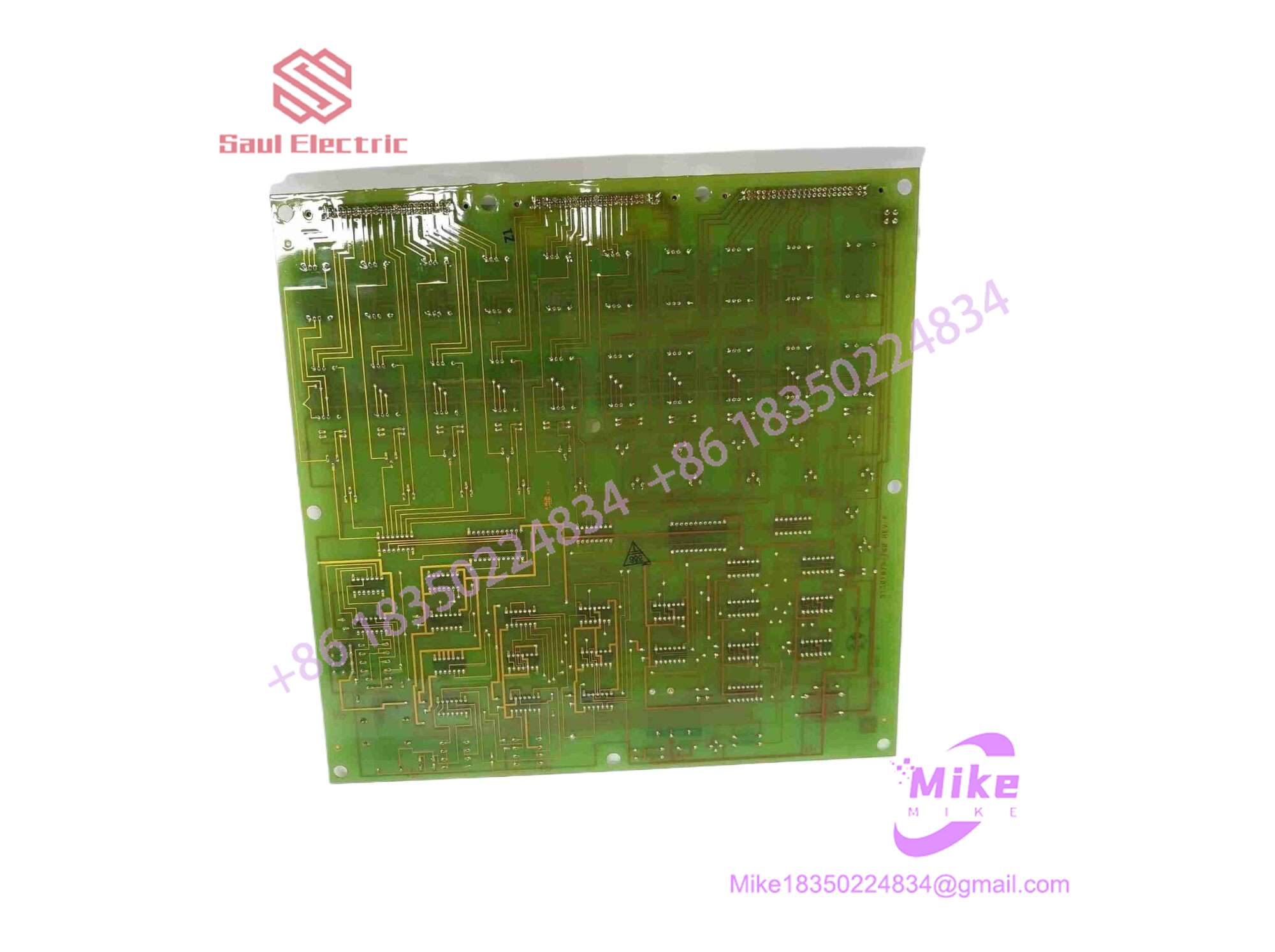
51301874-100
Key Technical Specifications
| Parameter | Specification |
| Manufacturer | Honeywell / Measurex |
| Part Number | 51301874-100 |
| Module Type | Thermocouple Multiplexer (Mux) Board |
| Compatible Architecture | LEPIU / Legacy Measurement Systems |
| Mounting Type | Internal Rack Slot / Chassis Mount |
| Input Types | Thermocouple / Low-level analog signals |
| Operating Temperature | 0°C to +60°C |
| Storage Temperature | -40°C to +85°C |
| Relative Humidity | 5% to 95% non-condensing |
| Weight | Approximately 0.70 kg |
Field Engineer’s Pitfall Guide (Unique Value)
- Cold-Junction Compensation Errors: Swapping terminal blocks or mixing up wiring harnesses between adjacent channels will ruin thermal calibration. Always verify physical channel mapping against loop diagrams before energizing.
- Shielding Breakdown: Leaving the analog drain wire ungrounded or tying it at both ends creates ground loops that inject high-frequency plant noise directly into the multiplexer front-end, throwing off critical temperature loops.
- Electrostatic Sensitivity: The delicate analog multiplexing switches on this board are exceptionally vulnerable to static discharge. I once watched an apprentice handle an unboxed replacement card during a dry plant outage, destroying the input channels instantly and forcing an emergency board re-swap.
QA & Testing SOP (Transparency)
- Visual & Origin Verification: Units are inspected under magnification for original OEM markings, trace integrity, and clean connector fingers.
- Test Bench Simulation: The board is inserted into a dedicated test chassis to verify stable power rail distribution and communication handshakes.
- Analog Signal Injection: Calibrated millivolt and thermocouple simulation sources are applied to every individual channel to check measurement linearity, zero drift, and multiplexing speed.
- Anti-Static Packaging: Post-testing, units are sealed inside moisture-barrier static-shielding bags with high-density cushioning to prevent transit impacts.
Technical FAQ
- Can I hot-swap this multiplexer card while the process is running? No. Always de-energize the rack before pulling or inserting this module to prevent voltage spikes and bus corruption.
- Does this card require local configuration jumpers? Depending on the exact hardware revision and system slot configuration, verify address or channel jumpers against historical documentation prior to installation.
- What causes sudden temperature channel spiking after installation? This is almost always caused by an open thermocouple wire, a loose terminal screw, or an uncompensated cold-junction connection on the input strip.
- What warranty is provided with a surplus unit? Units carry a standard 12-month replacement warranty backed by comprehensive bench calibration testing.





