


Description
HIMA F6706 | HIQuad Safety Communication Module
Dynamic Product Introduction
A safety controller can execute logic perfectly and still fail operationally if communication between system components is unstable.
The HIMA F6706 is a communication interface module used within HIMA safety automation architectures to support data exchange between controller components and connected engineering or supervisory systems. It provides the interface layer required for diagnostics, system coordination, and operational visibility.
Unlike standard industrial communication cards, the F6706 operates inside a safety-oriented environment where communication availability and fault reporting are part of the overall system design. The module is intended for installations where predictable data exchange and controlled diagnostics are required.
For plants maintaining legacy HIMA HIQuad systems, keeping a tested F6706 spare can reduce troubleshooting time when communication faults interrupt safety monitoring or engineering access. Replacing the module requires verification of network parameters, configuration data, firmware compatibility, and the existing system topology.
In field recovery situations, I have seen teams replace communication hardware and immediately suspect the module when the real issue was a mismatched configuration file, incorrect addressing, or a network parameter that was never transferred from the original unit.
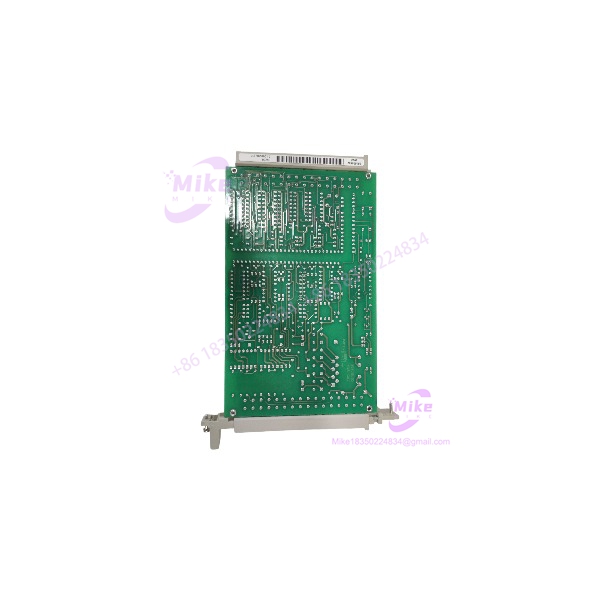
F6706
Key Technical Specifications
- Model: F6706
- Manufacturer: HIMA Paul Hildebrandt
- System Family: HIQuad Safety Controller Platform
- Module Type: Safety communication/interface module
- Primary Function:
- Controller communication
- System networking
- Engineering access support
- Diagnostic data exchange
- Application Areas:
- Safety Instrumented Systems (SIS)
- Emergency shutdown systems (ESD)
- Process automation networks
- Industrial safety control systems
- Communication Functions:
- Safety controller data exchange
- System diagnostics transmission
- Engineering communication interface
- Installation: HIMA rack-mounted architecture
- Controller Interface: HIMA safety backplane communication
- Configuration Requirements:
- Network settings
- Hardware configuration
- Application project parameters
- Typical Connected Systems:
- HIMA engineering workstation
- Supervisory systems
- Safety controller networks
Global Sourcing & Live-Test SOP (Transparency Core)
Communication modules require a different inspection method from analog and digital I/O cards. A module can pass a power-on check while still failing during network communication.
The objective is to confirm that the HIMA F6706 can communicate correctly inside the intended safety architecture.
Inbound Verification
Each incoming should receive:
- Exact model confirmation
- Hardware identification recording
- Serial number documentation
- Connector inspection
- Housing inspection
- PCB condition review
Inspection points:
- Backplane connector pins
- Communication interfaces
- Mechanical locking mechanism
- Signs of moisture or overheating
- Storage-related damage
A visually identical communication module may not contain the same firmware or interface configuration.
Live Simulation
A practical validation setup should include:
- Compatible HIMA safety rack
- HIMA controller platform
- Engineering workstation
- Network test environment
- Controlled communication load
Test sequence:
- Install the module.
- Confirm controller recognition.
- Establish communication link.
- Verify diagnostic information.
- Monitor communication stability.
Functional checks:
- Module initialization
- Network handshake
- Data exchange
- Diagnostic reporting
- Communication recovery after interruption
Diagnostics
Recommended equipment:
- Fluke industrial multimeter
- Network diagnostic tools
- HIMA engineering software
- Industrial Ethernet test equipment
Diagnostic checks:
- Supply voltage verification
- Communication status
- Interface activity
- Error messages
- Controller recognition
A network link light only proves physical connection. It does not prove correct safety-system communication.
Final Preparation
Before shipment:
- Record hardware identification.
- Document test results.
- Protect communication connectors.
- Use ESD-safe packaging.
- Maintain traceability records.
For legacy safety systems, accurate communication module records help reduce commissioning delays.
The Field Engineer’s Pitfall Guide
❗ Do not replace the without documenting the existing communication configuration.
Network parameters, addresses, and controller settings must match the original installation. I have seen plants lose engineering access because the replacement module was installed with default settings.
❗ Do not assume firmware versions are interchangeable.
A newer or different firmware revision may communicate differently with older HIQuad components. Always verify compatibility before returning the system to operation.
❗ Do not ignore redundant communication paths.
Safety systems often depend on planned redundancy. Replacing one communication module without checking the second path can hide a developing network failure.
Intent-Driven FAQ
What is the HIMA used for?
The is a safety system communication/interface module used in HIMA HIQuad architectures for controller communication and diagnostic data exchange.
Is the an I/O module?
No. The is a communication-focused module. It does not directly replace digital or analog input/output cards.
Can I directly replace a failed ?
Only after verifying:
- Exact hardware version
- Firmware compatibility
- Network configuration
- HIQuad rack compatibility
- Existing project settings
Does the contain the safety application logic?
No. The safety application runs in the HIMA controller. The provides communication support within the system architecture.
Why would an replacement fail to communicate?
Common causes include:
- Incorrect network parameters
- Firmware mismatch
- Configuration mismatch
- Backplane communication issues
- Damaged communication wiring
Is the HIMA still available?
The is associated with legacy HIMA safety installations. Many operators maintain existing systems through tested replacement inventory and lifecycle support sourcing.
What should be tested before installing a used ?
Recommended checks:
- Power supply stability
- Controller recognition
- Communication handshake
- Diagnostic status
- Network operation
Procurement verdict: The is a lifecycle-critical communication component for existing HIQuad safety systems. It should be sourced and tested as part of the complete safety architecture, not treated as a simple plug-in replacement.
Before installation, verify compatibility, firmware alignment, communication settings, rack configuration, diagnostic behavior, and documented test results to prevent extended SIS maintenance downtime.





