


Description
HIMA F3240 | HIQuad Safety Digital Input Module
Dynamic Product Introduction
A safety loop is only as reliable as the signal entering the controller. A failed input module can hide a real process condition, block a shutdown sequence, or create unnecessary plant intervention.
The HIMA F3240 is a HIQuad-series safety digital input module designed to acquire binary signals from industrial field devices. It is used in safety-related applications where switches, sensors, and protective contacts must be monitored with predictable diagnostic behavior.
The F3240 works within HIMA’s HIQuad safety architecture rather than as a standalone PLC expansion card. Its purpose is not simply reading voltage states — it provides a controlled interface between field wiring and the safety logic processor.
Compared with standard automation input modules, safety modules require additional attention to diagnostics, fault response, and validation. A replacement must match the existing HIQuad configuration, field wiring philosophy, and safety application requirements.
In maintenance environments, I have seen teams lose valuable troubleshooting time because an input card was replaced based only on channel count. The module installed correctly, but the safety project configuration and hardware characteristics did not match.
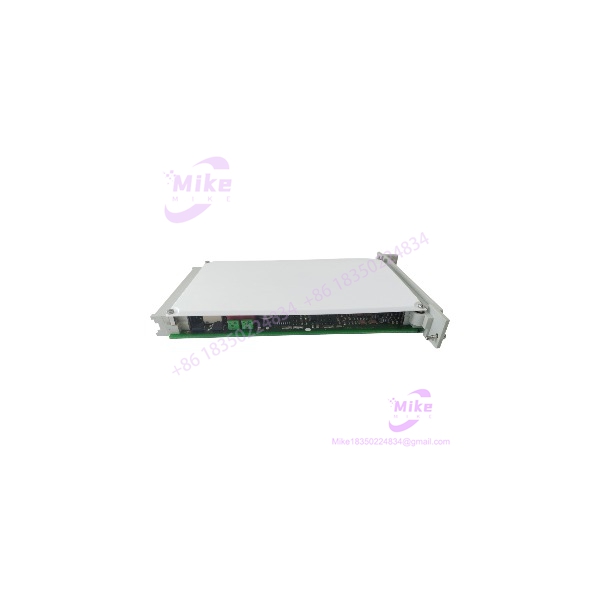
F3240
Key Technical Specifications
- Model: F3240
- Manufacturer: HIMA Paul Hildebrandt
- System Family: HIQuad Safety Controller System
- Module Type: Safety Digital Input Module
- Input Channels: 16 digital input channels
- Field Signal Type: 24 VDC binary signals
- Application Areas:
- Emergency shutdown systems (ESD)
- Safety instrumented systems (SIS)
- Process protection
- Machine safety applications
- Safety Capability: Suitable for SIL 3 applications depending on complete safety loop design
- Input Monitoring: Safety-related channel diagnostics
- Isolation: Safety-rated electrical separation
- Mounting: HIQuad rack installation
- Controller Interface: HIMA backplane communication
- Diagnostic Functions:
- Input status monitoring
- Module fault detection
- Communication diagnostics
- System alarm reporting
- Typical Field Devices:
- Emergency stop contacts
- Pressure switches
- Limit switches
- Process interlocks
Global Sourcing & Live-Test SOP (Transparency Core)
For a legacy safety module like the HIMA F3240, procurement inspection must verify more than basic power-up operation.
Safety input hardware can fail in subtle ways. A module may communicate normally while individual channels, isolation paths, or diagnostic functions are degraded.
Inbound Verification
Each incoming F3240 should receive:
- Exact model identification
- Hardware marking verification
- Serial number recording
- Connector inspection
- Housing inspection
- PCB condition review
Inspection points:
- Rear backplane connector
- Terminal interface
- Mechanical locking mechanism
- Signs of overheating
- Contamination or corrosion
The replacement unit must match the existing HIQuad system design. Similar HIMA modules may have different channel functions, electrical characteristics, or diagnostic behavior.
Live Simulation
A proper validation setup should include:
- Authentic HIMA HIQuad rack
- Compatible CPU/controller hardware
- 24 VDC simulation source
- Simulated field contacts
- Engineering workstation
Test procedure:
- Install the into the correct rack position.
- Confirm hardware recognition.
- Apply simulated input signals.
- Verify channel response.
- Review diagnostic messages.
Recommended simulations:
- Normal contact switching
- Open-circuit condition
- Input loss detection
- Communication interruption
Diagnostics
Recommended equipment:
- Fluke industrial multimeter
- 24 VDC laboratory power supply
- Continuity tester
- HIMA engineering tools
Diagnostic checks:
- Input voltage thresholds
- Channel response
- Backplane communication
- Fault reporting
- Module status indicators
A voltage measurement alone cannot confirm safety performance. The module must be evaluated inside the intended HIQuad environment.
Final Preparation
Before shipment:
- Record hardware identification.
- Document test results.
- Protect rack connectors.
- Apply ESD-safe packaging.
- Maintain traceability records.
For lifecycle support of older safety systems, clear test documentation is often the difference between a fast replacement and a delayed restart.
The Field Engineer’s Pitfall Guide
❗ Do not replace the without verifying the safety configuration.
A replacement input module may appear normal but still fail during commissioning because the safety application expects different hardware parameters. I have seen shutdown restoration delayed by configuration mismatches rather than hardware defects.
❗ Do not assume terminal assignments are identical across HIQuad input modules.
HIMA modules within the same family can look similar externally while having different wiring definitions. Copying an old terminal map without verification can create false signals or unavailable safety channels.
❗ Do not ignore aging rack power conditions.
Older HIQuad installations may have limited spare capacity. Before adding or replacing modules, check the 5 VDC and 24 VDC supply loading to avoid intermittent rack faults.
Intent-Driven FAQ
What is the HIMA used for?
The is a safety digital input module used in HIQuad safety systems to collect binary field signals for protective control applications.
Is the a normal PLC input card?
No. The is a safety automation component designed for use inside HIMA HIQuad safety architectures.
Can I directly replace an existing ?
Only after verifying:
- Exact module type
- Hardware revision
- HIQuad rack compatibility
- Safety project configuration
- Field wiring arrangement
A physical fit does not guarantee a valid safety replacement.
Does the support SIL 3 applications?
The HIMA HIQuad platform supports SIL 3 safety applications when the complete system architecture, application logic, and safety lifecycle process are properly designed and validated.
Does the contain application logic?
No. The safety controller executes the application program. The provides the field input interface and diagnostic functions.
Why would an replacement fail after installation?
Common causes include:
- Wrong HIMA module variant
- Configuration mismatch
- Incorrect terminal wiring
- Backplane communication issue
- Field device fault
Is the HIMA still available from OEM production?
The belongs to the legacy HIQuad platform family. Many facilities maintain operation through tested spare units, refurbished inventory, and lifecycle replacement programs.
Procurement verdict: The is a safety-critical HIQuad input component intended for maintaining existing SIS installations. It should be sourced with the same discipline used for any safety-system hardware.
Before installation, verify compatibility, HIQuad rack configuration, field wiring, diagnostic behavior, and documented functional testing to maintain the integrity of the existing safety system.





