

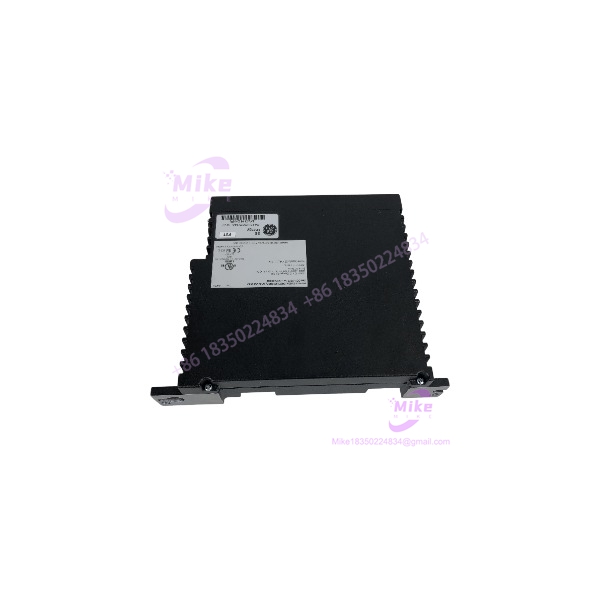
Description
GE IS420UCSBH4A | Mark VIe Replacement Controller
Product Introduction
When a Mark VIe controller fails, replacing the processor hardware is only one part of restoring the control system. The replacement must also match the installed ControlST environment, controller configuration, network assignments, and redundancy strategy.
The GE IS420UCSBH4A is a UCSB standalone controller used in GE Mark VIe control applications. It executes the control application and exchanges data with supported I/O packs through the IONet interfaces. Unlike a conventional PLC CPU with local I/O cards mounted on its backplane, the UCSB architecture places the I/O processing in distributed modules connected over the control network.
GE documentation identifies the H4A version with a 1066 MHz Intel EP80579 processor, 256 MB DDR2 ECC memory, and 2 GB NAND flash. It is a distinct hardware variant within the UCSB family—not a generic substitute for every Mark VIe controller. Confirm the exact controller revision, software baseline, and application configuration before approving it for a production system.
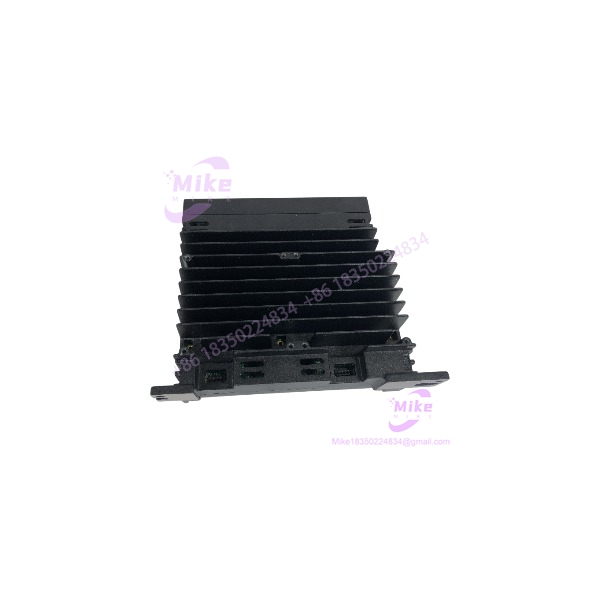
IS420UCSBH4A
Key Technical Specifications
- Manufacturer: General Electric (GE)
- Part Number: IS420UCSBH4A
- Series: Mark VIe control system
- Functional Abbreviation: UCSB
- Controller Type: Standalone application controller
- Processor: Intel EP80579, 1066 MHz
- Memory: 256 MB DDR2 SDRAM with error-correcting code (ECC)
- Flash Storage: 2 GB NAND flash
- Operating System: QNX Neutrino
- Power Input Range: 18–32 VDC
- Nominal Input Voltage: 28 VDC
- Power Consumption: 17.3 W nominal; 28.7 W peak, per GE UCSB specifications
- Ethernet Connectivity: Five Ethernet interfaces in the UCSB controller architecture; two control-network interfaces and three IONet interfaces
- IONet Function: Communications with supported Mark control I/O modules and controllers
- Cooling: Convection cooled; no fan on the H4A version
- Operating Temperature: -30°C to +65°C
- Mounting: Panel mounted
- Engineering Environment: GE ControlST / ToolboxST, with compatibility dependent on the installed software version and application
The specifications above are drawn from GE Mark VIe reference material and UCSB controller documentation. Confirm the applicable manual and hardware revision before using these values as acceptance criteria for a particular installation.
Global Sourcing & Live-Test SOP
For a used or surplus IS420UCSBH4A, a successful power-up does not establish application readiness. Treat the controller as a configuration-dependent control-system component.
1. Inbound Verification
- Photograph the complete nameplate and confirm IS420UCSBH4A.
- Record the serial number, hardware revision, and any visible service markings.
- Inspect the enclosure, mounting points, connectors, and status indicators.
- Check Ethernet ports for damaged contacts or mechanical wear.
- Inspect the controller for evidence of moisture, corrosion, contamination, or unauthorized repair.
- Confirm that the unit is an H4A—not an H1A, H3A, or safety-controller variant.
- Request available firmware, ControlST, and application-configuration records.
- Document the seller’s condition claim separately from independently observed inspection results.
2. Controlled Power-Up
- Use a regulated, current-limited DC supply within the documented 18–32 VDC input range.
- Verify polarity and terminal assignments against the applicable GE manual.
- Apply power at the specified nominal voltage for the test setup.
- Observe startup behavior and controller status LEDs.
- Monitor current draw and investigate unexpected resets, abnormal heating, or fault indications.
- Do not connect the unit to a live plant network merely to establish that it powers on.
3. Controller and Network Diagnostics
- Verify that the controller completes its expected startup sequence.
- Inspect Ethernet interfaces and confirm link status using an isolated test setup.
- Confirm that the hardware is recognized by the appropriate engineering environment, where authorized software and test resources are available.
- Verify the controller’s firmware/software baseline and application configuration.
- Confirm IONet interface operation using a compatible test configuration.
- Record diagnostic messages and communication faults.
- Do not download, overwrite, or modify customer application files without authorization.
4. Extended Heat Run
For units sold as tested, conduct an extended powered run under controlled conditions. Where practical, include representative controller and network activity.
Monitor:
- Startup consistency
- Power stability
- Controller status indications
- Ethernet link stability
- Unexpected resets
- Abnormal temperature rise
- Diagnostic or communication faults
Record the test duration, supply voltage, hardware revision, software baseline, and observed results. Do not claim a 24-hour burn-in unless it was actually completed and documented.
5. Final Preparation and Shipment
- Record the full part number and serial number.
- Photograph the nameplate, connectors, and overall unit condition.
- Preserve any customer-supplied configuration files and records.
- Document whether the controller is supplied with application data or as hardware only.
- Use ESD-safe packaging and protect all connectors during shipment.
- Clearly state the actual test scope and any limitations.
- Do not advertise a controller as plug-and-play or application-ready without evidence of configuration compatibility.
Field Engineer’s Pitfall Guide
❗ H4A is not interchangeable with every UCSB controller
The IS420UCSBH4A uses a 1066 MHz Intel EP80579 processor. Other UCSB variants have different processor speeds and may have different cooling and power characteristics. Match the complete model number and validate the replacement against the installed system configuration.
❗ Hardware compatibility does not guarantee software compatibility
A physically compatible UCSB controller may still require a matching ControlST/ToolboxST environment, firmware baseline, and application configuration. Confirm the target controller’s software requirements before commissioning or attempting a download.
❗ Verify redundancy and IONet assignments before removing the original controller
Mark VIe systems can be configured for simplex, dual, or triple redundancy. Network assignments and controller roles are application-specific. Before replacing an , document the existing controller role, IONet connections, and approved maintenance procedure. Do not assume that a controller can be removed or replaced online.
Intent-Driven FAQ
What is the GE ?
The GE is a UCSB standalone controller used in Mark VIe control applications. It executes the control application and communicates with supported I/O packs over IONet.
What processor does the use?
GE documentation identifies the H4A variant with a 1066 MHz Intel EP80579 processor. It also specifies 256 MB DDR2 ECC memory and 2 GB NAND flash.
What power supply does the require?
The documented UCSBH4A input range is 18–32 VDC, with 28 VDC nominal. Confirm the actual nameplate and GE wiring documentation before applying power.
Is the a safety controller?
The is a UCSB controller variant. It should not be treated as interchangeable with a dedicated Mark VIeS safety controller. Safety applications require the correct certified hardware, software, and system configuration.
Can the replace an IS420UCSBH1A or IS420UCSBH3A?
Do not assume direct interchangeability. The UCSB variants differ in processor speed and other hardware characteristics. Verify the application, firmware/software baseline, and GE replacement guidance before substituting one variant for another.
Does a replacement include the original application?
Not necessarily. Application files, controller configuration, and software compatibility must be confirmed with the seller. A hardware-only controller may require authorized restoration and configuration before it can operate in the intended system.
What should I verify before buying a used ?
Confirm the exact part number and revision, request nameplate photos, inspect connectors and enclosure condition, and ask for documented power-up and diagnostic results. For an operational Mark VIe system, also verify the controller’s software baseline, network role, and application compatibility.
Bottom Line for Buyers
The is a Mark VIe UCSB controller built around a 1066 MHz Intel EP80579 processor. Its role in the control system makes exact hardware identification and application compatibility more important than cosmetic condition alone.
For procurement, specify in full. Request serial-number and revision details, available software/configuration records, and documented test results. A controller that powers up is not necessarily ready to restore a turbine or other critical control application.





