


Description
Foxboro FBM207C P0917GY | 16-Channel Contact Input
Product Introduction
The Foxboro FBM207C P0917GY is the 48 VDC contact-sense member of the FBM207/b/c family. It provides 16 discrete input channels for dry contacts or compatible solid-state switches, with the module supplying the contact-sense excitation rather than requiring an externally powered voltage signal at each input.
That distinction is the procurement checkpoint. FBM207c P0917GY is not the same electrical interface as FBM207b P0914WH. The b-version is designed for 24 VDC contact sensing; the c-version is designed for 48 VDC contact sensing. Both provide 16 channels, but the field excitation voltage and associated wiring must match the installed hardware.
The module is channel isolated, meaning the individual input channels are galvanically isolated from one another and from the module’s internal logic/ground. It communicates with the Foxboro DCS through the redundant 2 Mbps module Fieldbus and can be installed as a single module or as part of a redundant pair.
For plant applications, the FBM207c is suited to equipment status, breaker and switchgear feedback, motor auxiliary contacts, valve position indication, permissives, alarms, and other discrete signals where a 48 VDC contact-sense interface is required.
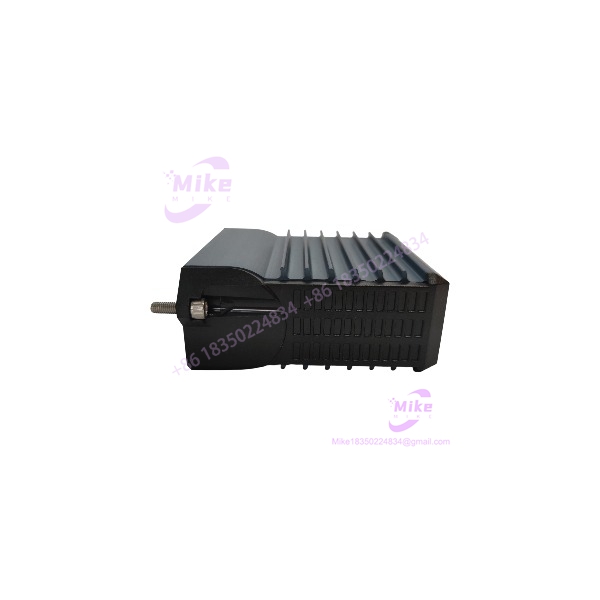
FBM207C
Key Technical Specifications
- Model: FBM207c
- Part Number: P0917GY
- Manufacturer: Foxboro / Schneider Electric
- Product Family: FBM207/b/c Voltage Monitor/Contact Sense Input Modules
- Input Type: 48 VDC contact sense
- Number of Inputs: 16
- Input Architecture: Channel isolated
- Input Configuration: Contact or compatible solid-state switch
- Open-Circuit Contact Voltage: 48 VDC ±15%
- Short-Circuit Current: Approximately 3.2 mA typical
- ON-State Resistance: 1 kΩ maximum
- OFF-State Resistance: 100 kΩ minimum
- Input Filter: None, 4, 8, 16, or 32 ms
- Pulse Frequency: 0–250 Hz without missed pulses under specified conditions
- Fieldbus: Redundant 2 Mbps module Fieldbus
- Fieldbus Paths: A and B
- Module Supply: 24 VDC, redundant
- Maximum Module Consumption: Approximately 5 W
- Maximum Heat Dissipation: Approximately 5 W
- Operating Temperature: -20 to +70°C
- Storage Temperature: -40 to +70°C
- Relative Humidity: 5–95%, noncondensing
- Environmental Classification: ISA S71.04 Class G3
- Module Weight: Approximately 284 g
- Module Dimensions: 102 × 45 × 104 mm
- Height Including Mounting Lugs: 114 mm
- Maximum Termination Cable Length: 30 m (98 ft)
- Termination Cable Type: Type 4
- Module Connector: 37-pin male D-subminiature
- Redundant Adapter: P0926ZY
- Primary Part Number: P0917GY
Schneider’s current PSS identifies the FBM207c as a 16-channel 48 VDC contact-sense module, and its parts listing maps the module to P0917GY.
48 VDC Contact-Sense Architecture
The FBM207c is designed around a contact-sensing circuit rather than a conventional externally powered voltage-monitoring input.
The field device can be a mechanical contact or suitable solid-state switch. When the contact closes, the FBM207c detects the resulting circuit condition and reports the discrete state to the Foxboro control system.
The nominal contact excitation is 48 VDC ±15%. The contact-sense circuit is current limited, with approximately 3.2 mA typical short-circuit current. The documented ON-state resistance is up to 1 kΩ, while the OFF-state resistance is at least 100 kΩ.
This architecture makes the appropriate where the plant’s discrete instrumentation standard is based on 48 VDC rather than 24 VDC.
Do not assume that a 24 VDC dry-contact circuit can simply be moved to an FBM207c. The module’s intended contact excitation is different.
FBM207 vs FBM207B vs FBM207C
The three model variants share the same general mechanical family and 16-channel architecture, but their field interfaces are different.
- FBM207 / P0914TD: Voltage monitoring. The termination assembly matches externally powered field voltages.
- FBM207b / P0914WH: 24 VDC contact sense.
- 48 VDC contact sense.
The current Foxboro documentation describes FBM207b as a 16-channel 24 VDC contact-sense module and FBM207c as a 16-channel 48 VDC contact-sense module.
Therefore, the model suffix is not cosmetic. It identifies the electrical interface required by the field wiring.
Input Filtering
The FBM207c supports configurable input filtering:
- No filter
- 4 ms
- 8 ms
- 16 ms
- 32 ms
This provides a practical way to suppress contact bounce and short electrical transients.
A 4 ms filter may be suitable where response time is important, while 16 or 32 ms may be preferable for mechanical contacts that generate substantial bounce. The actual setting should be coordinated with the DCS logic execution period and the process requirement.
For an interlock, permissive, or trip indication, the total response is not simply the FBM input filter time. The signal also passes through module processing, Fieldbus communication, control-block execution, and any downstream logic.
Pulse Processing
The FBM207c supports pulse processing up to 250 Hz without missed pulses under the specified conditions. This extends its application beyond simple ON/OFF status monitoring.
For pulse-count applications, however, the engineer should confirm:
- Pulse width
- Pulse frequency
- Filter setting
- Control-block execution period
- Required event resolution
- Fieldbus update behavior
- Sequence-of-events requirements, if applicable
A 250 Hz headline number should not be treated as a guarantee for every possible pulse waveform.
Channel Isolation
The FBM207c uses channel-isolated input circuitry.
This is useful in installations where individual field devices may have different reference potentials or where one field circuit should not electrically interfere with another.
The published specification includes high-voltage isolation withstand testing. That rating should not be interpreted as permission to connect the contact-sense channels directly to hazardous or unspecified voltages. The 48 VDC ±15% contact-sense specification remains the relevant operating interface for .
Fieldbus Communication
The FBM207c communicates through the Foxboro 200 Series module Fieldbus at 2 Mbps.
The module supports redundant Fieldbus operation through paths A and B. In a properly configured system, the redundant communication architecture provides an additional layer of availability between the FBM and its associated FCM/FCP.
The module’s application programs support discrete input processing and ladder logic functions. The current Foxboro 200 Series module overview specifically identifies FBM207c as Redundant Ready, with Discrete Input and Ladder Logic application functions and configurable input-filter time.





