

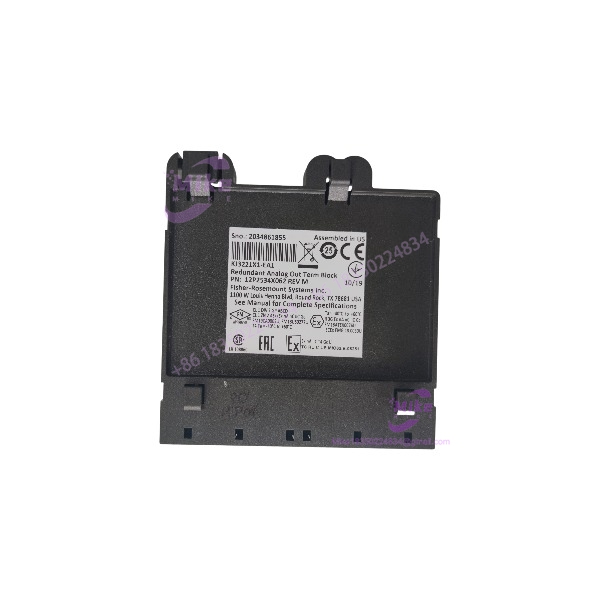
Description
Emerson KJ3221X1-EA1 | DeltaV Redundant AO Terminal Block
Product Introduction
In a DeltaV replacement job, a terminal block is not interchangeable just because it fits the same general I/O footprint. The field wiring, card compatibility, and terminal-block keying must all match the installed configuration.
The Emerson KJ3221X1-EA1 is identified as a redundant analog output terminal block. Emerson installation documentation lists the model as a redundant AO terminal block and identifies key position C. Supplier references report a 30 VDC rating and 200 mA maximum current, but those figures should be checked against the applicable OEM documentation before they are used for wiring or acceptance decisions.
For maintenance and procurement teams, this is a configuration-specific DeltaV spare—not a generic analog output module. Confirm the complete part number, terminal-block keying, associated I/O card, and existing wiring before approving a replacement.
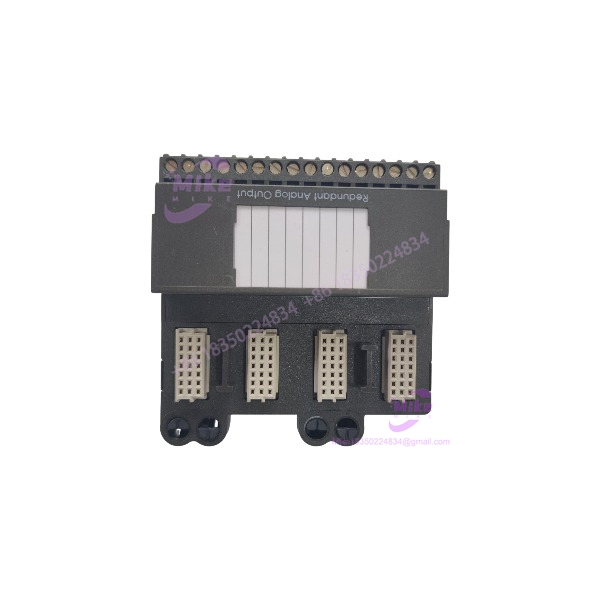
KJ3221X1-EA1
Key Technical Specifications
- Model: KJ3221X1-EA1
- Manufacturer: Emerson
- System Family: DeltaV DCS
- Component Classification: Redundant analog output terminal block
- Terminal-Block Key Position: C, per Emerson installation documentation
- Reported Voltage Rating: 30 VDC
- Reported Maximum Current: 200 mA
- Reported Operating Temperature: 0°C to +60°C in some supplier references; verify the applicable OEM limit
- Reported Relative Humidity: 5–95%, noncondensing
- Reported Protection Rating: IP20
- Reported Contamination Classification: ISA-S71.04-1985 Class G3
- Compatibility Requirement: Must match the intended DeltaV AO card and terminal-block configuration
- Field Wiring: Verify terminal assignments against the applicable Emerson drawing
- Hot-Swap/Removal: Do not assume energized removal is permitted; follow the applicable Emerson installation instructions and site isolation procedure
Specification note: Supplier listings do not consistently agree on all environmental and electrical details. The terminal-block identity and key position are supported by Emerson documentation; confirm remaining ratings against the exact hardware revision and OEM manual before using them as installation limits.
Global Sourcing & Live-Test SOP
For a used or surplus KJ3221X1-EA1, procurement acceptance should establish both physical identity and compatibility with the intended DeltaV configuration.
1. Inbound Verification
- Photograph the full nameplate and all model markings.
- Confirm the exact part number: KJ3221X1-EA1.
- Record the serial number and hardware revision where available.
- Verify terminal-block key position against the approved installation documentation.
- Inspect terminal points, connectors, mounting features, and housing for damage.
- Check for corrosion, contamination, heat discoloration, cracked insulation, or previous repair.
- Compare the terminal layout with the original unit or OEM drawing.
- Retain supplier traceability documents and condition disclosures.
2. Configuration & Compatibility Review
- Identify the DeltaV analog output card intended for use with the terminal block.
- Verify compatibility using the full card and terminal-block model numbers.
- Confirm terminal-block keying and carrier arrangement.
- Compare the field-wiring diagram with the existing installation.
- Check whether the application uses redundant AO operation and confirm the intended configuration.
- Do not infer compatibility from the KJ3221X1 prefix alone.
3. Bench Inspection & Electrical Checks
- Follow the approved OEM procedure before connecting the terminal block to a powered system.
- Inspect accessible terminals for mechanical damage or looseness.
- Perform continuity checks only where appropriate to the assembly and approved test procedure.
- Check for unintended shorts where the OEM procedure permits.
- Do not apply insulation-resistance or high-potential testing to connected electronic circuitry unless expressly authorized by Emerson.
- Record the inspection method and results.
4. Functional Simulation & Diagnostics
The terminal block alone cannot prove analog output performance. A meaningful functional test requires a compatible AO card and a controlled DeltaV test configuration.
- Install the terminal block in the approved test arrangement.
- Confirm the terminal assignments against the OEM drawing.
- Use an approved test load or simulator appropriate to the AO card.
- Verify output behavior through the intended card and field-termination path.
- Where redundancy is part of the application, test the relevant configuration using the approved system procedure.
- Record diagnostics, output behavior, and any intermittent connection faults.
Do not describe a terminal block as fully load-tested or redundancy-tested unless the complete test arrangement and procedure were actually used.
5. Extended Run & Stability Check
Where practical, run the assembly in a controlled test configuration with representative analog output activity.
Monitor:
- Output stability
- Intermittent terminal or connector faults
- Unexpected diagnostics
- Connector or terminal heating
- Mechanical stability during operation
Record the test duration, companion card, test setup, and results. Do not claim a 24-hour burn-in unless it was performed and documented.
6. Final Preparation & Shipment
- Record the exact model, serial number, and revision.
- Photograph the unit and terminal layout before packing.
- Disclose whether the unit is used, refurbished, repaired, or untested.
- Include only accessories verified as part of the sale.
- Protect terminals and connectors against impact and contamination.
- Use suitable ESD-safe packaging for the electronic assembly.
- Retain inspection and test records with the shipment.
Field Engineer’s Pitfall Guide
❗ Terminal-block keying is not optional
Emerson documentation identifies the KJ3221X1-EA1 as a redundant AO terminal block with key position C. Verify the keying and intended I/O card before installation. A similar-looking block is not proof of compatibility.
❗ Do not confuse the terminal block with the AO card
The is a field-termination component, not a standalone analog output card. Output capability, signal behavior, and application compatibility depend on the associated I/O hardware and system configuration.
❗ Verify supplier-listed ratings before wiring
Some reseller references report 30 VDC and 200 mA, but distributor specifications are not a substitute for the applicable Emerson installation documentation. Confirm voltage/current limits, terminal assignments, and removal procedures before commissioning.
Intent-Driven FAQ
What is the Emerson ?
It is a DeltaV redundant analog output terminal block used as a field-termination/interface component with compatible analog output hardware. Emerson installation documentation identifies it as a redundant AO terminal block.
What is the terminal-block key position?
Emerson installation documentation identifies key position Cthe . Confirm the installed card’s required keying before replacing the terminal block.
What are its voltage and current ratings?
Supplier references report 30 VDC and 200 mA maximum. Verify those values against the applicable OEM documentation and exact hardware revision before using them for installation or acceptance.
the an analog output card?
No. It is identified as a redundant analog output terminal block. The associated AO card performs the I/O function; the terminal block provides the field-side termination/interface.
the hot-swappable?
Do not assume it is. Follow the applicable Emerson instructions and the site’s approved isolation procedure. Remove field power and isolate the relevant equipment unless the specific OEM procedure explicitly permits another method.
Can it replace any DeltaV analog output terminal block?
Not automatically. Verify the complete part number, terminal-block key position, matching AO card, carrier arrangement, and wiring. Similar model prefixes or physical appearance do not establish interchangeability.
What should buyers verify before purchased ?
Request clear nameplate and terminal-layout photographs, confirm the exact suffix and key position, inspect connector condition, and establish the seller’s actual test scope. Match the unit against the installed DeltaV AO card and approved wiring documentation before purchase.
Bottom Line for Buyers
The is a DeltaV redundant analog output terminal block. Emerson installation documentation identifies its function and key position C, while supplier references report a 30 VDC rating and 200 mA maximum current. Confirm the complete configuration and OEM ratings before using those values for field installation.
For procurement, specify the full model, request photographs of the nameplate and terminal layout, and verify compatibility with the installed AO card. The correct keying and field-wiring arrangement are essential to a dependable replacement.





