Description
Emerson KJ3002X1-BF1 | DeltaV RTD Input Module
Product Introduction
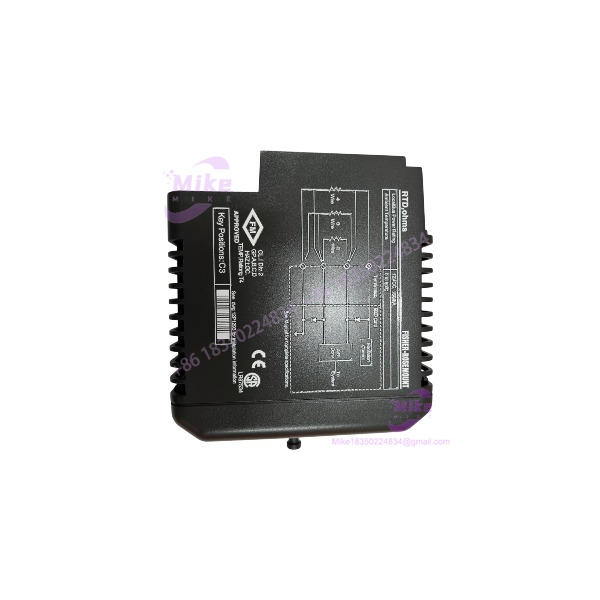
Temperature input problems can be deceptively expensive to troubleshoot. A faulty RTD channel, damaged field wiring, or incompatible I/O card can produce similar symptoms, but the replacement requirements are not interchangeable. The Emerson KJ3002X1-BF1 is identified as a DeltaV RTD input module intended for resistance-based temperature measurement.
Supplier technical references associate the BF1 model with VE4003S6B1 and specify 12 VDC LocalBus power at 160 mA, a 5.5 VDC field circuit rating, and B2 terminal-block keying. However, supplier records disagree on the ordering-number suffix and channel count. For that reason, the physical nameplate and applicable Emerson documentation should take precedence over generalized catalog descriptions.
For legacy DeltaV maintenance, verify the exact module, terminal-block compatibility, and RTD configuration before ordering. A module that fits the carrier is not necessarily electrically or functionally equivalent to the installed card.
KJ3002X1-BF1
Key Technical Specifications
- Model Number: KJ3002X1-BF1
- Manufacturer: Emerson
- System Platform: DeltaV
- Module Type: RTD Input Module
- Measurement Principle: Resistance Temperature Detector (RTD)
- Channel Count: 8 channels, as identified in available technical references; verify the specific hardware revision
- Associated Model Reference: VE4003S6B1
- Ordering Number References: 12P1732X042 / 12P1732X062 / 12P1732X072 / 12P1732X082; exact suffix requires nameplate verification
- LocalBus Power Rating: 12 VDC at 160 mA
- Field Circuit Rating: 5.5 VDC at 0.6 mA per channel
- Terminal Block Key Position: B2
- Operating Ambient Temperature: 0°C to +60°C
- Relative Humidity: 5%–95%, non-condensing
- Shock Resistance: 10 g, half-sine wave, 11 ms
- Vibration Resistance: 1 mm peak-to-peak from 5–16 Hz; 0.5 g from 16–150 Hz
- Airborne Contaminants: ISA-S71.04-1985 Class G3
- Protection Rating: IP20
Specification note: The LocalBus, field-circuit, environmental, and B2 keying values are reported in technical references for the KJ3002X1-BF1. Channel count and ordering-number suffixes are inconsistent across supplier listings. Confirm the exact variant and RTD capabilities against Emerson documentation before using these details for a final engineering specification.
Global Sourcing & Live-Test SOP
For a used or surplus KJ3002X1-BF1, acceptance testing should establish module identity, channel response, and compatibility with the intended DeltaV installation. A simple power-up does not prove accurate temperature measurement.
1. Inbound Verification
- Photograph the complete nameplate and all visible labels.
- Confirm the exact model KJ3002X1-BF1.
- Record the complete ordering number, serial number, and hardware revision.
- Verify whether the offered unit is labeled VE4003S6B1.
- Inspect the module body, edge contacts, connectors, and terminal interface.
- Check for corrosion, contamination, bent contacts, or signs of previous repair.
- Confirm the B2 terminal-block keying requirement.
- Compare the unit against the existing DeltaV bill of materials.
2. Controlled Power-Up
- Use a compatible DeltaV carrier or approved test setup.
- Confirm the LocalBus and field-circuit requirements before energizing.
- Verify that the power arrangement is compatible with the module’s documented ratings.
- Observe startup indicators and available diagnostics.
- Monitor for abnormal current draw, unexpected resets, or excessive heating.
- Do not apply RTD simulator signals until the terminal arrangement and wiring are verified.
3. RTD Channel Functional Test
A useful test should verify actual resistance-input behavior, not just whether the DeltaV system recognizes the card.
- Use an appropriate RTD simulator or precision resistance source.
- Confirm the intended RTD type and wiring configuration from the applicable module documentation.
- Exercise each channel supported by the specific hardware.
- Check whether the indicated temperature or resistance changes as expected.
- Verify open-circuit and short-circuit behavior where supported by the module.
- Compare readings against known simulator values.
- Record channel-level results, deviations, and any untested inputs.
Do not claim a particular RTD sensor range, accuracy, or resolution unless it has been confirmed against the applicable Emerson specification.
4. Extended Test and Diagnostic Review
For units advertised as tested, perform an extended powered test with a compatible DeltaV setup.
Monitor:
- Module recognition and diagnostic status
- Input stability
- Channel-to-channel consistency
- Unexpected reading changes
- LocalBus stability
- Unexpected resets or abnormal heating
Record the test duration, equipment used, channel coverage, and results. Do not claim a 24-hour burn-in or full-channel test unless it was actually completed and documented.
5. Final Preparation and Shipment
- Record the complete model, ordering number, serial number, and revision.
- Photograph the nameplate, module, and connectors.
- Preserve available OEM documentation.
- Use ESD-safe handling and protective packaging.
- Protect contacts from impact and contamination.
- State the actual condition: used, refurbished, or unused surplus.
- Clearly identify seller warranty terms separately from any verified OEM warranty.
Field Engineer’s Pitfall Guide
❗ Do not assume every listing has the same ordering suffix
Supplier references associate the BF1 model with multiple 12P1732X0xx suffixes. These should not automatically be treated as proof of identical hardware revisions. Match the offered unit’s complete nameplate against the original module and applicable Emerson documentation.
❗ Confirm channel count and terminal-block compatibility
Available references identify the BF1 as an RTD input card and specify B2 terminal-block keying, but supplier descriptions differ on channel count. Verify the exact module configuration and terminal-block arrangement before installing it in a live system.
❗ Do not treat an RTD card as a generic analog input module
An RTD input module measures resistance-based sensor signals. It is not automatically interchangeable with a 4–20 mA analog input card, thermocouple module, or another DeltaV I/O type. Verify sensor compatibility, wiring, and channel configuration before commissioning.
Intent-Driven FAQ
What is the Emerson ?
The is identified as an Emerson DeltaV RTD input module for resistance-based temperature measurement. It is associated with the VE4003S6B1 model reference.
How many channels does the support?
Available technical references identify an 8-channel RTD input configuration. Some supplier listings conflict on channel count, so confirm the exact hardware variant and documentation before relying on this figure for system design.
What is the LocalBus power requirement?
Technical references specify 12 VDC at 160 mA. The field circuit rating is listed as 5.5 VDC at 0.6 mA per channel. Confirm these requirements against the applicable documentation for the offered unit.
What terminal block does the use?
The available technical references specify terminal-block key position B2. Verify the terminal block and installed carrier arrangement against the system’s original configuration.
Can the be hot-swapped?
Do not assume unrestricted hot-swap capability. The available installation information states that field power supplied to the device must be removed before connecting or removing it. Energized removal or insertion may be permitted only under specified system and hazardous-area conditions. Follow the applicable Emerson instructions and site procedures.
Is the obsolete?
It is a legacy DeltaV I/O component encountered through industrial surplus channels. Confirm current lifecycle status, OEM support, and replacement guidance with Emerson for the exact model and ordering suffix.
What should I verify before buying a replacement?
Confirm the complete model and ordering number, channel configuration, terminal-block key, hardware revision, physical condition, and seller’s test documentation. For production use, verify the module against the installed DeltaV configuration and the required RTD sensor wiring.
Bottom Line for Buyers
The is a DeltaV RTD input module associated with VE4003S6B1. Available technical references specify 12 VDC LocalBus power at 160 mA, a 5.5 VDC field circuit rating at 0.6 mA per channel, and B2 terminal-block keying.
The main procurement risk is inconsistent supplier data—particularly ordering-number suffixes and channel count. Request a clear nameplate photograph, verify the module against the original DeltaV configuration, and require channel-level test evidence if the unit is advertised as tested. Do not approve a substitute based on the BF1 prefix alone.