


Description
EMERSON A6210 | Machinery Health Monitor Module, New Surplus
Architect’s Product Breakdown
The Emerson A6210 functions as an integral monitoring and protection module within enterprise-grade machinery health architectures (such as the AMS 6500 ecosystem). Stationed inside standard 3U rack backplanes, it continuously samples sensor data from high-value rotating equipment like steam turbines, gas compressors, and large generators. By comparing real-time operational metrics against hard safety limits, the module executes rapid relay trips and transmits scaled analog signals to control systems to avert catastrophic mechanical breakdowns.
Deploying or servicing the A6210 module requires precise adherence to rack configuration software, jumper settings, and loop calibration parameters matching the target sensor type. Because this card forms part of a safety-critical shutdown loop, technicians must verify pin alignments, ground shield continuities, and front-panel buffer responses before commissioning the asset back into active industrial service.
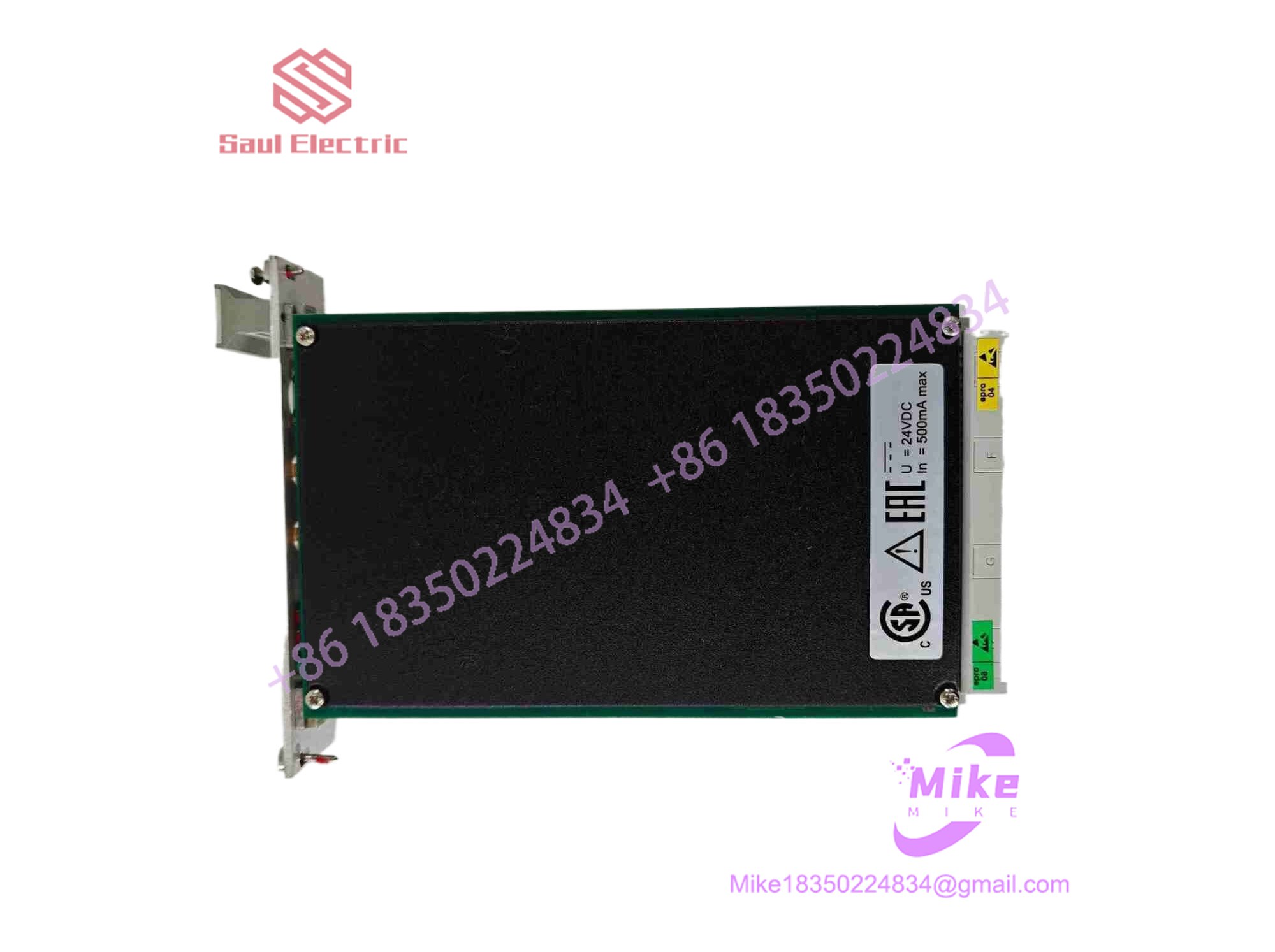
A6210
Key Technical Specifications
| Parameter | Specification |
| Manufacturer | Emerson |
| Part Number | A6210 |
| Compatible System | Emerson AMS 6500 Machinery Health Monitor Platform |
| Module Type | Critical Machinery Protection & Monitoring Card |
| Standard Compliance | API 670 Compliant |
| Form Factor | 3U Eurocard (DIN 41494 compliant plug-in module) |
| Outputs | Scaled Proportional Analog Out (0/4-20 mA), Buffered Raw Signal Outs |
| Operating Temperature | 0°C to +65°C (32°F to 149°F) |
Field Engineer’s Pitfall Guide
- Electrostatic Discharge (ESD) Hazards: Warning: The internal surface-mount microprocessors and logic gates on this module are exceptionally vulnerable to static charges. Always wear a grounded ESD wrist strap and handle the PCB strictly by its extraction handles or board edges.
- Hot-Insertion Misalignment Risks: Do not slide this module into an active rack backplane without checking alignment. Forcing a card at an angle can bend backplane pins or cause voltage transients that trigger false trips on neighboring protection slots.
- Ignoring Transducer & Loop Scaling: Swapping a protection card without verifying input signal scaling and transducer sensitivities can skew trip thresholds. Always cross-reference raw signal parameters before clearing the loop for service.
QA & Testing SOP (Transparency)
- Visual & Structural Audit: Incoming cards are inspected under optical magnification for component stress, trace continuity, edge connector wear, and authentic Emerson OEM markings.
- Static Bench & Power Rail Check: Technicians verify internal power supply isolation, bus buffer integrity, and DC rail resistance to guarantee zero internal short circuits.
- Live Rack Simulation Testing: The module is inserted into a certified AMS 6500 test rig, connected to a signal generator, and subjected to simulated dynamic waveforms to validate multi-channel processing accuracy.
- Relay & Trip Logic Verification: Functional checks are performed to ensure analog outputs, front-panel waveform buffers, and alarm trip relays actuate precisely according to setpoint criteria prior to anti-static sealing.
Technical FAQ
What type of machinery sensors are typically interfaced with the A6210 module?
The module is designed to integrate with standard machinery protection transducers (such as eddy current displacement probes, velocity sensors, or acceleration pickups depending on the specific firmware/hardware configuration variant) deployed on heavy industrial turbines and compressors.
What causes an input fault or error indication on the front panel display?
Common causes include open or shorted sensor field wiring, degraded loop shielding, loss of rack power rail stability, or an unseated card edge connector.
Are alarm trip settings stored locally on the A6210 module?
Configuration and trip parameters are typically managed through the system rack architecture and software configuration tools, though baseline module functionality relies on proper backplane communication and internal hardware jumpers.
Is component-level repair recommended for a damaged card?
No. Because safety protection systems demand absolute reliability under strict API 670 guidelines, component-level micro-soldering is discouraged. Full factory-certified module exchange is standard industrial procedure.





