Description
Emerson 1C31166G02 | Ovation 4-Wire RS485 Link Controller
Product Introduction
When high-speed motor control centers, turbine vibration monitors, or burner management skids stall mid-handshake, the root cause is rarely the main drop controller—it is usually buffer starvation or line noise on the serial driver card. The Emerson 1C31166G02 is not a generic serial converter; it is a specialized, high-throughput 4-wire RS485 Serial Link Controller Module engineered specifically for Ovation DCS architectures. By handling packet framing, CRC error checking, and local data buffering directly on the hardware, it offloads complex serial communication tasks from the main R1120 CPU drop, preserving deterministic loop execution times across the rack.
While its predecessor (the G01 variant) is frequently configured for standard 2-wire half-duplex or RS232 links, the G02 hardware group is optimized for robust 4-wire full-duplex RS485 topologies. This configuration allows simultaneous data transmission and reception across noisy plant environments without message collisions. Integrated 1500V optical isolation blocks common-mode ground potential shifts and high-voltage motor surges from reaching the internal backplane bus—though keeping terminal shield drains grounded properly at the cabinet entry point remains vital for long-distance runs.
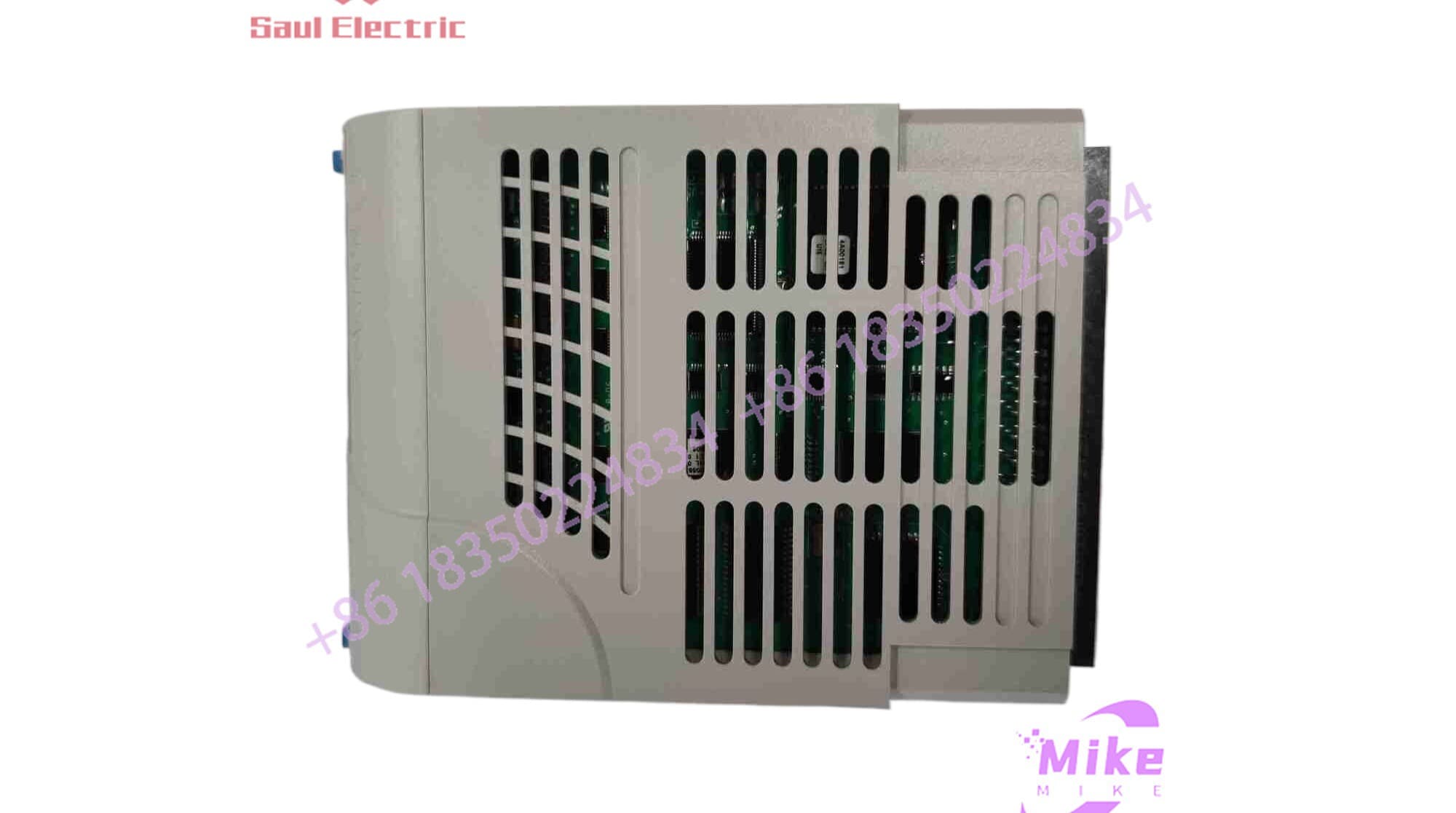
1C31166G02
Key Technical Specifications
| Parameter | Technical Specification |
| OEM Part Number | 1C31166G02 |
| System Family | Emerson / Westinghouse Ovation DCS |
| Module Type | Serial Link Controller Electronic Module (EMOD) |
| Primary Interface | RS485 (4-Wire Full-Duplex Differential) |
| Supported CPU Hosts | Emerson Ovation R1120 CPU / R1200 Series |
| Max Bus Data Rate | Up to 3.125 Mbps (protocol dependent) |
| Isolation Barrier | 1500 V RMS channel-to-logic optical isolation |
| Power Consumption | ~3.5 W via 24 VDC Ovation backplane supply |
| Operating Temperature | -40°C to +70°C (-40°F to +158°F) |
| Relative Humidity | 5% to 95% non-condensing |
| Form Factor | Standard Ovation I/O Base EMOD slot |
| Unit Weight | 0.70 lbs (0.32 kg) |
Application Scenarios & Pain Points
Scenario 1: Field Diary – Water Treatment VFD Network Failure
A municipal water treatment facility in Indiana experienced intermittent “Loss of Communication” trips on a bank of six 4160V raw water intake pump drives. The existing serial card was dropping Modbus RTU frames whenever heavy inductive loads kicked on nearby. Swapping the legacy unit for a bench-tested Emerson 1C31166G02 provided the necessary 4-wire noise rejection and 1500V optical isolation, locking network scan cycles under 50 ms and eliminating false pump trips entirely.
Scenario 2: With vs. Without Dedicated 4-Wire Link Controllers
- Without 1C31166G02: 2-wire half-duplex serial loops force the controller to constantly turn transmitter drivers on and off, leading to bus turnaround delays, timing collisions, and high bit-error rates (BER) on high-speed networks.
- With 1C31166G02: Dedicated 4-wire full-duplex lines separate Transmit (Tx) and Receive (Rx) channels completely. The module processes inbound and outbound packets simultaneously, delivering zero-latency data throughput to the Ovation controller.
Scenario 3: Specialized Field Applications
- Turbine Vibration Monitoring Systems: Aggregating high-speed serial telemetry from Bently Nevada rack monitors directly into Ovation sequence-of-events (SOE) logs.
- Substation Protection Relays: Interfacing numeric protection relays in electrical switchgear rooms where high electromagnetic interference (EMI) would corrupt standard unisolated serial links.
QA & Live Testing SOP (Trust Signal)
Every 1C31166G02 module undergoes a rigorous 4-stage quality assurance process before entering static-shielded inventory:
- Microscopic Trace Audit: We inspect all edge connector pins, transceiver ICs, and surface-mount solder runs under high magnification to confirm zero micro-fractures, lifted traces, or thermal stress spots.
- High-Speed Oscilloscope Line Testing: The module is connected to an automated test bench to drive 4-wire RS485 signals at maximum baud rates. We analyze signal differential voltage, edge transition times, and reflection damping to verify strict signal compliance.
- Live Ovation Drop Handshake: The unit is seated into an active Ovation base connected to an R1120 controller. We run continuous multi-drop polling commands to verify 100% packet delivery, zero CRC errors, and instant Tx/Rx LED feedback.
- Anti-Static Sealing: Cleared modules are wrapped in ESD-safe shielding bags with moisture-absorbent packets and packaged in heavy-duty foam containers for safe international transport.
Field Engineer’s Pitfall Guide
❗ WARNING 1: Verify 2-Wire vs. 4-Wire Jumpering on the Base The 1C31166G02 relies on the underlying PMOD/base wiring for physical loop termination. If your field network is wired for 2-wire RS485 but the base is jumpered for 4-wire full-duplex, the card’s receiver will sit permanently silent. Always match your hardware jumper configuration to your field cable setup!
❗ WARNING 2: Always Enable End-of-Line Termination Resistors On long 4-wire trunks (up to 4,000 feet), unterminated cable ends cause signal reflections that corrupt data frames. Ensure 120-ohm termination resistors are properly engaged across the Tx+/Tx- and Rx+/Rx- pairs at the physical far end of the cable run.
❗ WARNING 3: Never Swap G01 and G02 Modules Without Verifying Firmware While 1C31166G01 and 1C31166G02 look identical from the front faceplate, swapping them in an existing Ovation drop without checking the software driver configuration in Ovation Developer Studio can result in card initialization errors or unmapped I/O registers.
Intent-Driven FAQ
Q: What is the primary difference between the 1C31166G01 and the 1C31166G02?
A: The main distinction lies in group-level hardware tuning and default communication interface modes. While the G01 group is typically used for general RS232/ tasks, the G02 variant is optimized specifically for high-reliability 4-wire industrial loops and higher baud-rate stability.
Q: Can I hot-swap the 1C31166G02 while the Ovation controller is online?
A: Yes, the module supports live hot-swapping under standard Ovation operational procedures. However, pulling the module will immediately halt serial data exchange with all connected field devices—ensure downstream control loops are placed in MANUAL mode before removing the module!
Q: What communication protocols does this hardware module support?
A: The 1C31166G02 acts as the physical layer and link controller for serial protocols including Modbus RTU, DNP3, and custom user-defined serial streams configured within the Ovation software environment.
Q: How do I know if a serial communication failure is caused by the module or the field wiring?
A: Check the front faceplate LEDs. If the power LED is green and the Tx LED flashes repeatedly during a poll command but the Rx LED stays completely dark, the module is sending data out—indicating a field wiring open-circuit, reversed Rx+/Rx- polarity, or a dead field device transceiver.
Q: What warranty coverage do you provide on this module?
A: We back every 1C31166G02 module with our full 12-month replacement warranty. If a channel drops offline or a hardware fault develops during commissioning, we replace it immediately from our ready-to-ship surplus inventory.