


Description
Emerson Westinghouse 1C31204G01 | Ovation Remote Node Personality
Product Introduction
The 1C31204G01 is not a standard I/O interface; it is the physical optical transport layer for extended Ovation DCS sub-racks. Operating as a Group 1 Remote Node Personality Module, it houses the fiber-optic transceivers (RX/TX) and power-monitoring logic necessary to link distant I/O cabinets directly back to the main controller across long distances without signal degradation.
Running 850 nm multimode optical transceivers, this module converts incoming serial light pulses into internal backplane logic signals across links up to 2 kilometers long. It also features dedicated hardware monitoring for redundant +24V DC power rails, flagging local power supply drops back to the active electronics module before a system-wide communication lockout occurs.
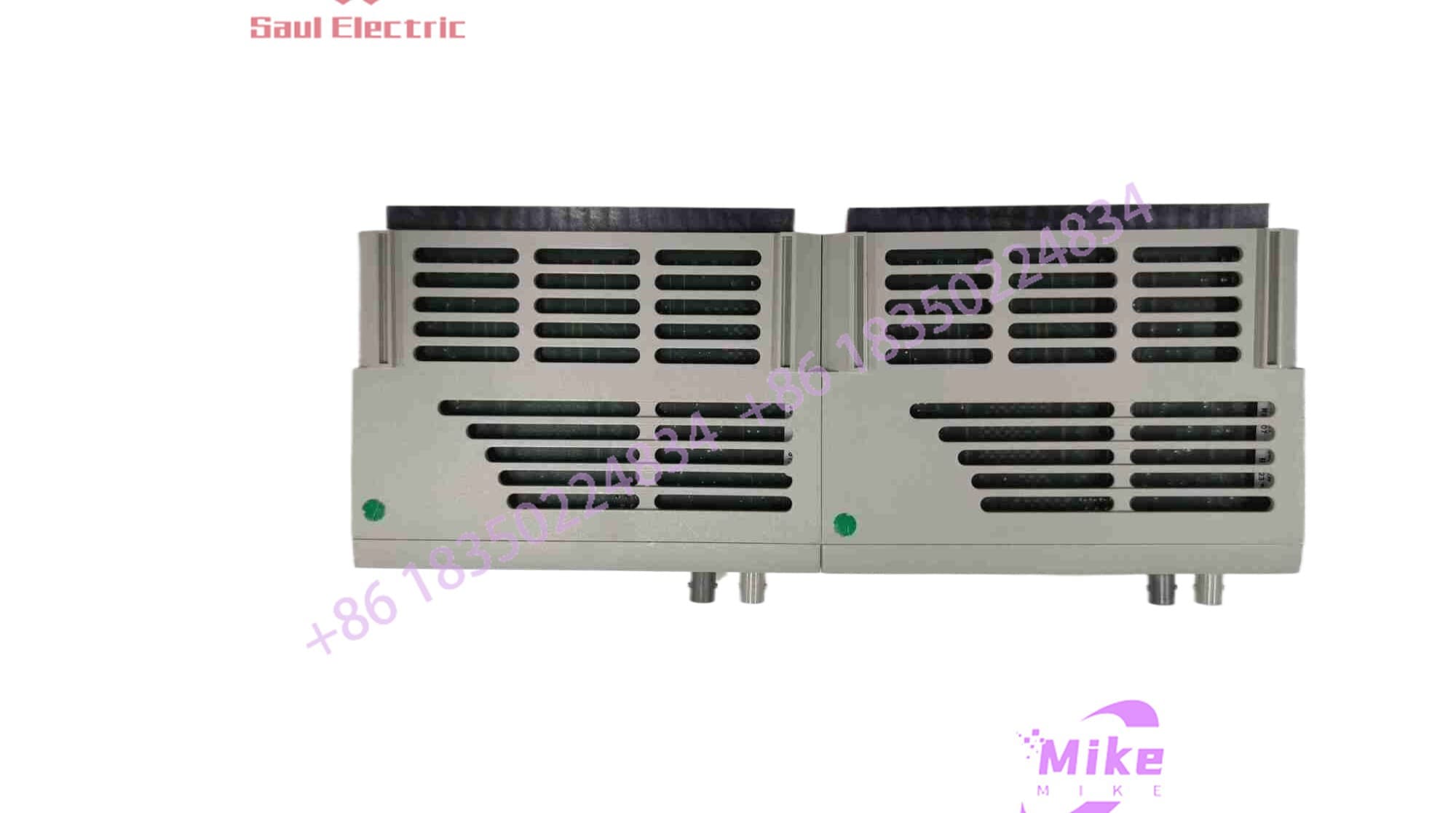
1C31204G01
Key Technical Specifications
| Parameter | Specification |
| Model Number | 1C31204G01 |
| Manufacturer | Emerson / Westinghouse |
| Module Classification | Remote Node Personality Module (Group 1) |
| Optical Wavelength | 850 nm Multimode |
| Maximum Fiber Distance | Up to 2 km (6,500 ft) |
| Physical Connectors | Fiber RX, Fiber TX, RS-232 Diagnostic DB9/Port |
| Power Supply Monitoring | Onboard monitoring for redundant +24V DC bus rails |
| Operating Temperature | -40°C to +70°C (-40°F to 158°F) |
| Storage Temperature | -40°C to +85°C (-40°F to 185°F) |
| Relative Humidity | 5% to 95% non-condensing |
| Diagnostics | Front-panel serial port for field technician terminal access |
Application Scenarios & Pain Points
- Field Anecdote: A chemical facility in Louisiana kept getting intermittent optical link timeouts on their off-site tank farm remote node whenever high-power pumps started up. Replacing an aging, heat-degraded personality board with a fresh 1C31204G01 restored full +24V power rail monitoring telemetry and cleared up link dropouts on the 850nm fiber loop.
- With vs. Without Contrast:
- Without 1C31204G01: Copper communications across long field distances suffer massive ground potential shifts and high electrical noise, causing continuous frame CRC errors.
- With 1C31204G01: Complete optical isolation eliminates ground loops entirely, delivering noise-free data transport across 2-kilometer distances.
- Blunt Technical Conditions:
- Distant Field Equipment Enclosures: Extends remote node racks into remote switchgear buildings or water treatment plants without adding electrical noise risks.
- Redundant Power Cabinet Monitoring: Actively tracks primary and secondary +24V power health, sending early alarm telemetry before a total power bus blackout occurs.
QA & Live Testing SOP (Trust Signal)
We treat passive and active personality modules with strict quality control before adding them to our warehouse stock:
- Optical Power & Attenuation Test: We connect the RX/TX connectors to an optical power meter, driving 850nm test pulses to verify transmitter light output levels and receiver sensitivity across full dynamic range limits.
- Backplane Power Rail Simulation: Mounted on an Ovation test frame, we intentionally dip primary and secondary +24V DC power rails to confirm the power monitoring circuit correctly trips diagnostic warning flags.
- RS-232 Diagnostic Handshake: We attach a serial terminal to the front diagnostic port to verify serial comms response and port hardware health.
- ESD-Safe Packaging: Cleaned, sealed inside anti-static shielding bags with fresh desiccant packs, and shipped in custom double-wall foam boxes.
Field Engineer’s Pitfall Guide
- ❗ 850 nm vs. 1300 nm Fiber Matching: Do not mix up Group revisions. The 1C31204G01 uses 850 nm optics. If your existing field fiber backbone is built for 1300 nm (which uses the 1C31204G03 module), plugging in this G01 board will result in severe attenuation losses and a dead optical link.
- ❗ Fiber End-Face Cleanliness: Always inspect and clean optical ST connectors before seating them into the RX/TX ports. Microscopic dust particles trapped against the 850nm transceiver lenses will cause optical dB loss, triggering link fault alarms.
- ❗ Observe Bending Radius Limits: When dressing fiber optic patch cables inside the Ovation cabinet, maintain a minimum bend radius of at least 30 mm. Sharp kinks in fiber cables induce light leakage that shows up as erratic node offline events.
Intent-Driven FAQ
What is the exact difference between the 1C31204G01 and 1C31204G03 modules?
The main difference is the optical wavelength: the 1C31204G01 utilizes 850 nm optics (rated for distances up to 2 km), whereas the 1C31204G03 utilizes 1300 nm optics for longer fiber runs. Always verify your existing transceivers before ordering.
What is the purpose of the onboard RS-232 diagnostic port?
The front RS-232 port allows field engineers to plug in a laptop terminal directly at the remote rack to monitor node communication status, check power supply health, and debug local node issues without needing access to the central engineering workstation.
Does the 1C31204G01 personality module require firmware programming?
No. The 1C31204G01 functions as a hardware personality interface module. Node addressing and operational logic execution are handled by the paired active electronic node controller card plugged into the base assembly.
How does the power supply monitoring feature work?
The module contains dedicated onboard circuitry that continuously samples the primary and backup +24V DC bus rails feeding the node base. If either supply drops below threshold voltage, the module reports the failure status back to the main controller card to flag a power system alarm.
Are these units brand new or reconditioned surplus?
We stock both original factory New Surplus and certified reconditioned units. Every unit undergoes full 850nm optical power testing, serial port verification, and power supply alarm checks prior to shipment.
What warranty is included with this module?
All 1C31204G01 units ship with a comprehensive 1-year replacement warranty, giving you complete operational peace of mind.





