


Description
Yokogawa 230311 | Industrial Automation Component Core Category
Dynamic Product Introduction
Sustaining legacy process automation loops without undergoing costly, full-scale system rip-and-replace cycles remains a primary operational challenge for plant managers. The Yokogawa 230311 addresses this architectural bottleneck by providing drop-in hardware continuity, ensuring that existing control frameworks maintain precise communication standards without requiring software rewrites.
Moving far beyond generic third-party alternatives, this component stabilizes critical loop performance through tightly regulated internal tolerances and enhanced noise rejection. Field engineers benefit from seamless terminal matching and reliable data handshakes, directly reducing loop drift and eliminating unexpected controller dropouts in continuous production environments.
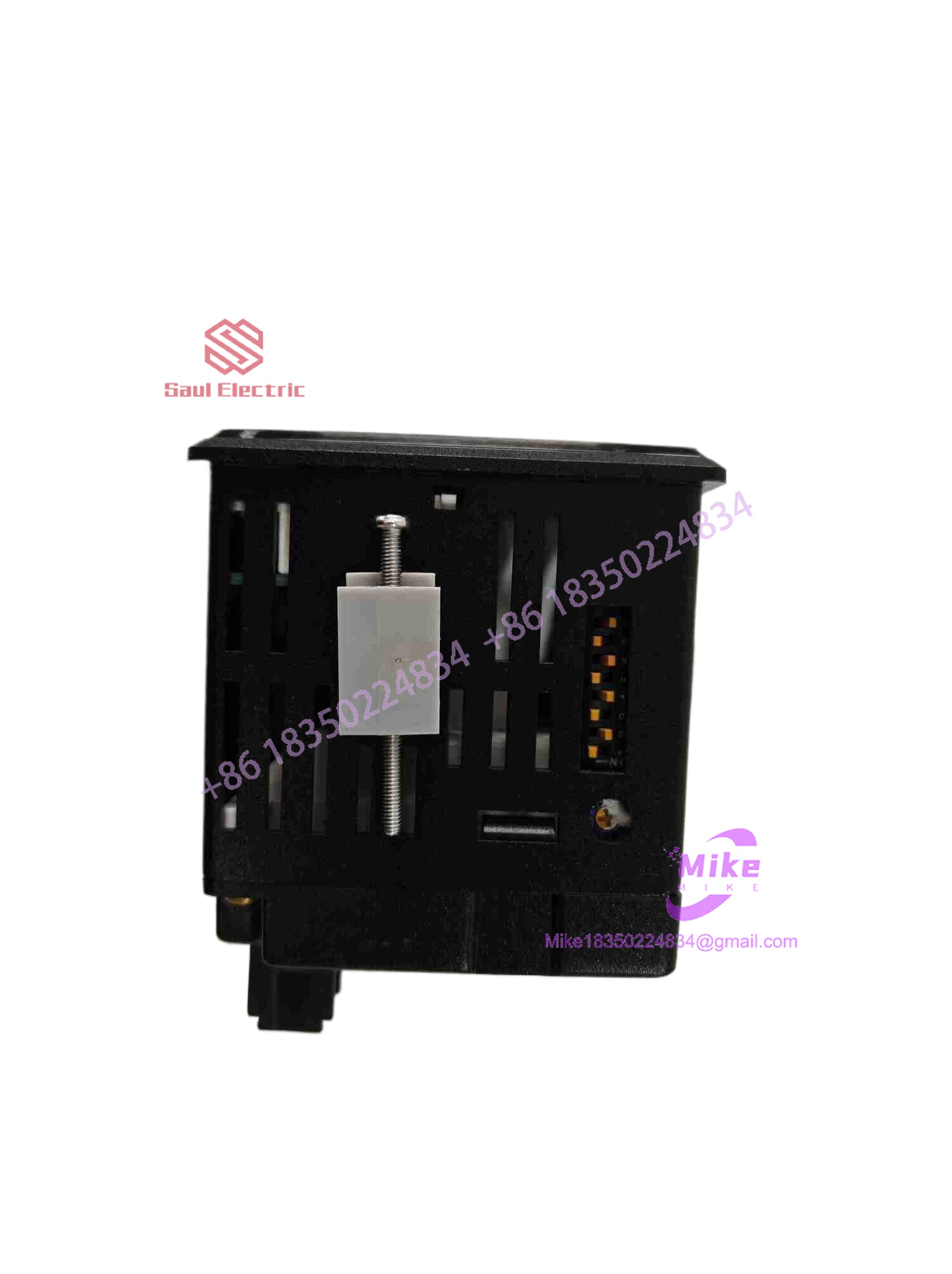
230311
Key Technical Specifications
| Core Parameter | Technical Specification |
| Manufacturer | Yokogawa |
| Product Identifier | 230311 |
| Equipment Class | Industrial Automation / Process Control Module |
| Input/Output Signal | Standard 4-20 mA loop compatibility / Digital discrete mapping |
| Operating Voltage | 24 VDC nominal (10–30 VDC operational range) |
| Accuracy Rating | \pm 0.1\% full scale or better depending on application |
| Isolation | Galvanic optical isolation across channel boundaries |
| Mounting Standard | Standard DIN rail or rack-slot chassis configuration |
| Operating Temperature | -20°C to +70°C (-4F to +158F) |
| Enclosure Protection | IP20 base rating (panel dependent) |
Global Sourcing & Live-Test SOP (Transparency Core)
Procuring discontinued or hard-to-find automation parts requires absolute procedural transparency to eliminate counterfeit risks and infant mortality failures. Our verification pipeline adheres to strict guidelines:
- Inbound Verification: Every unit undergoes rigorous paper-trail tracing, verifying customs declarations, original manufacturer seals, and anti-counterfeit holographic markers. PCB traces and chip date codes are microscopically inspected against factory baselines.
- Live Simulation: Hardware is mounted onto a dedicated Yokogawa test rack powered by regulated industrial supplies to emulate real-world chassis conditions.
- Diagnostics: Technicians execute full-scale signal injection sweeps across all channels, checking analog-to-digital conversion accuracy, communication protocol handshakes, and a 24-hour thermal soak under load.
- Final Prep: Post-test performance logs are permanently linked to the serial number, and the hardware is vacuum-sealed in anti-static, moisture-barrier packaging with fresh desiccant.
The Field Engineer’s Pitfall Guide
❗ Bus Termination and Grounding Loops: Failing to verify shield grounding continuity across the sub-rack can inject high-frequency electrical noise into the measurement channels. (I’ve seen plants chase phantom error codes for days simply because an incoming drain wire was improperly bonded to the chassis ground.)
❗ Backplane Address Misalignment: When inserting replacement hardware into older racks, check that internal hardware jumpers or software node addressing match the legacy node layout to prevent communication timeouts.
❗ Inadequate Power Supply Derating: Adding fresh modules to heavily populated legacy power distribution blocks can cause rail voltage sag under peak load. Always measure rail voltage directly at the terminal strip under full system load before final commissioning.
Intent-Driven FAQ
Will swapping this module erase my existing control configuration or logic database?
No, system programming is generally stored on higher-level controller cards or non-volatile system engineering files rather than localized passive interface cards, though checking node parameters beforehand is always best practice.
Is this specific 230311 hardware revision compatible with older system chassis generations?
Yes, backward compatibility is maintained across standard revisions, provided that the system firmware version meets the minimum baseline requirements for the hardware release year.
Are these components pulled from operational plants or supplied factory-sealed?
Inventory batches include both verified surplus (never commissioned, original box) and fully reconditioned, bench-tested stock. Provenance is explicitly stated on every quote and invoice.
What level of warranty protection comes with this unit?
Every component is backed by a comprehensive 12-month replacement warranty covering any electrical or mechanical defect from the date of shipment.





