


Description
Bently Nevada 176449-08 | 3500/72M Recip Rod Position Monitor Core Category
Dynamic Product Introduction
Protecting critical reciprocating compressors from catastrophic crosshead or piston rod failure demands specialized monitoring hardware built to handle complex dynamic motion. The Bently Nevada 176449-08 operates as the front-board 3500/72M Reciprocating Rod Position Monitor module, designed to accept up to four proximity probe inputs. It precisely measures both static rod drop (due to rider band wear) and dynamic rod position behavior (such as rod reversal and peak-to-peak deflection) during every rotation.
Moving beyond standard vibration monitors meant for centrifugal assets, this module implements specialized signal filtering—such as peak-to-peak, gap, and 1X/2X vector filters—tailored to reciprocating kinematics. Field service records confirm that installing a verified replacement 3500/72M monitor instantly eliminates erratic trigger spikes, restores compliance with API 618 safety guidelines, and re-establishes dependable protection tracking for heavy industrial compressors.
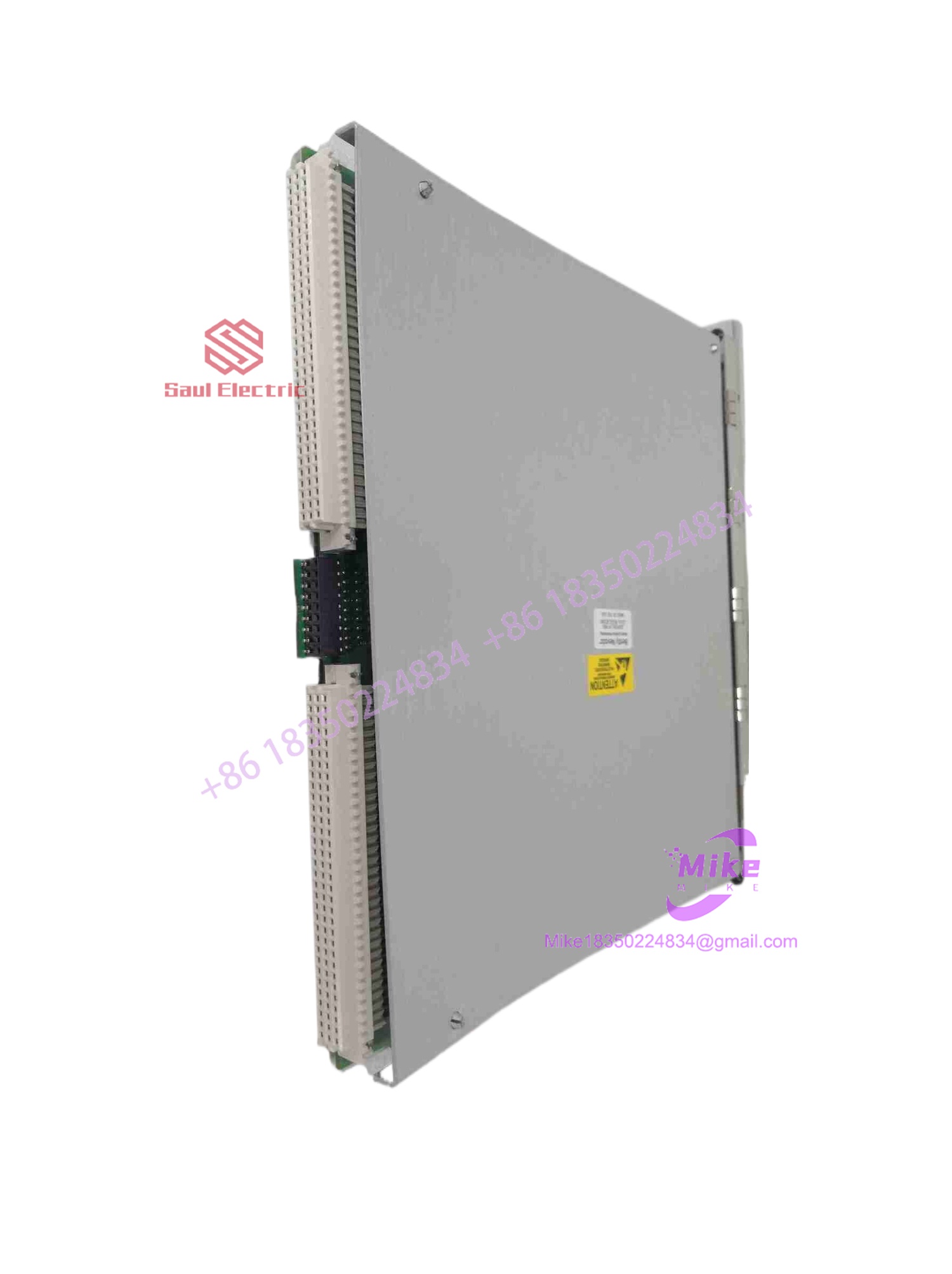
176449-08
Key Technical Specifications
- Module Architecture: 3500/72M Reciprocating Rod Position Monitor (Front-Board Card)
- System Compatibility: Bently Nevada 3500 Series Machinery Protection Racks
- Channel Capacity: 4 independent proximity transducer channels (programmed in pairs)
- Signal Input Range: Compatible with eddy current proximity probes (20 to 200 mV/mil scaling)
- Power Consumption: ~7.7 Watts nominal
- Filtering Logic: Fixed 1 Hz to 600 Hz Peak-Peak Filter, Gap Filter, and 1X/2X Vector Filters
- Operating Temperature Range: -30^\circC to +65^\circC (-22^\circF to +149^\circF)
- Weight: ~0.91 kg (2.0 lbs)
Global Sourcing & Live-Test SOP (Transparency Core)
Deploying replacement rod position monitors on active compressor protection racks requires an uncompromising verification protocol to guarantee mechanical measurement accuracy and zero phase delay.
- Inbound Verification: Incoming monitor modules are audited against original Bently Nevada manufacturing specifications. Front-panel LEDs, internal processor chips, and backplane connector pins are inspected under optical magnification for pin pitting, corrosion, or thermal stress.
- Live Simulation: The module is inserted into a dedicated 3500 test backplane paired with a compatible rear I/O module (such as internal/external termination blocks) and a calibrated signal generator.
- Diagnostics: Technicians inject simulated proximity probe waveforms across all four channels, verifying peak-to-peak amplitude tracking, rod drop calculation linearity, filter attenuation accuracy, and alarm trip response times across a 24-hour thermal soak cycle.
- Final Prep: Once diagnostic logs clear baseline standards, interface contacts are cleaned, and the module is sealed inside an anti-static moisture-barrier shield.
The Field Engineer’s Pitfall Guide
❗ Hot-Plugging Front Cards Without Backplane Alignment: Forcing the 176449-08 module into the rack slot without checking backplane pin alignment can bend delicate connector pins, causing boot failures or loss of channel communication. (I’ve seen hasty technicians ruin backplane headers by rushing card insertions.) Always guide the card smoothly along the internal rack rails.
❗ Incorrect Proximity Probe Scaling or Gap Voltage: Failing to verify that the physical probe gap voltage matches the software configuration range (e.g., 100 mV/mil vs. 200 mV/mil settings) results in severe measurement distortion and erroneous rod drop alarms. Always check gap voltages with a DMM before startup.
❗ Ignoring Channel Pairing Constraints: Attempting to assign incompatible measurement functions across paired channels in the 3500 configuration software can generate configuration faults. Keep in mind that channels are processed in pairs (channels 1–2 and 3–4) sharing specific functional limits.
Intent-Driven FAQ
Will swapping this 176449-08 module require reprogramming the 3500 rack?
Because channel scaling, setpoints, and measurement configurations are stored within the rack’s system software memory, dropping in a replacement 176449-08 module typically retains operational programming, though verifying configuration parameters via software is recommended.
Can this rod position monitor be replaced while the reciprocating compressor is running?
Yes. The monitor card resides within the rack framework, but care must be taken regarding voting logic. If the channels on this module are tied to active compressor shutdown trips, pulling the card can impact safety interlocks. Coordination with operations and adherence to bypass protocols are mandatory.
What causes a channel on this module to register a persistent “Not OK” status?
A “Not OK” status typically points to a damaged proximity probe tip, a severed extension cable, an open power supply connection, or an out-of-range gap voltage. Checking loop resistance and probe clearance isolates the fault.
Is the 176449-08 compliant with API 618 standards?
Yes. The 3500/72M platform and the 176449-08 module are engineered specifically to meet API 618 requirements for reciprocating compressor protection.
What kind of warranty accompanies surplus or refurbished units?
Reputable industrial suppliers typically back tested surplus or refurbished Bently Nevada hardware with a standard 1-to-2 year replacement warranty, supported by an independent bench test report confirming dynamic signal and position measurement accuracy.





