


Description
ABB PFTL101A-2.0KN 3BSE004172R1
PFTL101A-2.0KN (material number 3BSE004172R1) is a force/tension sensor in the ABB PillowBlock series, belonging to the pillow type weighing sensor. Its core function is to accurately measure the tension, tension or pressure on site and convert it into standard electrical signal output for use in DCS, PLC or tension controllers.
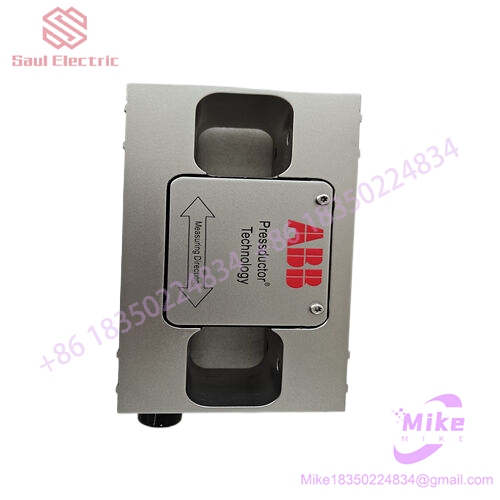
ABB PFTL101A-2.0KN 3BSE004172R1
core positioning
The sensor itself does not execute control algorithms or output control commands. It is a signal acquisition unit installed on site, which converts mechanical forces from the measured objects such as metal wires, felt, paper webs, cables, etc. into 4-20mA standard current signals. In the system architecture, it is the perception layer node that connects the measured object on site with the upper control system. The PFTL1101A series has seven range options, ranging from 0.5kN to 20kN. The rated range of this model is 2.0kN (approximately 200kg force), which belongs to the medium and small range range range.
Measurement ability
The measurement accuracy can reach 0.1% of the full range, with a repeatability error of less than 0.05%, ensuring consistent and reliable measurement data output during continuous operation. Fast response speed, capable of real-time tracking of dynamic changes in tension or pressure, meeting the measurement requirements under high-speed working conditions. Strong overload capacity, able to withstand 150% of the rated load (i.e. 3.0kN) without damaging the sensor, with built-in overload protection mechanism. Supports 4-20mA analog current output and optional voltage output, directly compatible with the analog input channels of most DCS, PLC, and tension controllers.
Physical and Environmental Characteristics
The sensor housing is made of AISI 316L stainless steel (corresponding to SIS 2348/DIN 1.7440/X12CrMoS17), which has excellent corrosion resistance. This model is designed for acid resistance (Acid Resistant version), specifically optimized for the “wet end” of paper machines and other high humidity, high corrosive environments. Protection level IP66/IP67, capable of withstanding long-term exposure to moisture, dust, and pollutants. The working temperature range is -20 ° C to+70 ° C, with some data indicating a nominal range of -40 ° C to+85 ° C. The dimensions are approximately 115mm × 50mm × 40mm, with a net weight of approximately 1.5kg. The installation method is fixed with bolts, and standard installation holes are provided for easy on-site installation and maintenance.
Role in the system
PFTL1101A is a core component of ABB’s tension measurement and force measurement solutions, and shares a unified engineering configuration environment with PFTL101B, PFTL101AER/BER, PFCL201C and other series of products. In the paper industry, it is specifically used to accurately measure the tension of metal wires and felt on paper machines, ensuring the operational stability of the paper web in the drying and calendering sections. It is also widely used in textile, cable production, material handling and other occasions that require precise tension or tension monitoring. In the brownfield renovation project, old tension sensors can be directly replaced and connected to the existing ABB control system without the need to re plan the signal link.
Electrical Characteristics
The working power supply is 12-48V DC (typical 24V DC), with a maximum continuous current of about 6A (referring to the supporting driver, the sensor itself is a passive output type). Output signal 4-20mA, insulation impedance ≥ 10M Ω (under 500V DC conditions). The onboard LED indicator light displays the power status and signal activity status in real time, supports hot swapping, and can be replaced without interrupting the measurement signal when the system is powered on. The sensor implements electrical isolation between the input and output sides internally, with overvoltage protection, overcurrent protection, and surge protection. Automatically detect the electrical ID when powered on, and refuse to enter the running state when it does not match the system configuration.
Typical application scenarios
The tension measurement of metal wires and felt at the wet end of the paper machine is the most typical application of this model. The low tension measurement under heavy rolling mill and high-speed operating conditions is also its original design intention. In addition, it is also used for monitoring the tension of textile yarns, detecting the tensile force of cables, monitoring the load of lifting devices, as well as for various brownfield and new industrial projects that require precise collection of internal force values within a 2kN range.





