

Description
ABB LF1005-S/SP16 | 1000A Current Transducer
Product Introduction
In a high-power drive, current feedback is part of the control loop—not just a monitoring accessory. The LEM LF 1005-S/SP16 is a closed-loop current transducer designed to measure large AC, DC, and pulsed currents while maintaining galvanic isolation between the primary power conductor and the secondary electronics.
ABB catalogs the LF 1005-S/SP16 as a current transducer under product ID 64572881. The LEM technical data identifies a 1,000 A nominal primary current, 200 mA nominal secondary current, and a 1:5000 conversion ratio. The transducer is used in applications such as AC variable-speed drives, servo drives, DC converters, UPS systems, and switched-mode power supplies.
For replacement procurement, the exact sensor version matters. A unit with the same nominal current rating may still differ in supply requirements, mechanical footprint, connector arrangement, or system calibration. Match the complete LF1005-S/SP16 designation and verify the host drive’s requirements before installation.
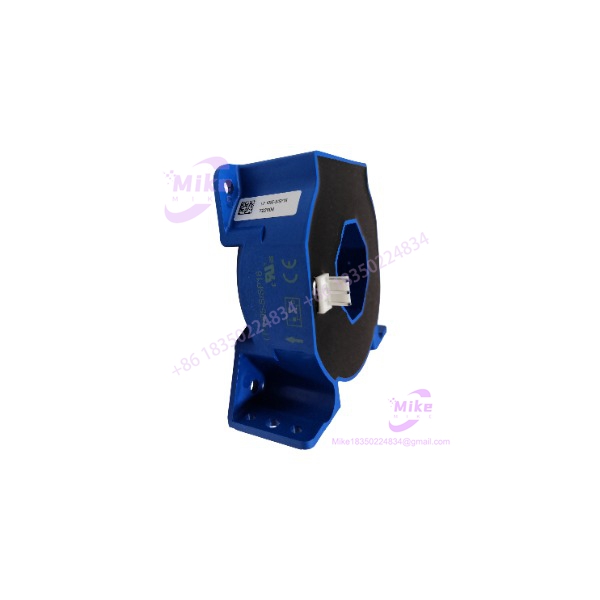
LF1005-S/SP16
Key Technical Specifications
- Model: LF 1005-S/SP16
- Manufacturer: LEM
- ABB Product ID: 64572881
- Nominal Primary Current (IPN): 1,000 A RMS
- Primary Current Measuring Range: Up to approximately ±2,100 A under specified ±24 V supply conditions
- Nominal Secondary Current (ISN): 200 mA
- Conversion Ratio: 1:5000
- Supply Voltage: ±15 to ±24 VDC, ±5%
- Current Consumption: Approximately 28 mA plus secondary current at ±24 V
- Overall Accuracy: ±0.4% at nominal primary current and 25°C
- Linearity Error: Manufacturer datasheet specifies a separate linearity-error characteristic; verify the applicable curve and conditions
- Frequency Response: DC to 150 kHz, depending on operating conditions
- Response Time: Approximately 1 µs under specified test conditions
- Measurement Types: AC, DC, and pulsed current
- Isolation: Galvanic isolation between primary and secondary circuits
- Secondary Connection: JST B3P-VH connector
- Primary Aperture: Approximately 40.5 × 13 mm, with an alternate circular aperture dimension shown in the mechanical drawing
- Operating Temperature: Confirm the applicable thermal limits from the exact datasheet and host installation
- Mounting: Multiple screw-mounting arrangements are documented
The LF1005-S/SP16 requires a suitable secondary measuring resistance and a correctly configured bipolar supply. Its output is not a generic 4–20 mA signal. The host circuit must be designed for the transducer’s nominal secondary current and specified burden limits.
Global Sourcing & Live-Test SOP
1. Inbound Verification
- Photograph the complete sensor, nameplate, connector, and mounting features.
- Confirm the exact LF 1005-S/ marking.
- Record the ABB product ID or legacy cross-reference where present.
- Inspect the primary aperture for deformation, contamination, or mechanical damage.
- Check the secondary connector for bent contacts, oxidation, or housing damage.
- Inspect the enclosure for cracks, unauthorized repairs, or signs of overheating.
- Compare the physical layout with the original installed transducer.
2. Configuration and Compatibility Review
- Confirm the host drive or converter model.
- Verify the required transducer supply rails.
- Check the specified secondary measuring resistance and burden limits.
- Confirm the drive’s current-scaling and calibration requirements.
- Compare connector pinout and mechanical mounting with the original component.
- Verify that the replacement is the LF1005-S/—not merely another LF1005 family variant.
- Confirm the required current direction and polarity conventions.
3. Controlled Functional Testing
Testing should be conducted by qualified personnel using an isolated, current-controlled test setup.
- Verify the bipolar supply requirements before energizing.
- Confirm the secondary connection and measuring resistance.
- Apply a known current through the primary aperture using a suitable calibrated source.
- Check output polarity and conversion ratio.
- Verify response at multiple current levels within the documented operating range.
- Compare readings against a calibrated reference instrument.
- Check for abnormal offset, unstable output, or intermittent behavior.
- Do not exceed the specified primary current, supply, or secondary burden limits.
4. Extended Run and Diagnostics
Where an appropriate test facility is available, perform a controlled run with representative current levels.
Monitor and record:
- Applied primary current
- Supply voltage
- Secondary output current
- Measurement error against the reference
- Output stability
- Sensor temperature
- Connector stability
- Any observed offset or intermittent behavior
A simple continuity check or visual inspection does not establish current-measurement accuracy.
5. Final Preparation
- Record the complete model, ABB product ID, and available serial or batch markings.
- Document the test method, applied current, supply voltage, and measured output.
- Photograph the sensor and connector before shipment.
- Protect the primary aperture and secondary connector from impact and contamination.
- Use ESD-safe packaging and suitable mechanical protection.
- Disclose any untested functions, repairs, or known limitations.
Field Engineer’s Pitfall Guide
❗ Do not treat the LF1005-S/ as a passive current transformer
This is an active closed-loop transducer requiring a bipolar supply and a properly designed secondary measuring circuit. Do not connect it as though it were a conventional passive CT.
❗ Verify the conversion ratio and secondary burden
The documented nominal conversion ratio is 1:5000, with a 200 mA nominal secondary current at 1,000 A primary current. The measuring resistance and supply conditions affect the usable measurement range. Confirm the original drive’s circuit requirements before substitution.
❗ Confirm the exact variant before installation
The -S/ is a specific configuration. Verify the complete marking, connector, mounting arrangement, and drive calibration requirements. A similar-looking LEM sensor is not automatically interchangeable.
Intent-Driven FAQ
What is B /?
It is a LEM closed-loop current transducer cataloged by ABB for drive-service applications. It measures AC, DC, and pulsed current with galvanic isolation between the primary conductor and secondary electronics.
What is the nominal current rating?
SP16 has a nominal primary current of 1,000 A RMS. Its usable measuring range depends on supply voltage and secondary burden conditions.
Does it require an external power supply?
Yes. The transducer requires a bipolar supply in the range of ±15 to ±24 VDC, according to the LEM technical data. Confirm the exact supply and pinout before energizing.
Does it provide a 4–20 mA output?
No. The docd / uses a nominal 200 mA secondary current with a 1:5000 conversion ratio. It is not a standard 4–20 mA process transmitter.
Which ABB part numbers cross-reference to this sensor?
ABB product information lists 64572881 as the product ID and identifies 3AFE64572881 and 3BHB020938R0001 as older product references. Verify the full sensor designation as well as the cross-reference.
Can it replace another -series sensor?
Not without checking the exact suffix, electrical specifications, connector, mounting arrangement, and host-drive calibration. Confirm compatibility using the original drive documentation or an OEM cross-reference.
What should I verify before buyingd /?
Request clear photos of the label, connector, and mounting features. Confirm the full model marking, condition, and any available functional-test results. For critical drive applications, request evidence of output accuracy and stability under a documented test condition.
Bottom Line for Buyers
The is a 1,000 A nominal closed-loop current transducer used in industrial drive and power-conversion applications. ABB identifies it under product ID 64572881, while LEM technical data defines its conversion ratio, bipolar supply, and secondary-current characteristics.
For procurement, match the complete model and cross-reference, verify the host drive’s supply and burden requirements, and request functional test evidence. Do not substitute it based solely on nominal current rating or physical resemblance.





