

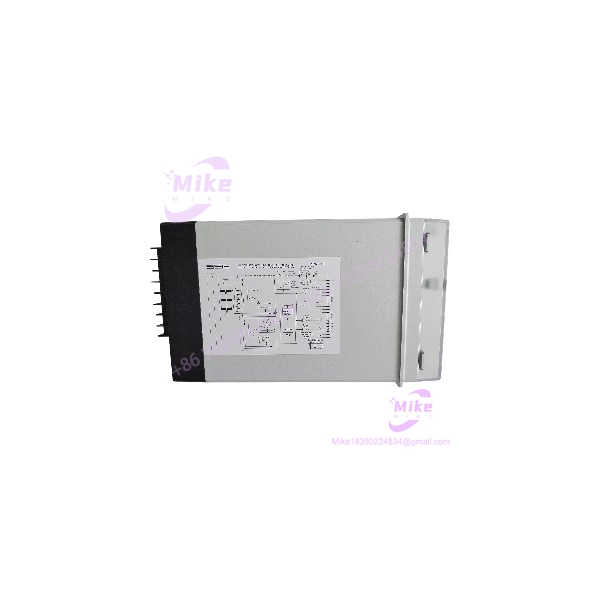
Description
Woodward SEG MRN3-11D | Mains Decoupling Relay, Category ID
Architect’s Product Breakdown
The MRN3-11D protective relay acts as a dedicated monitoring node for distributed power generation systems tied to public utility grids. Mounted within switchgear cabinets, this model continuously samples phase voltages and frequency dynamics to prevent unintended islanding conditions. Its high-speed digital sampling and internal Fourier analysis filter out harmonic distortion, ensuring that transient disturbances do not trigger nuisance utility trips.
Deploying this specific model in brownfield upgrades requires verifying auxiliary control voltages and matching existing potential transformer (PT) and current transformer (CT) secondary ratings. Retrofitting aging electromechanical protection schemes with this digital unit reduces panel footprint while adding event-recording capabilities and advanced parameter profiling.
Engineers face distinct challenges regarding auxiliary power supply stability and wiring termination integrity inside crowded control panels. Unstable DC control rails can cause processor reboots, while loose terminal connections introduce measurement errors during grid fault transients.
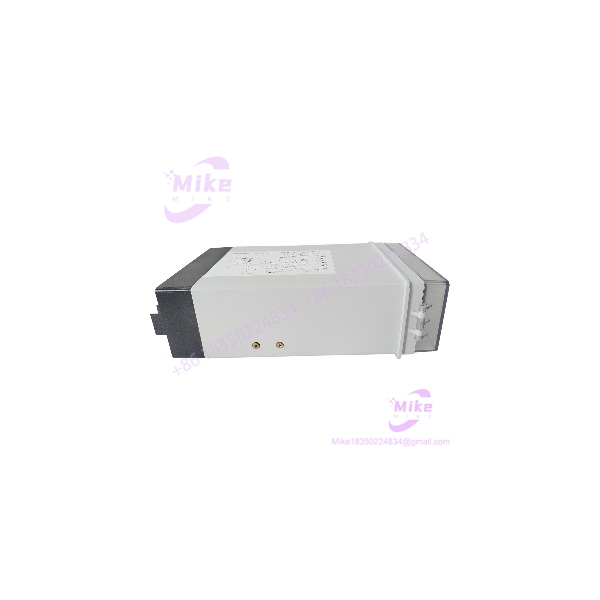
MRN3-11D
Key Technical Specifications
| Parameter | Specification |
| Manufacturer | Woodward SEG (SEG Electronics) |
| Model Number | MRN3-11D |
| Device Family | MRN3 Digital Protection Relays |
| Auxiliary Supply Voltage | 24–60V DC / 88–280V AC/DC |
| Measuring Voltage Inputs | Up to 480V AC phase-to-phase |
| Frequency Range | 45–65 Hz (selectable 50/60 Hz base) |
| Communication Interface | RS485 / Modbus protocol support |
| Output Contacts | Multi-channel potential-free changeover trip relays |
| Operating Temperature | -20°C to +70°C |
| Mounting Type | Flush panel mounting / DIN rail adapter options |
Field Engineer’s Pitfall Guide
- Auxiliary Voltage Range Mismatches: Energizing the MRN3-11D with an incorrect auxiliary supply tier will fry the internal power regulation stage. I once watched a technician hook up a 24V DC unit to a 110V DC substation battery bus, instantly destroying the input board before the pre-commissioning checks even started.
- Incorrect VT/CT Scaling Parameters: Failing to program the exact primary-to-secondary potential transformer ratios will skew voltage trip thresholds, leaving generation assets unprotected during low-voltage grid sag events.
- Unterminated RS485 Communication Lines: Leaving serial communication loops unterminated in noisy switchgear environments will drop Modbus packets and blind the SCADA monitoring station.
QA & Testing SOP
- Visual & Origin Inspection: Inspect the enclosure casing for structural cracks, verify OEM security seals, and cross-reference the model number against factory packing slips.
- Live Test Environment: Power up the relay using a variable isolated test bench supply to verify internal microprocessor boot sequences and LED diagnostic indicators.
- Diagnostics & Handshake Tests: Inject calibrated AC voltage and frequency ramps using a secondary injection test set to verify accurate pickup thresholds and trip time delays.
- Preservation & Packaging: Record firmware and hardware revision identifiers, apply protective terminal covers, and seal the unit inside anti-static cushioning material.
Technical FAQ
Can I use the MRN3-11D for both 50Hz and 60Hz grid networks?
Yes. The relay is software-configurable to accommodate both standard utility grid frequencies by adjusting the base reference parameter during setup.
Does this protection relay store trip records after a complete power failure?
Yes. Event history and fault parameter logs are maintained in non-volatile memory, allowing engineers to analyze pre-trip conditions following a blackout.
Is calibration required in the field after replacing an old unit with this exact model?
No manual potentiometer adjustments are required, but you must upload the site-specific configuration file or manually program parameters to match the system protection charter.
What is the primary application for this specific relay variant?
It is engineered primarily for decentralized power generation setups, such as cogeneration plants, wind turbines, and photovoltaic systems requiring strict utility grid decoupling compliance.





