


Description
Woodward easYgen-3500-5 | 5A CT Generator Control
Product Introduction
A generator controller replacement gets expensive when the substitute looks right but the CT inputs, firmware, or terminal arrangement do not. The Woodward easYgen-3500-5 is a dedicated easYgen-3000-series controller intended for generator-set management where synchronization, protection, load control, and breaker logic have to operate as one coordinated system.
The easYgen-3500-5 uses the 5 A current-transformer input configuration and is designed for more demanding genset applications than a basic start/stop controller. Its operating architecture covers generator and mains measurements, automatic synchronization, generator protection, load sharing, breaker management, and engine communication. The front interface provides a 5.7-inch, 320 × 240 pixel graphical display, giving commissioning personnel direct access to operating values, alarms, and configuration data.
The “-5” suffix matters. It identifies the 5 A CT version, so replacing it with another easYgen variant simply because the model family appears similar can create a measurement error or an outright commissioning problem (especially when the original switchgear was designed around 5 A secondary CTs).
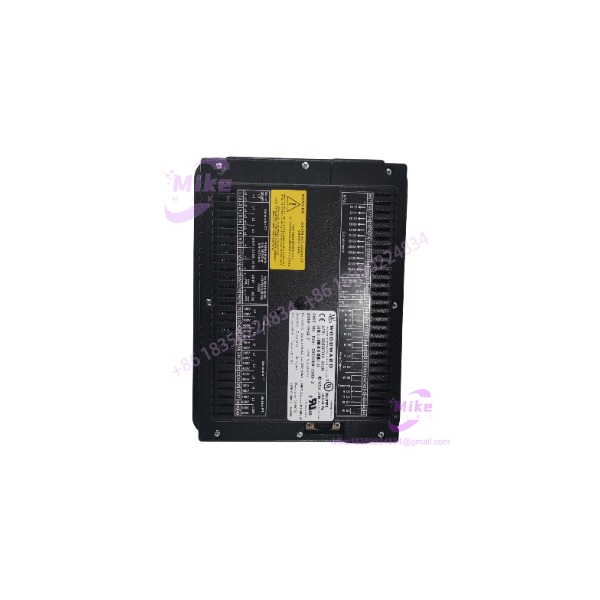
easYgen-3500-5
Key Technical Specifications
| Parameter | easYgen-3500-5 |
|---|---|
| Manufacturer | Woodward |
| Series | easYgen-3000 |
| Controller Family | easYgen-3500 |
| CT Configuration | 5 A nominal CT secondary |
| Controller Function | Genset management / synchronization / power management |
| Display | 5.7-inch graphical LCD |
| Resolution | 320 × 240 pixels |
| DC Supply Class | 12/24 VDC system |
| Communication | CAN, RS-232, RS-485 interfaces |
| Protocol Capability | Modbus and engine/ECU communication depending on configuration |
| Application Modes | Standby, island, mains parallel, peak shaving, cogeneration |
| Control Functions | Auto start/stop, synchronization, breaker control, load sharing |
| Installation | Front-panel controller |
| Configuration | Local HMI and PC configuration tools |
Engineering note: Exact I/O availability and electrical behavior should be checked against the complete Woodward ordering code and the controller’s hardware revision. Do not treat every easYgen-3500-5 unit as electrically identical.
Application Scenarios & Pain Points
With vs. Without
Without the easYgen-3500-5:
A generator system requiring synchronization, load sharing, protection, and utility paralleling can require several separate control functions and additional interface hardware. More components mean more points to troubleshoot.
With the easYgen-3500-5:
The controller provides a centralized control layer for generator measurement, synchronization, breaker operation, engine sequencing, alarms, and power-management functions.
Multi-Genset Synchronization
When several generator sets operate on a common bus, frequency and voltage matching must occur before the generator breaker closes. The controller handles the synchronization sequence and monitors the associated electrical parameters.
For larger generator installations, the easYgen architecture can coordinate multiple gensets rather than treating each machine as an isolated standby generator.
Utility-Paralleled Generation
A facility using generators for peak shaving, import/export control, or cogeneration needs more than an automatic transfer controller. The generator must track the utility and maintain controlled power exchange without allowing unstable breaker operation.
That is where the easYgen-3500-5 becomes useful.
5 A CT Retrofit Projects
This is the situation where the “-5” designation earns attention.
A generator switchgear lineup using 5 A CT secondaries needs a controller configured for that measurement range. Installing a 1 A CT variant without checking the measurement circuit is not a harmless substitution.
Check the CT secondary wiring before energizing the controller.
Legacy Controller Replacement
For older Woodward installations, the physical controller may be only one part of the replacement problem. Existing parameter files, engine ECU communications, breaker logic, CT ratios, voltage transformers, and CAN-bus configuration all need to be considered.
A replacement that boots successfully can still fail during synchronization.
QA & Live Testing SOP
For an easYgen-3500-5 supplied as new surplus or unused legacy inventory, our inspection sequence should look like an engineering acceptance test—not a cosmetic inspection.
1. Origin & Identity Check
- Verify Woodward manufacturer markings.
- Confirm complete model/order code.
- Record serial and production information where available.
- Compare label information against the purchasing specification.
- Inspect OEM seals and enclosure condition.
2. Hardware Inspection
- Inspect PCB and terminal areas for corrosion, contamination, oxidation, or rework.
- Examine LCD, keypad/soft keys, connectors, and mounting points.
- Confirm that no terminals have been bent or mechanically damaged.
3. Powered Test
- Power the unit from a controlled DC source appropriate to the applicable specification.
- Verify startup sequence and LCD operation.
- Exercise the HMI.
- Check alarms, status pages, measurement screens, and configuration access.
4. Communication Test
Where the available test rack supports it:
- Verify CAN communication.
- Test RS-485/Modbus communication.
- Check RS-232 functionality where applicable.
- Confirm basic communication handshake and response.
5. I/O & Measurement Test
The 5 A CT input configuration receives particular attention. Simulated current/voltage signals should be applied within the appropriate test limits, with measured values compared against the expected controller readings.
Finally, package the unit in ESD-safe antistatic protection with connector protection and sufficient shock isolation.
Field Engineer’s Pitfall Guide
❗ The “-5” Is Not Decoration
The easYgen-3500-5 is associated with the 5 A CT input configuration.
Do not substitute a 1 A variant because the enclosure and display look identical. The current measurement circuit is part of the generator protection and power-control system.
❗ Parameter Files Can Make or Break Commissioning
Generator voltage, CT ratio, VT ratio, frequency, breaker logic, synchronization windows, engine interface, start/stop timers, protection thresholds, and load-sharing settings must match the installation.
A factory-reset controller is not a commissioned controller.
Save the existing configuration before removing the old unit whenever possible.
❗ Do Not Assume Plug-and-Play Replacement
Terminal layout and hardware revision should be compared point by point.
Pay particular attention to:
- CT circuits
- Generator voltage sensing
- Mains sensing
- Breaker outputs
- Emergency-stop circuits
- Engine CAN wiring
- Digital input polarity
- DC supply wiring
A five-minute terminal comparison can prevent hours of troubleshooting after the generator refuses to synchronize.
Intent-Driven FAQ
Is the easYgen-3500-5 a 5 A CT controller?
Yes. The “-5” designation identifies the 5 A CT configuration. Confirm the complete ordering code before purchasing, especially when replacing a different easYgen-3000 variant.
Can I replace an easYgen-3500-5 with an easYgen-3500-1?
Not automatically. The CT input configuration differs. If the existing generator switchgear uses 5 A CT secondaries, the replacement controller must be evaluated against the actual current-sensing circuit before substitution.





