


Description
Woodward 9907-018 | 2301A Load Sharing and Speed Control Core Category
Dynamic Product Introduction
Engine speed hunting, generator load imbalances, and sudden synchronization dropouts on industrial power generation skids frequently trace back to degrading electronic governor controls. When an aging control unit suffers from capacitor drift or internal component fatigue under continuous thermal cycling, speed loops lose stability and threaten grid synchronization. The Woodward 2301A (Model 9907-018) load sharing and speed control unit resolves these issues by delivering precise, closed-loop fuel positioning and reliable active power distribution across multi-generator parallel plants.
Unlike standard generic controllers, this specialized Woodward unit is engineered specifically to withstand heavy electrical noise and mechanical vibration inherent in heavy-duty engine and turbine environments. Maintaining absolute frequency stability and load management across legacy power generation assets demands exact hardware matching—making this control module essential for preventing unscheduled plant outages.
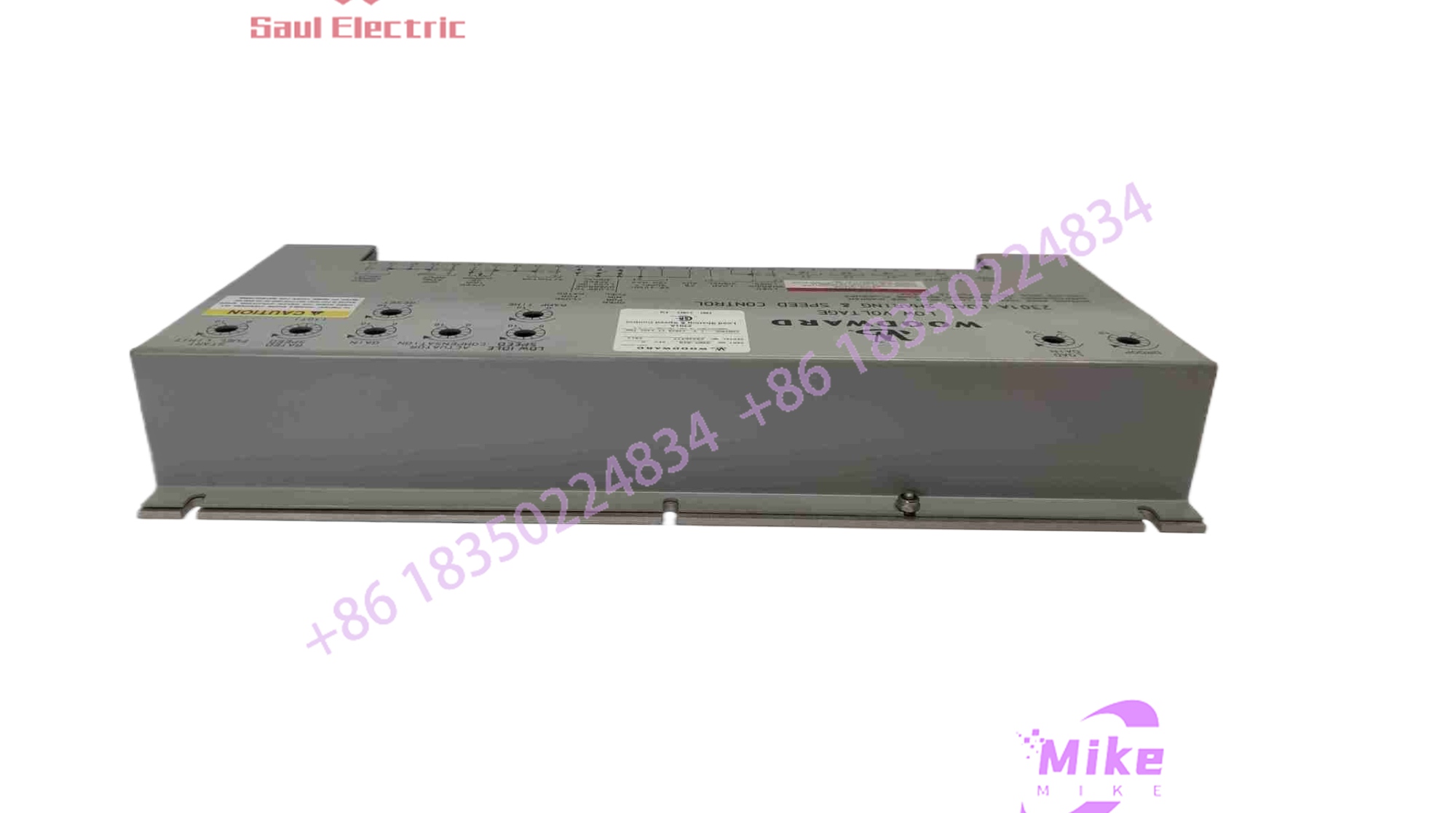
2301A 9907-018
Key Technical Specifications
| Parameter | Specification Detail |
| Manufacturer | Woodward |
| Catalog / Part Number | 9907-018 (2301A Series) |
| System Application | Generator Engine / Turbine Speed and Load Sharing Control |
| Control Modes | Isochronous, Droop, or Base Load |
| Power Supply Input | Low-voltage DC operating power (typically 20 to 160 VDC or standard 24 VDC depending on sub-revision) |
| Actuator Output | Standard low-level current output to drive proportional actuators |
| Input Signals | Magnetic pickup (MPU) speed sensor input, load sensor / tie-line power inputs |
| Operating Environment | Industrial control panel enclosures (-40^\circ C to +70^\circ C) |
Global Sourcing & Live-Test SOP (Transparency Core)
Acquiring secondary-market industrial governor controls requires rigorous electronic simulation and calibration testing to ensure zero drift, relay failure, or signal attenuation prior to installation. Our multi-stage qualification protocol covers:
- Inbound Verification: Incoming 2301A units undergo high-magnification optical inspection along terminal blocks, internal circuit board traces, and electrolytic capacitors to check for electrolyte leakage, solder micro-fissures, or heat stress. OEM identification and revision tags are authenticated against historical archives.
- Live Simulation: We mount the control module onto a dedicated Woodward test fixture bench configured with a simulated magnetic pickup (MPU) frequency generator and actuator load bank.
- Diagnostics: Engineers execute full frequency response sweeps, PID loop verification, and load-sharing line check simulations across variable input voltage ranges. The unit undergoes an accelerated thermal burn-in cycle.
- Final Prep: Once testing criteria are met, terminal connections are cleaned, calibration potentiometers are secured, and the unit is packaged inside an antistatic, moisture-barrier shielding bag.
The Field Engineer’s Pitfall Guide
❗ Improper Shield Grounding: Never leave speed sensor (MPU) signal cable shields floating or grounded at both ends. Always ground the shield at the controller end only to prevent electrical noise from causing erratic speed governance.
❗ Potentiometer Over-Adjustment: I’ve seen technicians aggressively crank gain and reset potentiometers during live tuning without locking down baseline settings, triggering severe engine speed surging and mechanical instability.
❗ Power Supply Voltage Mismatches: Always verify whether your specific 9907-018 sub-model requires a standard 24 VDC supply or higher auxiliary voltage configurations before applying power to avoid internal circuit damage.
Intent-Driven FAQ
Can the Woodward 9907-018 be used as a direct drop-in replacement for other 2301A part numbers?
Not always. While the external housing looks identical, different part numbers dictate specific operating voltage ranges, ramp times, and output current configurations. Always verify the exact dash number against your system schematic.
What causes an engine to hunt or surge in speed while using this controller?
Speed hunting typically stems from poorly tuned gain or reset (stability) potentiometer settings, a damaged magnetic pickup (MPU) sensor gap, or excessive linkage friction in the fuel actuator mechanism.
How do you configure the unit for isochronous versus droop operation?
Mode selection is handled via external terminal jumper configurations on the controller’s rear terminal strip, allowing easy switching between standalone isochronous control and parallel droop load sharing.
Are these electronic governor modules field-repairable?
Due to surface-mount components, conformal coating, and precision factory calibration requirements, component-level field repairs are not recommended. Whole-unit replacement ensures generation reliability and safety.
What level of warranty is included with this surplus controller?
We back this component with a comprehensive one-year replacement warranty, covering material defects and control performance under standard industrial operating conditions.





