


Description
Woodward 9907-838 | Load Sharing Module Core Category
Dynamic Project Introduction
Balancing active kilowatt output across parallel generator skids requires a dedicated control link that eliminates circulating reactive currents and load-hogging conditions. The Woodward 9907-838 operates as a specialized load-sharing module designed to interface directly with electronic governors, reading generator power lines and adjusting fuel demand dynamically. Unlike complex software-managed PLC arrays prone to network communication jitter, this analog hardware unit provides instantaneous, deterministic load-balancing adjustments across multi-unit utility buses.
Stepping past legacy paralleling iterations, this specific hardware revision brings improved thermal stability and tighter signal isolation for interconnect lines. Field deployment history confirms that dropping in this replacement module resolves chronic load-hunting issues and stabilizes parallel bus synchronization under abrupt industrial load changes.
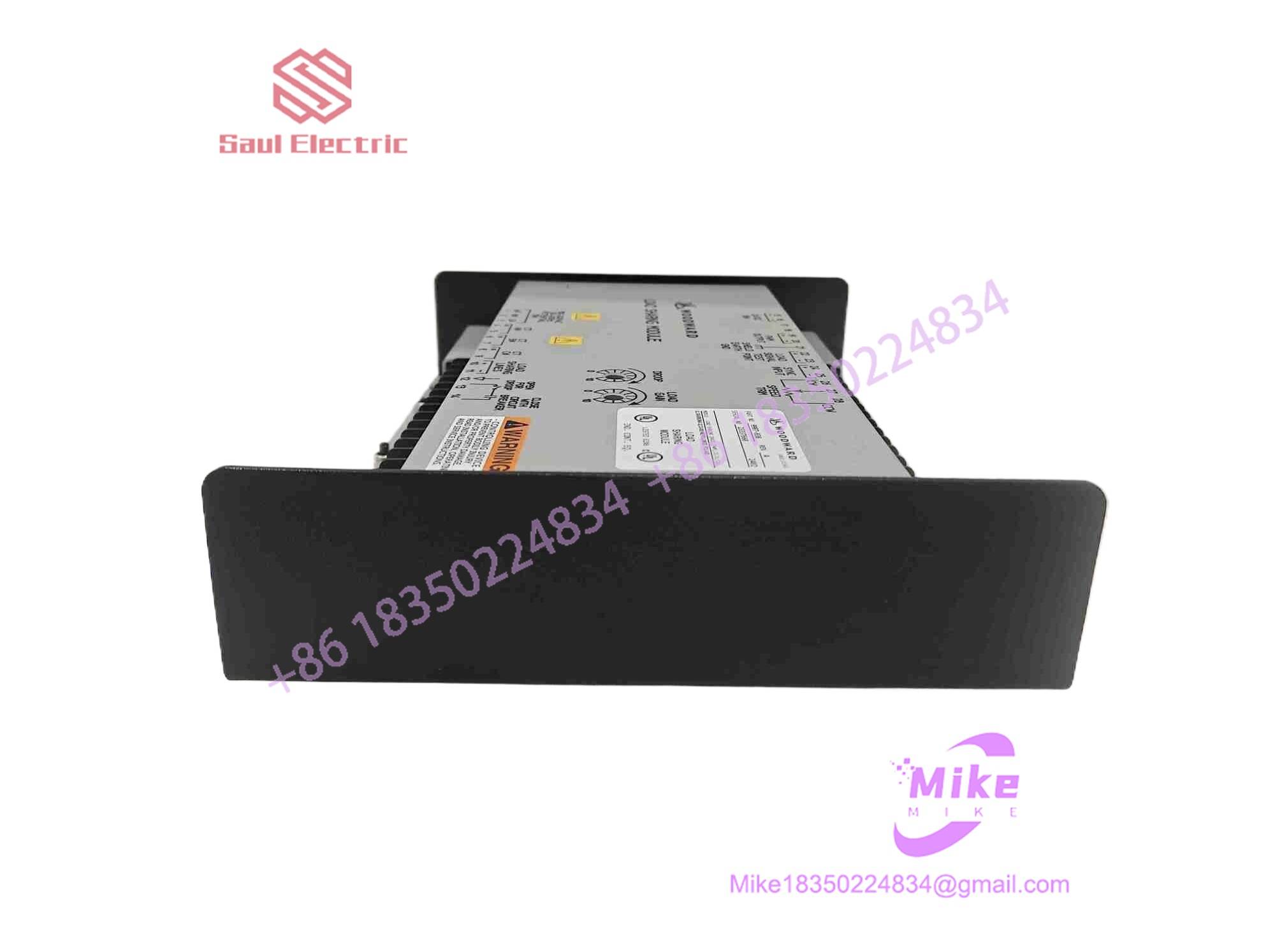
9907-838
Key Technical Specifications
- Input Supply Voltage: 24 VDC nominal auxiliary power
- Power Consumption: Approximately 10 watts
- Control Output: Proportional DC bias signal for electronic governor integration
- Bus Interconnect: Shielded low-impedance load-sharing communication lines
- Operating Temperature Range: -40^\circC to +70^\circC industrial ambient tolerance
- Vibration Resistance: 4 Gs (5 to 500 Hz frequency sweep)
- Enclosure Type: Switchgear panel-mountable modular housing
- Dimensions: Standard Woodward auxiliary chassis footprint
- Weight: ~1.2 kg (2.6 lbs)
Global Sourcing & Live-Test SOP (Transparency Core)
Deploying replacement load-sharing hardware on continuous-duty generation plants demands an uncompromising bench verification protocol to ensure reliable operation.
- Inbound Verification: Incoming units are audited against official OEM manufacturing lots. Terminal blocks and circuit traces are inspected under optical magnification for pin oxidation, dust buildup, or component heat stress.
- Live Simulation: The module is mounted on a dedicated test rack powered by an isolated 24 VDC source, tied to simulated AC voltage and current inputs representing live generator phases.
- Diagnostics: Technicians execute full-scale kW load sweeps, verifying that the output bias response matches factory linearity curves. Units are subjected to a 24-hour thermal soak cycle under continuous power to catch latent component drift.
- Final Prep: Once calibration logs confirm zero baseline error, terminal strips are cleaned, and the unit is sealed inside an ESD-safe moisture-barrier bag.
The Field Engineer’s Pitfall Guide
❗ Unshielded Interconnect Cabling on Load-Sharing Lines: Running the sensitive load-sharing signal wires parallel to high-voltage AC lines without continuous shielded twisted-pair cabling introduces severe electromagnetic noise, causing parallel sets to fight each other for kW load dominance. (I’ve seen plants trip units on reverse power because unshielded lines picked up stray motor-drive harmonics.) Always ground shields strictly at a single cabinet earth point.
❗ Mismatched CT Ratios Across Paralleled Generators: Tying this module into a system where current transformer (CT) ratios vary across generator sets causes proportional calculation errors, leading to uneven load distribution. Always verify that all paralleled prime movers utilize identical CT secondary ratings.
❗ Ignoring Auxiliary Power Ripple: Supplying this controller from an unconditioned battery charger bus carrying excessive high-frequency ripple voltages will destabilize internal DC reference circuits, resulting in erratic load swings. Always verify DC bus cleanliness with a True-RMS meter prior to energizing.
Intent-Driven FAQ
Will swapping this load-sharing module require reprogramming firmware logic?
No. The 9907-838 is a hardwired analog control accessory block. There is no software flash memory or configuration file to download; operational tuning is accomplished entirely via physical potentiometers and terminal wiring connections.
Can this module be hot-swapped while the generator is running in parallel on the bus?
No. Unsealing or replacing a live load-sharing controller on an active parallel bus will instantly sever the unit’s awareness of system load sharing, causing the generator to either drop its load completely or surge unexpectedly. Always take the unit offline and de-energize the 24 VDC auxiliary supply first.
What causes the generator to drift off its share of the load immediately upon paralleling?
Load drifting typically points to an open-circuit fault in the load-sharing interconnect loop, reversed polarity on the bias lines, or a miscalibrated GAIN potentiometer. Check continuity across the interconnect wiring loop with a digital multimeter to isolate wiring breaks.
Is the 9907-838 compatible with digital PLC SCADA systems?
The 9907-838 functions primarily as a standalone analog auxiliary loop controller designed to interface with analog governors. It does not feature native Modbus or Ethernet stacks unless paired with external signal converter hardware.
What kind of warranty accompanies surplus 9907-838 units?
Reputable industrial suppliers typically back tested surplus or refurbished automation components with a standard 1-to-2 year replacement warranty, backed by an independent bench test report confirming analog bias output linearity.





