


Description
Woodward 9905-001 | 24V DC Power Supply, Factory Original
Architect’s Product Breakdown
The Woodward 9905-001 power supply module acts as the electrical backbone for MicroNet and MicroNet Plus digital control systems, commonly deployed in gas and steam turbine management setups. In heavy industrial power generation and compression facilities, clean, stable power delivery is essential to prevent erroneous logic execution or nuisance turbine trips. This switched-mode module delivers regulated voltage rails directly to the system backplane, ensuring stable operation for processors and I/O cards alike.
When retrofitting aging turbine control panels, maintaining power supply integrity is vital. Failing power supplies often introduce subtle high-frequency ripple currents that wreak havoc on analog input conversion accuracy and communication loops. Deploying a factory-original 9905-001 guarantees proper load sharing across redundant configurations and eliminates the compatibility risks associated with unverified third-party power conversions.
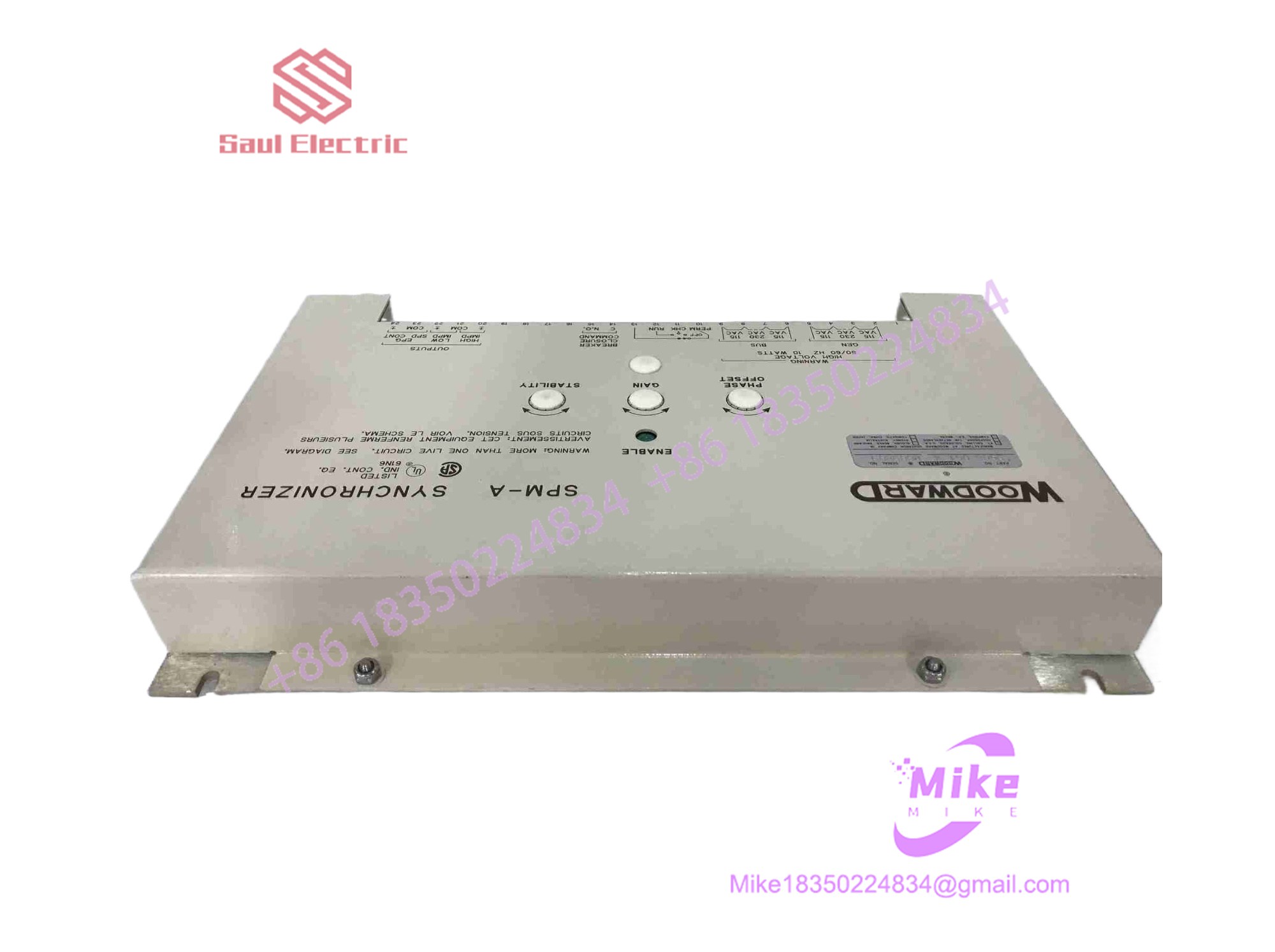
9905-001
Key Technical Specifications
| Parameter | Technical Specification |
| System Compatibility | Woodward MicroNet and MicroNet Plus Control Systems |
| Module Type | Power Supply Unit (PSU) |
| Input Voltage Range | Standard industrial AC/DC supply specifications |
| Output Voltage | 24V DC regulated nominal rails |
| Redundancy | Supports dual-module load sharing configurations |
| Mounting | MicroNet chassis dedicated power slot |
| Operating Temperature | -20°C to +65°C |
| Cooling | Natural convection |
Field Engineer’s Pitfall Guide (Unique Value)
- Warning: Redundant Load Balancing: When replacing a failed unit in a dual-redundant MicroNet chassis, always verify that both power supply modules are sharing the load evenly. I’ve commissioned gas turbine skids where an old, degraded supply was left in the secondary slot, forcing the new 9905-001 to carry 100% of the cabinet load until it thermally overloaded.
- Warning: Input Voltage Jumper Settings: Check all internal configuration jumpers or terminal wiring configurations before applying primary power. Mismatched input voltage ranges can instantly destroy input-stage MOVs and internal switching components.
- Warning: Chassis Backplane Pins: Inspect the backplane connector pins inside the MicroNet chassis slot before sliding in the module. Dust buildup or bent pins will cause poor contact resistance, leading to intermittent voltage sags under heavy transient loads.
QA & Testing SOP (Transparency)
- Visual & Origin Inspection: Verified for original Woodward manufacturing seals, serial number tracking, and lack of component scorching or capacitor bulging.
- Powered Bench Test: Loaded onto a live MicroNet test rack to evaluate output voltage stability, ripple attenuation, and temperature regulation under simulated operational loads.
- Redundancy Handshake Testing: Tested for proper current-sharing capability and status relay output transitions during simulated primary supply dropouts.
- Packaging: Enclosed in anti-static, heavy-duty cushioning material and packed in a moisture-barrier bag prior to shipment.
Technical FAQ
Can I hot-swap the Woodward 9905-001 power supply module while the turbine is running?
Yes, provided the system is configured for dual-redundant power supplies and the secondary healthy supply is actively carrying the full load. Always verify module health indicators before extracting a failed unit.
What causes the power supply’s internal fault relay to trip?
The internal fault relay typically trips due to an internal over-temperature condition, output voltage falling outside acceptable tolerance windows, or a complete loss of an input phase/line voltage.
Does the 9905-001 require external forced-air cooling?
No. The unit relies on natural convection cooling inside the cabinet. However, you must maintain proper vertical clearance above and below the MicroNet chassis to prevent thermal pocketing.
Are there any user-serviceable fuses inside the module?
No. Internal fusing is soldered or integrated for primary safety isolation. Attempting field-level electronic repairs on safety-critical power supplies voids certification; replace the module as a complete unit if internal failure occurs.





