


Description
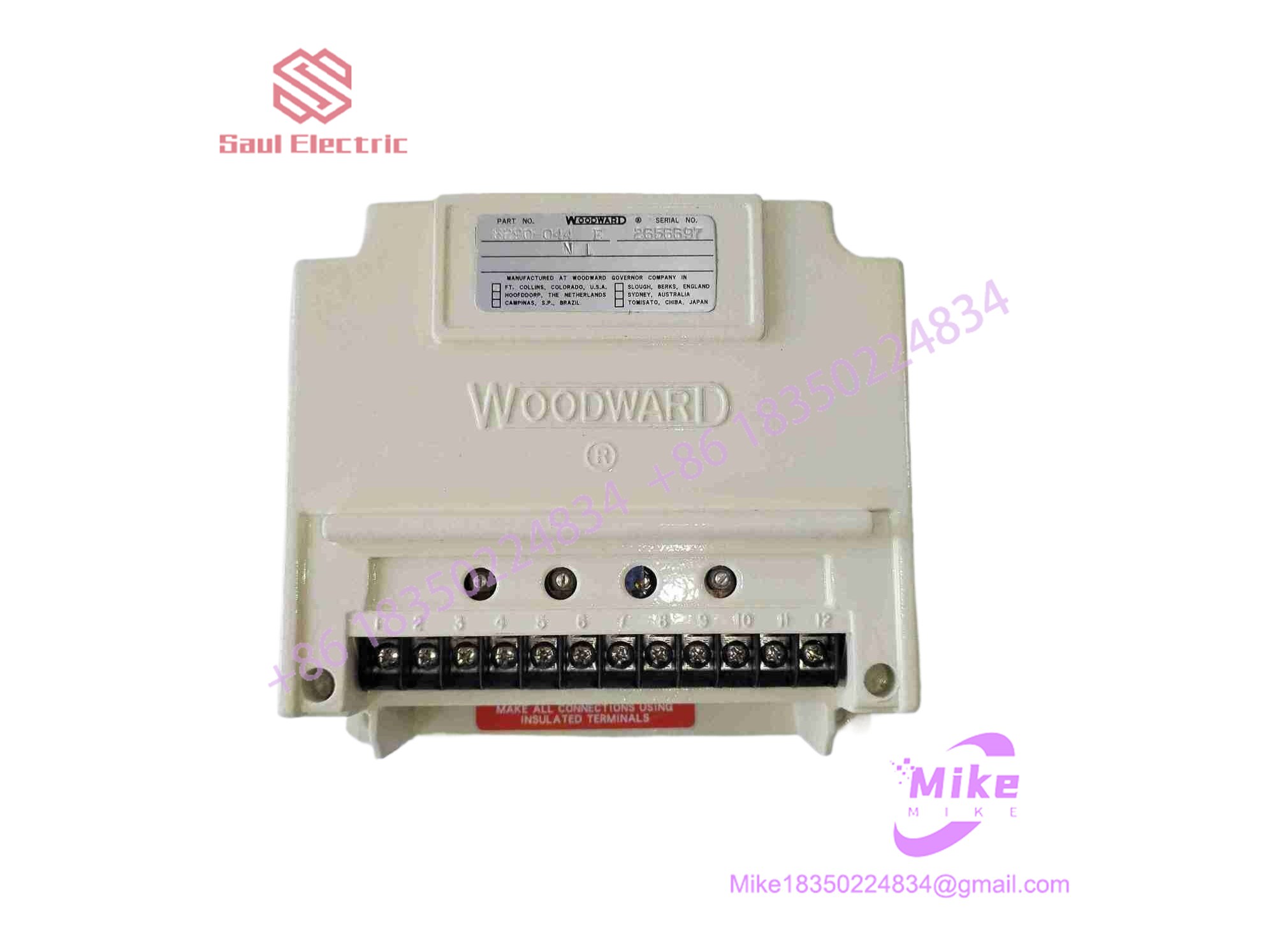
Woodward 8290-044 | EPG Governor Speed Control Module
Architect’s Product Breakdown
The Woodward 8290-044 belongs to the robust EPG (Electric Power Governor) product line, engineered to provide precise, reliable speed control for diesel, gas engines, and small turbines. Operating as an analog-electronic control package, it takes frequency input signals from a magnetic pickup (MPU) measuring flywheel ring gear rotation, compares it against a reference speed setpoint, and outputs a proportional current to drive an external EPG actuator.
Tuning and calibration are handled via onboard potentiometers (such as Gain, Stability, and Deadtime) rather than software configurations, making field adjustments straightforward for veteran technicians without requiring laptop interfaces. However, this demands precise manual tuning during initial hot commissioning to avoid hunting or sluggish transient response.
The unit is built to withstand harsh industrial environments inside control cabinets, but it requires clean power isolation and strict shielding on the MPU input to prevent electrical noise from causing speed fluctuations. Integrating an 8290-044 ensures a direct, drop-in replacement for aging EPG hardware, preserving existing wiring topologies and minimizing downtime during maintenance outages.
8290-044
Key Technical Specifications
| Parameter | Technical Specification |
| Operating Voltage | 12 or 24 VDC battery systems (Polarity protected) |
| Power Consumption | 50 W max (plus actuator load) |
| Speed Sensor Input | 100 to 10,000 Hz (from magnetic pickup) |
| Output Current | Up to 2.5 A continuous to actuator |
| Speed Trim Range | \pm 5\% (or external potentiometer trim) |
| Adjustments | Gain, Stability, Droop, Idle, Speed Setting |
| Operating Temperature | -40°C to +85°C (-40°F to +185°F) |
| Enclosure Rating | Chassis mount, vibration-resistant potting |
| Physical Weight | ~1.2 kg (2.65 lbs) |
Field Engineer’s Pitfall Guide
- WARNING: Actuator Feedback Polarity. Reversing the actuator output wires during installation will cause an uncontrolled positive feedback loop, driving the engine instantly to maximum overspeed upon startup. Always double-check actuator wire phase continuity before releasing the unit to service.
- WARNING: Potentiometer Over-Adjustment. Forcing the miniature onboard trimpots past their physical stops will strip the delicate internal gears. Use precision screwdrivers and make incremental, fractional turns when adjusting Gain and Stability.
- WARNING: MPU Air Gap Misalignment. If replacing the controller due to erratic speed readings, check the physical magnetic pickup sensor gap on the flywheel housing. An improper gap causes signal dropout that no amount of electronic gain tuning can fix.
QA & Testing SOP (Transparency)
- Visual & Origin Verification: Comprehensive physical audit checking for OEM markings, uncompromised factory housing seals, and intact connector pins.
- Bench Power & Signal Injection: The module is secured to a test bench and energized with an isolated DC supply, while a signal generator injects precise frequency sweeps to mimic MPU inputs.
- Actuator Load Simulation: Technicians monitor current draw and transient response across a simulated load profile to verify stable proportional output behavior.
- Final Packaging: Units are cleaned, fitted with protective terminal covers, sealed in anti-static bags, and packed with high-density foam padding.
Technical FAQ
Can I hot-swap this module while the engine is running?
No. Disconnecting or swapping the 8290-044 while the prime mover is operating will instantly drop the actuator signal, resulting in a sudden fuel shutoff or unpredictable speed spikes. Perform all replacements during a scheduled shutdown.
Do I need specialized software to configure a replacement unit?
No. The 8290-044 is an analog-electronic controller. All adjustments—including speed setting, droop, gain, and stability—are performed manually using physical onboard potentiometers.
Is this controller compatible with both 12V and 24V systems?
Yes. The unit is designed to accept standard industrial DC power supplies across both 12 VDC and 24 VDC nominal battery architectures, though internal jumpers or configuration checks should match supply ratings.
What causes the engine to “hunt” or surge after installation?
Hunting is typically caused by excessive Gain or insufficient Stability settings on the onboard potentiometers. Back off the gain potentiometer slightly and increase stability until the speed loop settles smoothly.





