


Description
Woodward 5501-376 | MicroNet Analog High-Density Simplex FTM
Product Introduction
In complex power generation and industrial turbomachinery control applications, establishing clean, organized, and reliable signal connections between field instruments and the primary control rack is essential for system stability. The Woodward 5501-376 is an Analog High-Density Simplex Field Terminal Module (FTM) engineered specifically to support Woodward’s MicroNet control ecosystem. It serves as the physical interface bridge where external sensors, speed pickups, and actuator lines land securely on industrial screw blocks before being routed via heavy-duty multi-conductor cables to internal High-Density Combo I/O cards.
Designed for standard panel or DIN-rail installation within control cabinets, the 5501-376 eliminates messy point-to-point cabinet wiring and ensures that each terminal channel matches its corresponding software register address precisely. Its robust structural footprint withstands aggressive industrial environments while maintaining low-impedance signal integrity for sensitive analog loops and high-frequency pulse inputs. Whether you are expanding an existing control layout or executing a swift component changeout during a plant outage, this module ensures seamless physical compatibility.
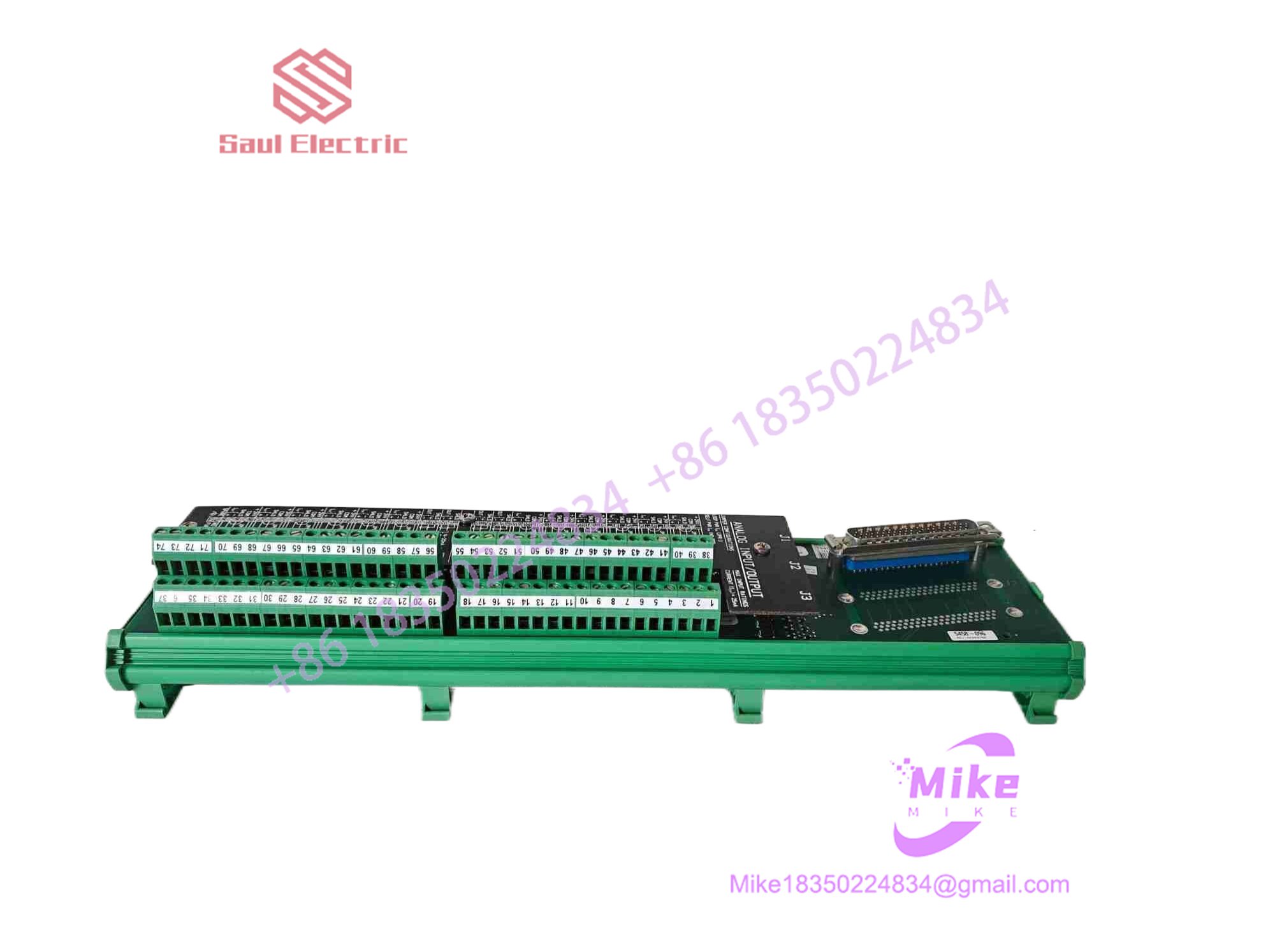
5501-376
Key Technical Specifications
| Parameter | Specification Metric |
| Device Category | Analog High-Density Field Terminal Module (Simplex FTM) |
| System Compatibility | Woodward MicroNet Simplex Digital Control Platforms |
| Matching Rack Cards | Designed for MicroNet High-Density Analog Combo I/O modules |
| Termination Design | Heavy-duty industrial screw terminals for secure field wire clamping |
| Backplane/Cable Interface | High-density multi-pin connectors linking via analog system harnesses |
| Mounting Architecture | DIN-rail or standard back-panel cabinet mounting |
| Operating Temperature | Standard industrial tier (-20°C to +70°C operating profile) |
| Enclosure Rating | Open industrial board layout designed for protected control cabinet placement |
Application Scenarios & Pain Points
- Gas and Steam Turbine Control Retrofits: Plant operators modernizing turbine governing panels rely on structured FTM layouts to organize complex sensor wiring without inducing signal noise or ground faults.
- Compressor and Generator Skid Upgrades: Multi-channel analog instrumentation (such as pressure, temperature, and level transmitters) requires clean signal termination to prevent erratic control loops and nuisance trips.
- Rapid Turnaround Maintenance: Utilizing dedicated FTM boards allows maintenance technicians to replace internal MicroNet chassis cards safely without unbolting individual field wires, drastically reducing downtime.
QA & Live Testing SOP (Trust Signal)
We don’t warehouse legacy FTM termination boards without verifying structural and electrical continuity; every 5501-376 unit goes through our rigorous bench protocol:
- Visual & Terminal Block Audit: Inspected under optical magnification for screw thread integrity, terminal block seating, solder joint stability on backplane headers, and complete absence of corrosion.
- Point-to-Point Continuity Testing: Multi-meter verified resistance testing across every individual channel path from the field screw terminals to the multi-pin connector headers to ensure zero open circuits.
- Insulation Resistance Check: High-voltage isolation screening performed between adjacent signal traces and mounting grounds to prevent signal cross-talk or leakage on low-level analog channels.
- Protective Packaging: Sealed inside heavy-duty anti-static barrier bags and packed with high-density structural foam to prevent transit vibration or mechanical damage.
Field Engineer’s Pitfall Guide
- ❗ Shielding and Grounding Continuity: Always terminate signal cable shields to the designated FTM ground studs or terminal bars; floating shields or multi-point grounding will introduce electromagnetic interference (EMI) into sensitive analog loops.
- ❗ Terminal Torque Specifications: Avoid over-tightening field wiring screw terminals, as excessive torque can strip block inserts or snap internal trace paths.
- ❗ Cable Latching and Keying: Ensure that the multi-pin interconnecting cables linking the 5501-376 FTM to the MicroNet rack card are fully seated and latched securely to prevent intermittent communication drops.
Intent-Driven FAQ
Is the Woodward 5501-376 a standalone controller or a terminal board?
The 5501-376 is a passive/routed Field Terminal Module (FTM); it does not contain active processing firmware or software configuration logic. It acts as the physical wiring transition point for high-density analog I/O cards.
Which MicroNet modules pair directly with the 5501-376?
It is engineered specifically to interface with Woodward MicroNet High-Density Analog Combo I/O modules used in simplex control configurations.
Do I need to disconnect field wiring when replacing a MicroNet I/O card linked to this FTM?
No. One of the primary maintenance benefits of using an FTM like the 5501-376 is that field wires remain permanently landed on the screw blocks while you service or swap the multi-pin connecting cable and rack card.
Can this terminal module handle both current and voltage inputs?
Yes, depending on your system configuration mapping and the specific High-Density Analog module installed in the rack, it supports standard industrial process ranges (such as 4–20 mA or 0–5 V signals).
What kind of warranty covers this surplus terminal module?
Every unit is backed by our comprehensive replacement guarantee, supported by multi-point pre-shipment bench testing to ensure absolute electrical continuity out of the box.





