


Description
Zygo ZMI-4104C | 4-Axis Metrology Board VME Interface
Product Introduction
When a semiconductor lithography tool or precision air-bearing stage misses its positioning target by even a fraction of a nanometer, wafer yield drops to zero. The Zygo ZMI-4104C is not a standard commercial encoder card; it is a high-performance 4-axis metrology processor engineered specifically to decode complex heterodyne laser interferometer signals. It acts as the high-speed computational core translating optical phase shifts into ultra-precise coordinate data.
Built around a sophisticated digital signal processing architecture, this board mounts directly into standard VMEbus chassis slots while handling continuous multi-axis position updates without latency. It handles demanding cleanroom and laboratory environments—withstanding ambient operating temperatures up to 50^\circC—while maintaining rigorous error detection. If you are maintaining legacy photolithography tools or upgrading advanced metrology test rigs, this board drops straight into your existing VME rack framework.
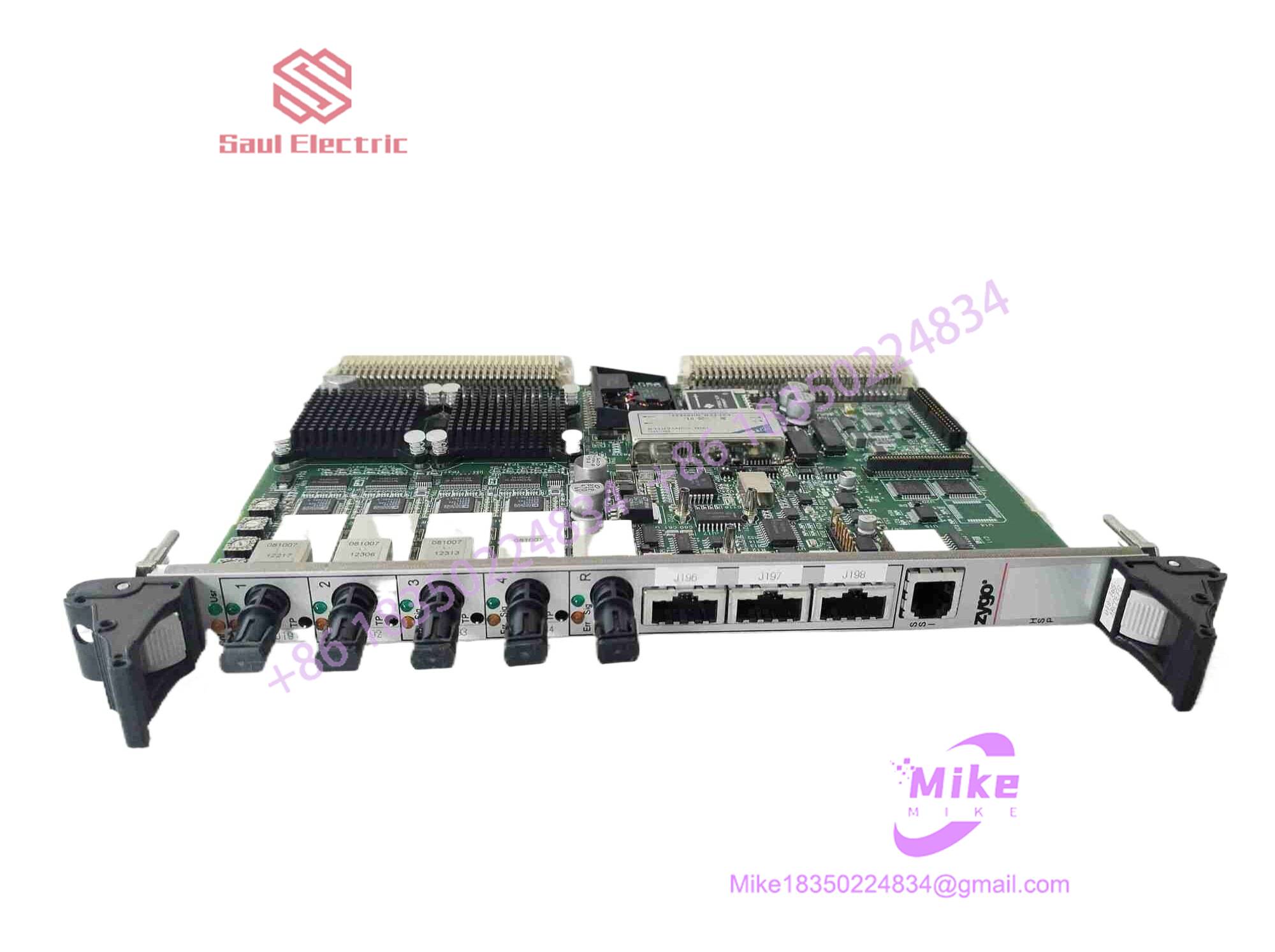
ZYGO ZMI-4104C
Key Technical Specifications
| Parameter | Specification Metric |
| Device Category | Multi-Axis Metrology / Interferometer Board |
| System Compatibility | VMEbus Industrial / Laboratory Racks |
| Axis Capacity | 4 independent measurement axes |
| Measurement Resolution | Sub-nanometer positioning capability (system dependent) |
| Input Signal Type | Heterodyne laser interferometer quadrature / frequency inputs |
| Bus Interface | VMEbus backplane data transfer architecture |
| Diagnostic Features | Front-panel LED status indicators and test points |
| Operating Temperature | 0^\circC to +50^\circC controlled environment |
| Power Requirements | Standard VME backplane DC rail voltages |
Application Scenarios & Pain Points
- Semiconductor Wafer Stepper Stage Control: Photolithography scanners require real-time positioning feedback across multiple axes to align circuits within atomic tolerances. The ZMI-4104C processes high-speed optical fringes instantly, preventing tracking errors during high-acceleration stage steps.
- Precision Optics Fabrication Testing: Interferometric testing of large astronomical mirrors demands absolute measurement stability over extended test cycles. This board eliminates phase-decoding jitter, ensuring clean surface profile maps.
- High-Speed Air-Bearing Stage Metrology: Multi-axis motion platforms require deterministic feedback loops to suppress mechanical vibration artifacts. The board’s rapid update rates feed stable coordinate data directly to the motion controller.
QA & Live Testing SOP (Trust Signal)
We don’t warehouse sensitive metrology boards without verifying their internal logic and bus communication health; every ZMI-4104C unit goes through our QA protocol:
- Visual & Microscopic Audit: Inspected under high magnification for trace integrity, solder joint stability, and complete absence of environmental contamination on gold-plated VME edge connectors.
- Dynamic VME Rack Testing: Slotted into a live VMEbus test chassis to verify proper backplane handshakes, register read/write stability, and processor boot sequences.
- Signal Decoding Simulation: Tested with specialized frequency generator inputs to confirm that all four axes process quadrature signals accurately without count loss.
- Protective Packaging: Sealed inside heavy-duty anti-static shielding bags and suspended in high-density structural foam to prevent transit vibration damage.
Field Engineer’s Pitfall Guide
- ❗ Electrostatic Discharge (ESD) Vulnerability: Never handle this board without a properly grounded wrist strap. Direct contact with exposed surface-mount ICs can cause catastrophic electrostatic breakdown.
- ❗ VME Bus Address Conflicts: Verify your board jumper and switch address settings carefully before sliding the card into a populated VME rack; overlapping base addresses will lock up the system bus.
- ❗ Optical Preamplifier Grounding: Ensure that remote receiver/preamplifier chassis are grounded properly to the same star ground as the VME rack; ground loops will inject common-mode noise into the interferometer photodetector inputs.
Intent-Driven FAQ
Is the Zygo ZMI-4104C compatible with older ZMI-1000 series systems?
Compatibility depends on your specific system architecture and VME master software drivers. Always verify that your software environment supports the ZMI-4104C command set and firmware revision level before swapping hardware.
Does this board require external calibration files?
Calibration parameters and axis compensation factors are typically managed through your host control software during system initialization, though board-level hardware jumpers must match your system configuration requirements.
What causes a bus timeout error immediately upon insertion?
Usually, this indicates an unseated VME backplane connector, an incorrect base address switch setting, or a conflict with another card occupying the same address space on the VME bus.
Can all four axes be operated simultaneously at high velocities?
Yes. The board is engineered to process multi-axis data concurrently, maintaining high-speed tracking across all four channels without dropping measurement counts during rapid stage moves.
What kind of warranty covers this surplus metrology board?
Every unit is backed by our comprehensive replacement guarantee, supported by multi-point pre-shipment bench testing to verify VME bus communication and logic stability.





