


Description
Yuken AME-D-10-100-20 Power Amplifier | Core Hydraulic Control Unit
Dynamic Product Introduction
Precise hydraulic flow and pressure regulation require tightly tuned electronic drivers that match solenoid coil impedance profiles. The Yuken AME-D-10-100-20 power amplifier is engineered specifically to govern 10-ohm series proportional valves (such as Yuken EFG and EFCG series), translating incoming 0–10V command inputs into proportional output currents. Sourcing this exact configuration ensures seamless integration into legacy hydraulic control panels without requiring costly wiring or loop logic overhauls.
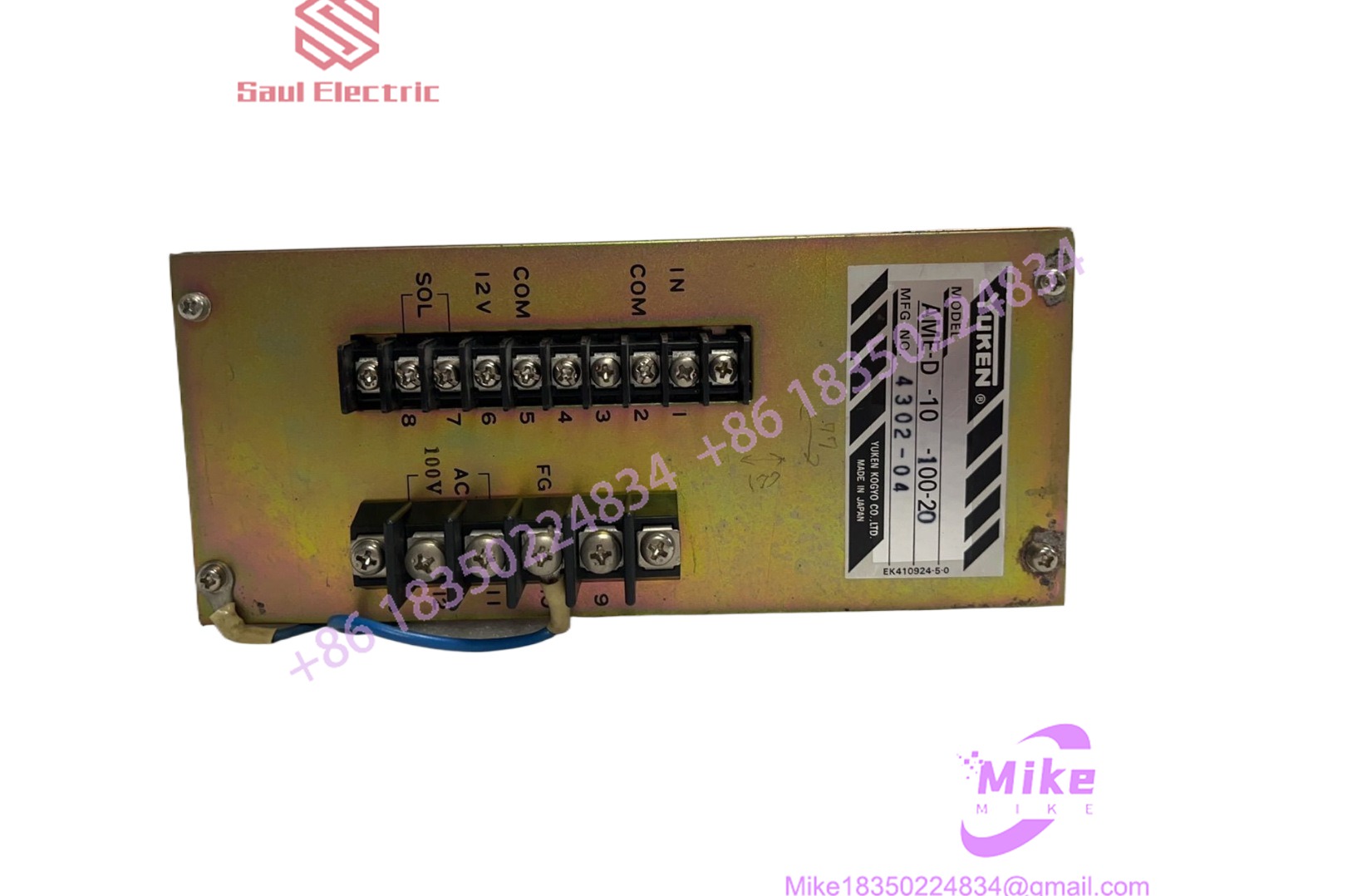
AME-D-10-100-20
Key Technical Specifications
| Technical Parameter | Specification Value |
|---|---|
| Device Type | Proportional Electro-Hydraulic Power Amplifier |
| Input Type | DC Command Input (typically 0 to 10 VDC) |
| Power Supply Voltage | 100 V AC |
| Target Solenoid Resistance | 10 Ω (optimized for 10-ohm proportional valves) |
| Compatible Valve Lines | Yuken EFG / EFCG series flow and pressure control valves |
| Ambient Temperature Range | 0°C to +50°C |
| Mounting Format | Panel / Sub-rack mounting architecture |
| Adjustment Features | Integrated gain, bias, and ramp (up/down) adjustments |
Global Sourcing & Live-Test SOP (Transparency Core)
Procuring secondary market or replacement industrial amplifier cards requires stringent testing of internal pulse-width modulation (PWM) output stages and signal linearity. Every inbound Yuken AME-D-10-100-20 unit undergoes a rigorous evaluation pipeline:
- Inbound Verification: Serial number pedigree tracing against factory ledgers, microscopic inspection of circuit board traces, and electrolytic capacitor health screening.
- Live Simulation: Mounted onto a dedicated bench test rig powered by a regulated 100VAC source and coupled to a 10-ohm resistive inductive load bank simulating valve solenoids.
- Diagnostics: Linear response verification across 0–10V input sweeps, output current stability monitoring, ramp-time potentiometer adjustment checks, and a 24-hour continuous thermal burn-in test.
- Final Prep: Terminal block pin inspection, anti-static shielding bag placement, and heavy-duty ESD-safe vacuum packaging prior to dispatch.
The Field Engineer’s Pitfall Guide
- ❗ Solenoide Coil Impedance Mismatch: Connecting this 10-ohm variant amplifier to a 40-ohm or different valve coil type will distort the current feedback loop, leading to severe thermal drift and inaccurate hydraulic positioning.
- ❗ AC Supply Voltage Fluctuations: Feeding line voltages outside the nominal 100VAC specification window can destabilize the internal DC regulation stages, causing output current chatter to the valve.
- ❗ Poor Cabinet Thermal Management: Installing the amplifier in unventilated enclosures near high-heat components will degrade onboard electrolytic capacitors and cause calibration drift in the ramp circuits.
Intent-Driven FAQ
- Will replacing the Yuken AME-D-10-100-20 require recalibrating my hydraulic valve? Fine-tuning the internal bias and gain potentiometers may be necessary to match the precise flow or pressure deadband characteristics of your specific hydraulic actuator loop.
- Can this amplifier use its own internal power supply for command signals? If only a single variable resistor is utilized for external setting commands, the internal power supply of the amplifier can be leveraged, otherwise an external 0–10V DC command source is required.
- What indicates a failing output stage during troubleshooting? Observing correct command voltage inputs on the terminal block while the output current to the valve remains flatlined or erratic points directly to a blown output driver transistor.
- Is this unit compatible with modern 24VDC control architectures? No. This specific part suffix (-100-20) is built for a 100V AC power input configuration; verify your control cabinet transformer ratings before installation.
- What type of warranty covers this surplus hardware? Verified units are backed by an industry-standard replacement warranty covering electrical functionality and component stability under normal operational parameters.





