

Description
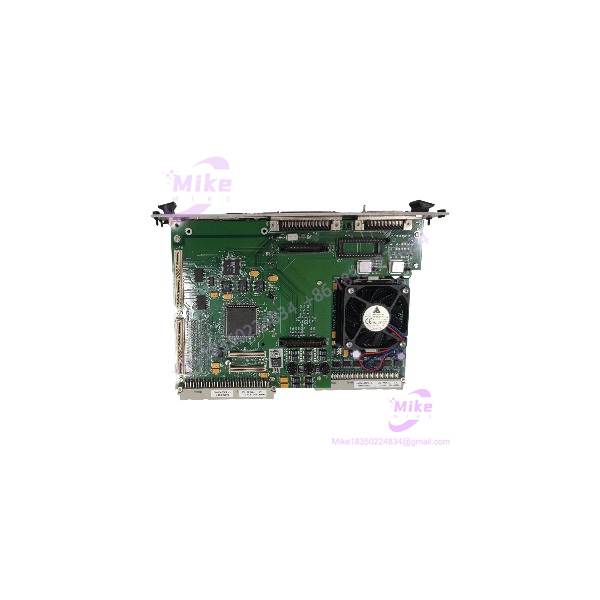
Xycom XVME-660716 | VMEbus Single Board Computer In-Stock
Dynamic Product Introduction
Finding yourself in front of an aging defense, aerospace, or heavy industrial control rack with a dead master CPU card turns an ordinary maintenance shift into an immediate outage emergency. The Xycom XVME-660716 acts as the computational engine inside high-reliability VMEbus chassis, bridging legacy backplane signaling with fast onboard processing and flexible memory subsystems. Built specifically to survive demanding industrial environments, it maintains deterministic control execution without succumbing to continuous cabinet vibration or elevated ambient temperatures.
In retrofit and legacy maintenance operations, instrument engineers frequently source the Xycom XVME-660716 to avoid the astronomical costs of a total system control re-architecture. Utilizing a fully bench-tested replacement board allows technicians to drop a working CPU directly into existing card cages without rewriting base VMEbus arbitration routines or altering field wiring infrastructure. Installing a pre-inspected board instantly clears system bus faults and restores stable processing across your VME cage.
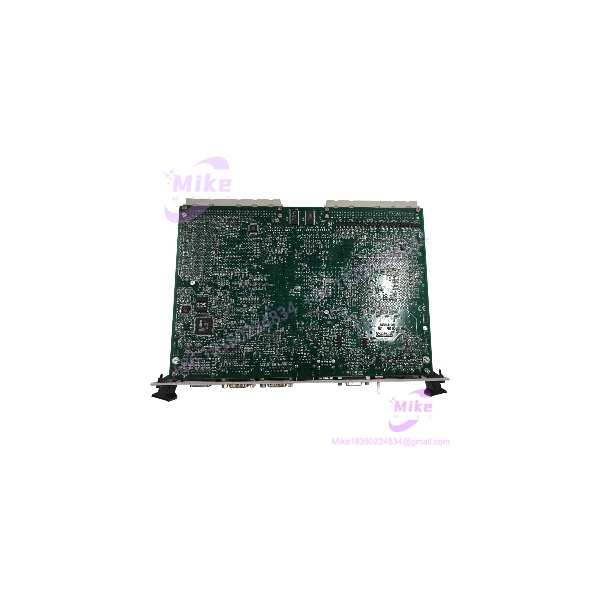
XVME-660716
Key Technical Specifications
- Model Designation: XVME-660716
- Manufacturer: Xycom Automation
- Bus Architecture: VMEbus standard (IEEE 1014 compliant)
- Processor Type: Embedded Intel architecture processor core
- System Memory: Onboard SDRAM with Flash memory storage options
- Serial Interfaces: Dual RS-232 / RS-422 configurable serial communications ports
- Network Ports: Integrated 10/100 Mbps Ethernet RJ45 controller
- Peripheral Connections: Keyboard/Mouse PS/2 ports, IDE/Floppy storage interfaces
- Backplane Form Factor: 6U single-slot VMEbus card construction
- Operating Temperature Range: 0°C to +55°C (32°F to 131°F)
- Storage Temperature Range: -40°C to +85°C (-40°F to 185°F)
Global Sourcing & Live-Test SOP (Transparency Core)
Procuring surplus VMEbus computer hardware like the Xycom XVME-660716 demands an uncompromising quality control process to guarantee plug-and-play field operation. Every incoming single board computer goes through a rigorous five-stage diagnostic verification:
- Inbound Verification: Serial numbers and board revision stamps are checked against original Xycom manufacturing logs. Technicians inspect multi-layer PCB traces for heat discoloration, examine surface-mount capacitors for bulging, and check all 96-pin DIN backplane connectors for pin misalignment or bending.
- Live Simulation: The Xycom XVME-660716 is inserted into a dedicated 6U VMEbus test chassis powered by a regulated multi-voltage power supply rack.
- Diagnostics: The card boots through a suite of low-level diagnostic self-tests to verify RAM address lines, onboard Flash read/write cycles, and serial port communication loopbacks. An oscilloscope monitors VMEbus arbitration timing and interrupt lines. The module then undergoes a 24-hour thermal soak inside an environmental chamber to rule out intermittent component drift.
- Final Prep: BIOS configurations are documented on the QC test sheet, gold DIN connector pins are cleaned with specialized contact restorer, and the board is sealed in static-shielding ESD packaging.
The Field Engineer’s Pitfall Guide
- ❗ Backplane Jumper and Shunt Setting Errors: —though board designations might match, failing to mirror the exact jumper settings (such as VMEbus system controller status, bus grant routing, or memory mapping addresses) from your old card will prevent the CPU from initializing properly. The central rack will register a bus error (BERR) status upon power-up.
- ❗ Forcing 96-Pin DIN Backplane Connectors: Slid the board into the card cage guide rails carefully. Forcing the Xycom XVME-660716 into position without proper alignment will bend the dense rear male connector pins, causing short circuits across the VMEbus backplane power rails.
- ❗ CMOS Battery Depletion and BIOS Memory Loss: Storing spare CPU cards on warehouse shelves for years can discharge the onboard lithium battery. (—though keeping a spare CR2032 or equivalent battery in your maintenance kit is standard practice.) A depleted battery causes loss of custom CMOS setups and boot order preferences, locking up the automatic startup sequence.
Intent-Driven FAQ
Will swapping out a Xycom XVME-660716 card require re-flashing system software?
If your application OS and control logic reside on onboard socketed Flash memory or a connected compact flash card, you will need to transfer those physical memory components or re-image the drive onto the replacement board before it will boot your specific application routine.
Is the Xycom XVME-660716 capable of acting as the VMEbus System Controller?
Yes, the board features configurable onboard logic that allows it to serve as the master VMEbus System Controller (enabling the bus arbiter, IACK daisy-chain driver, and system clock) or operate as a slave CPU in multi-processor chassis environments.
What should I do if the SYSFAIL LED remains steadily lit on power-up?
A continuous SYSFAIL light indicates that the board’s self-test diagnostic routine has failed. Check that onboard RAM modules are seated correctly, verify power supply rail voltages (+5V, +12V, -12V) are within spec, and confirm that jumper settings match your rack’s backplane configuration.
Can I hot-swap this CPU board while the VMEbus chassis is powered on?
No. Standard VMEbus backplanes do not support live insertion or removal of master processor cards. Pulling or inserting the Xycom XVME-660716 while backplane power is active will damage onboard transceivers and cause immediate bus faults on active adjacent modules.
What warranty coverage is included with tested surplus units?
All verified Xycom XVME-660716 boards come backed by a comprehensive 1-year replacement warranty. If the unit experiences hardware failures, memory read errors, or backplane communication faults under normal operating parameters within 12 months, it will be replaced directly from available inventory stock.





