

Description
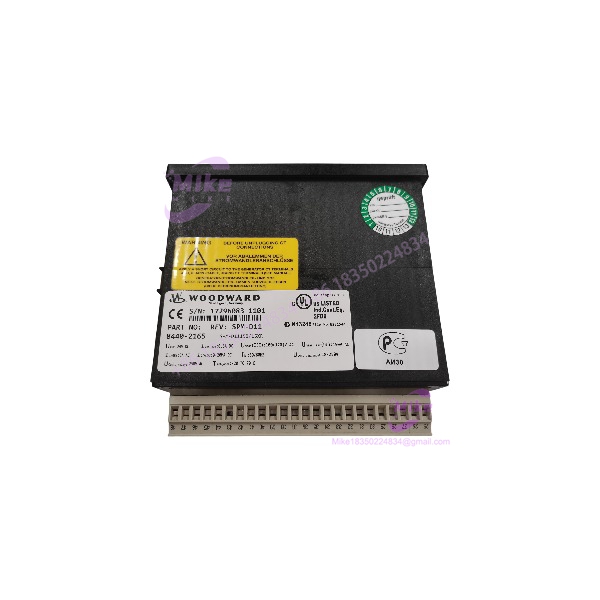
Woodward 8440-2165 | easYgen-3200XT Genset Controller In-Stock
Dynamic Product Introduction
A processor blackout or display failure on a central generator controller leaves prime power installations, emergency backup systems, and microgrid plants vulnerable to total power loss. The Woodward 8440-2165 (easYgen-3200XT-P1) is an advanced generator set control module designed for complex paralleling applications. Built with a heavy-duty metal enclosure and an intuitive graphical display, it manages engine start/stop sequencing, real-time kW/kVAR load sharing over CAN bus, breaker synchronization, and utility tie transfer logic without operational latency.
When an operational controller suffers display backlight failure, CAN communication dropouts, or sensor input drift mid-operation, sourcing an exact-fit Woodward 8440-2165 replacement module restores generator automation immediately. Installing a fully bench-tested replacement unit allows power generation engineers to panel-mount the module directly into existing cutout locations without re-engineering wiring harnesses or modifying CT/PT connections. Swapping out a degraded controller restores immediate multi-unit synchronization, precise voltage/frequency regulation, and total power grid reliability.
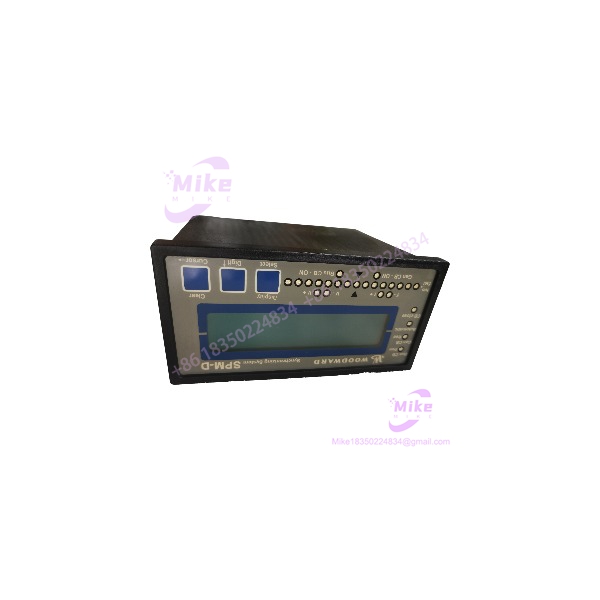
8440-2165
Key Technical Specifications
- Model Designation: 8440-2165
- Product Model: easYgen-3200XT-P1
- Manufacturer: Woodward, Inc.
- Control Logic Input: 12/24 VDC nominal (8.0 to 40.0 VDC continuous range)
- Generator Voltage Sensing: 3-phase, 100 to 480 VAC nominal (up to 600 VAC max line-to-line)
- Current Transformer Inputs: 1 A or 5 A configurable secondary inputs
- Communication Ports: 2 x CAN bus interfaces (Load Share & Expansion), 1 x Ethernet port, 1 x RS-485 port, 1 x USB configuration port
- Digital Inputs & Outputs: Configurable discrete inputs, relay outputs, and analog sensor channels (MPU, PT100, 0–20 mA)
- Enclosure Protection: IP65 / NEMA 4X front panel rating when mounted
- Operating Temperature Range: -20°C to +70°C (-4°F to 158°F)
Global Sourcing & Live-Test SOP (Transparency Core)
Procuring secondary-market power generation hardware like the Woodward 8440-2165 requires rigorous bench testing to verify voltage/current sensing accuracy, CAN load-sharing response, and output relay contact health. Every incoming controller passes through an intensive five-stage quality assurance protocol:
- Inbound Verification: Part numbers (8440-2165 / easYgen-3200XT-P1), serial tags, and mechanical housing conditions are validated against original Woodward engineering records. Technicians examine terminal blocks, glass display faceplates, and rear housing seals for signs of heat stress or physical damage.
- Live Simulation: The 8440-2165 is mounted into a specialized generator simulator test stand powered by a regulated 24 VDC logic power supply and connected to 3-phase AC voltage and current injection sets.
- Diagnostics: Technicians load test configuration files using Woodward ToolKit software. Three-phase generator and busbar voltage inputs are swept from 0 to 480 VAC while evaluating real-time frequency, phase-angle detection, and synchroscope responses. CAN bus load-sharing lines undergo active data packet verification against secondary test controllers. The unit then completes a 24-hour thermal soak in an environmental test chamber under continuous AC signal injection.
- Final Prep: Configuration memory is reset to clean baseline states, terminal block screws are verified, protective window film is applied, and the controller is wrapped in static-shielding ESD packaging before dispatch.
The Field Engineer’s Pitfall Guide
- ❗ CT Secondary Rating Configuration Mismatches: —though you might expect automatic input scaling, configuring the 8440-2165 for 5 A CT inputs while connecting 1 A CT secondaries will result in severe current measurement distortion, causing premature over-current tripping or invalid load-sharing calculations.
- ❗ Missing Termination Resistors on CAN Load-Share Bus: Operating the CAN bus load-sharing network without placing 120 Ω termination resistors at both physical ends of the communication line will induce signal reflections, triggering CAN bus communication fault alarms and unbalancing generator load distribution.
- ❗ Wiring Reverse Phase Sequence to PT Sensing Inputs: Reversing phase connections (e.g., L1 and L2 inverted) during voltage transformer wiring will trigger reverse phase sequence faults, preventing automatic breaker closure.
Intent-Driven FAQ
What is the primary application of the Woodward 8440-2165 controller?
The 8440-2165 (easYgen-3200XT-P1) is designed for automatic generator set management, complex multi-unit paralleling, automatic mains failure (AMF) transfer, and peak shaving applications in critical power plants.
Will replacing an 8440-2165 require loading a configuration file?
Yes. Surplus replacement units arrive reset to factory baseline settings. You must upload your site-specific application configuration file (.wset) using Woodward ToolKit software via the USB, RS-485, or Ethernet connection before operating the generator.
What is the difference between the easYgen-3100XT and easYgen-3200XT-P1 models?
The 3200XT series features an integrated graphical display and keypad interface directly on the front door panel, whereas the 3100XT model is a back-panel mounted unit without a built-in display screen.
What causes a red alarm LED to illuminate on the 8440-2165 front panel?
An active red alarm LED indicates an unhandled engine/generator fault condition, such as over/under voltage, over/under frequency, reverse power, generator overload, or a CAN bus load-share communication dropout.
What warranty coverage comes with pre-inspected replacement controllers?
All verified Woodward 8440-2165 generator set controllers come backed by a comprehensive 1-year replacement warranty. If the unit experiences processing core failure, display degradation, or sensing input drift under standard operating parameters within 12 months, it is swapped directly from available warehouse inventory stock.





