


Description
Square D 8410-CLE-202001 | Class 8410 AC Current Transducer Core Category
Dynamic Product Introduction
Legacy switchgear and older motor control centers frequently rely on specialized analog measurement loops that require precise current scaling without introducing high voltages to control rooms. The CLE-202001 addresses this engineering requirement by transforming raw 0–5 A AC signals from current transformers into a clean, linear 0–1 mA DC output. By establishing total electrical isolation between the primary power bus and secondary monitoring electronics, this Class 8410 unit protects downstream measurement assets from harmful line transients.
Sourcing replacement hardware for aging electrical infrastructure often presents a challenge when original components reach end-of-life status. Deploying a verified surplus CLE-202001 unit restores exact loop functionality without requiring costly panel redesigns or controller conversions.
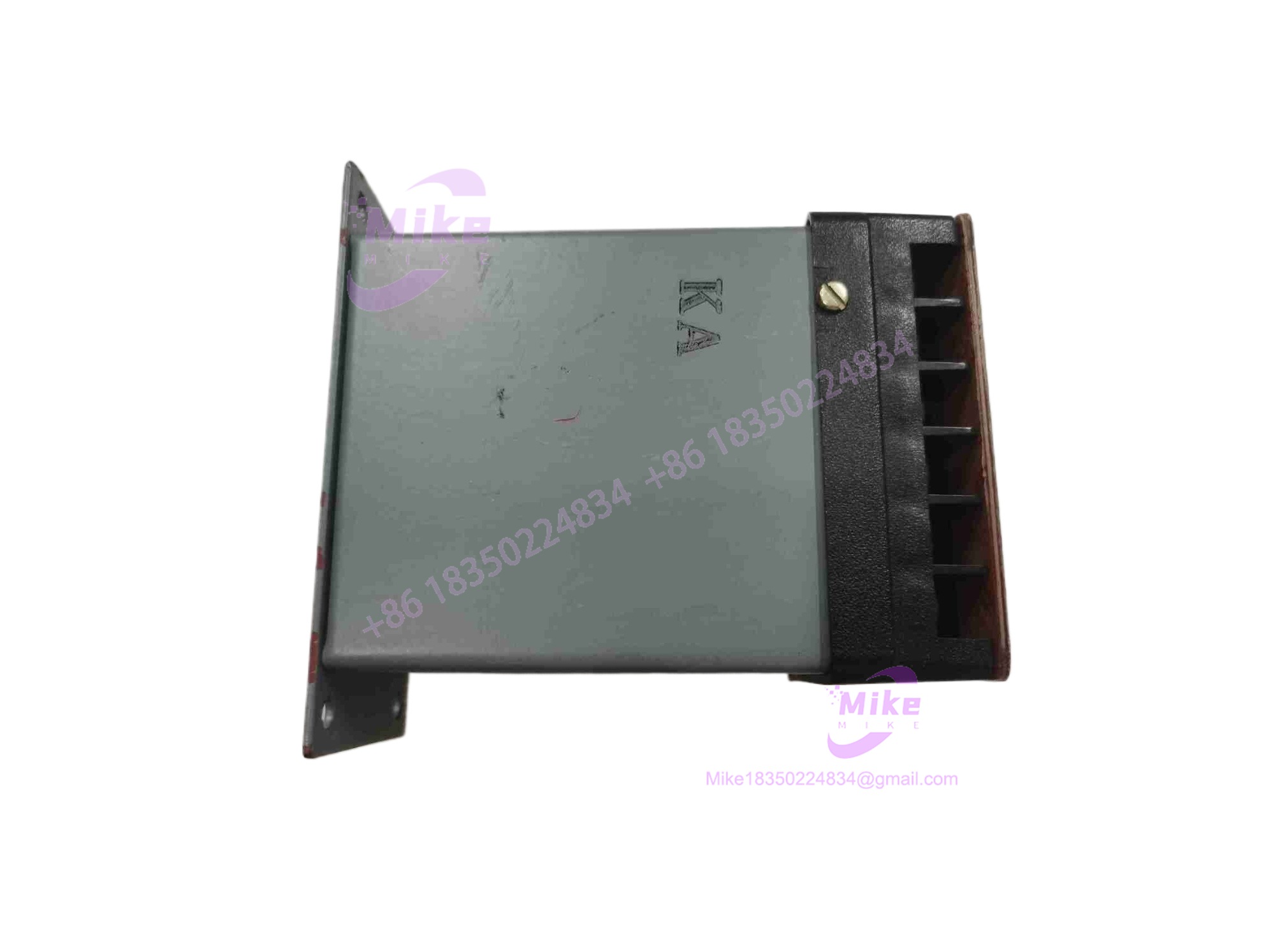
CLE-202001
Key Technical Specifications
| Core Parameter | Technical Specification |
| Manufacturer Series | Square D Class 8410 |
| Input Signal Range | 0 to 5 A AC |
| Output Signal Range | 0 to 1 mA DC |
| Isolation | Galvanic isolation between input, output, and power circuits |
| Response Time | \le 400 ms (nominal to 90% of final value) |
| Accuracy Class | \pm0.5% of full scale under reference conditions |
| Mounting Style | DIN rail or panel surface mount base |
| Enclosure Material | High-impact industrial thermoplastic (Black) |
| Operating Temperature | 0 °C to 60 °C |
| Catalog / Part Number | 8410-CLE-202001 |
Global Sourcing & Live-Test SOP (Transparency Core)
Acquiring obsolete analog instrumentation from the secondary market requires strict verification of electronic drift and calibration accuracy. Every pre-owned CLE-202001 unit undergoes an uncompromising evaluation routine:
- Inbound Verification: Inspectors examine the molded thermoplastic housing for thermal stress cracks, verify terminal block screw integrity, and check part numbers against historical Schneider Electric manufacturing ledgers.
- Live Simulation: The transducer is wired into an active test bench utilizing a variable-tap 5 A AC current source coupled to an isolated loop supply.
- Diagnostics: Technicians inject multi-point input steps (0%, 25%, 50%, 75%, 100%) across the 0–5 A range while measuring output current via a high-precision digital multimeter to verify the 0–1 mA DC scaling curve. Units undergo a thermal burn-in cycle to expose latent drift issues.
- Final Prep: Terminals are cleaned of oxidation, a calibration QA sticker is applied, and the device is sealed inside an antistatic moisture-barrier bag.
The Field Engineer’s Pitfall Guide
- ❗ Open-Circuit Current Transformer (CT) Hazards: Disconnecting the secondary wiring of an active 0–5 A CT loop feeding the CLE-202001 without shorting the CT first can induce lethal high-voltage spikes. (—though the transducer itself isolates internal electronics, external wiring demands strict adherence to safety shorting blocks.) I’ve seen technicians crack insulation and ruin internal windings by opening a live CT circuit during routine maintenance.
- ❗ Output Burden Resistance Overload: Driving the 0–1 mA DC output loop through excessive cable lengths or high-impedance loads beyond the maximum specified burden rating will cause signal saturation and severe reading drop-off.
- ❗ Ground Loop Interferences: Failing to ground the shield wire of the low-level DC output cable at a single designated reference point introduces electromagnetic noise into analog meter readouts.
Intent-Driven FAQ
Will swapping a faulty transducer require recalibrating downstream meters?
If you replace the unit with an exact functional match from the Class 8410 series, scaling should remain identical, eliminating the need to recalibrate downstream analog indicators or controller input channels.
Can I substitute a 4-20mA output transducer for this 0-1mA model?
Not directly. The outputs a 0–1 mA DC signal, meaning replacing it with a standard 4–20 mA loop device requires changing input card configuration parameters or adding an external signal scaling interface.
Is the input side electrically isolated from the output terminals?
Yes. The unit features built-in galvanic isolation separating the high-current AC input circuit from the low-power DC output loop to protect control hardware from power surges.
What causes a output to peg at maximum scale or drop to zero?
A zero output typically indicates a broken input wire from the primary current source or a failed internal power stage, while a pinned maximum output usually points toward a shorted internal component or severe over-range condition.
What kind of warranty covers pre-owned or surplus units?
Specialized industrial surplus suppliers typically back verified secondary-market transducers with a dependable 1-year operational warranty covering component stability and signal accuracy.
What type of downstream control device or analog meter are you feeding with the 0-1mA output of this transducer?





