

Description
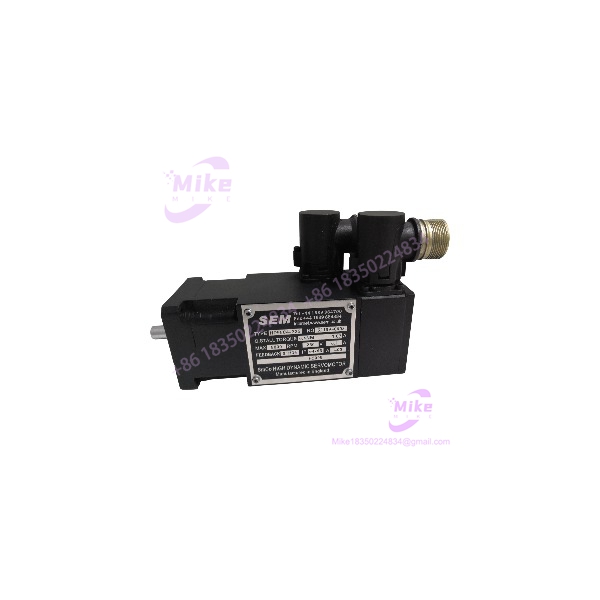
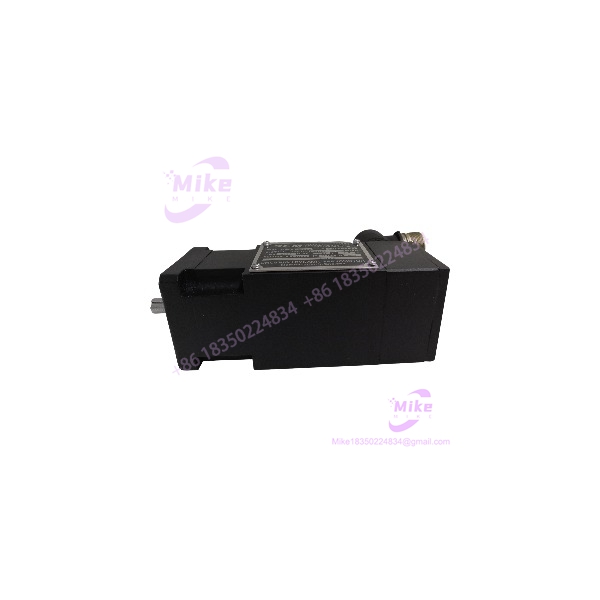
SEM HD55C4-32S | High-Speed Brushless Servo Motor
Product Introduction
The SEM HD55C4-32S is a compact high-speed servo motor from the SEM HD series, manufactured under the FTM Technologies / SEM product line. Current industrial parts records identify this exact part as a servo motor rated at 260 V and 6.1 A with an 8,000 RPM maximum speed. The model is also listed as discontinued, making exact part-number matching particularly important when sourcing a replacement.
This is a motor for applications where speed capability matters more than simply matching a frame size. The 8,000 RPM specification places it well outside the range of many conventional industrial motors, so the drive, feedback system, balancing condition, bearings, and mechanical load all need to be considered together. A replacement should therefore be selected by complete motor identification rather than by physical appearance alone.
The HD55 series includes several closely related variants, including HD55C4-22S, HD55C4-32S, and HD55C4-44S, as well as corresponding T variants. That makes the 32S suffix part of the actual electrical/mechanical identification, not a cosmetic model-code detail.
HD55C4-32S
Key Technical Specifications
- Manufacturer: SEM / FTM Technologies
- Part Number: HD55C4-32S
- Motor Type: Servo motor
- Technology: Brushless servo motor
- Maximum Speed: 8,000 RPM
- Voltage: 260 V
- Current: 6.1 A
- Series: HD55
- Configuration: C4-32S
- Feedback: Encoder feedback is associated with this servo configuration; verify the installed feedback device before commissioning
- Protection: IP20 reported by secondary technical data
- Weight: Approximately 8 lb reported by current industrial parts records
- Manufacturer Status: Discontinued
- Primary Use: High-speed precision motion applications
The 260 V, 6.1 A, 8,000 RPM and approximately 8 lb figures are directly reported in current industrial parts records for the exact HD55C4-32S. The public documentation available for this legacy model does not provide enough reliable information to state exact continuous torque, peak torque, rotor inertia, encoder resolution, shaft diameter, mounting dimensions, or connector pinout.
Global Sourcing & Live-Test SOP
1. Inbound Verification
For an incoming SEM HD55C4-32S, start with the nameplate.
- Confirm the complete
designation. - Record the serial number and any additional SEM/FTM identification.
- Photograph the motor from every side.
- Inspect the shaft for scoring, corrosion, or impact damage.
- Check the mounting flange for cracks or distortion.
- Inspect the electrical connector and cable exit.
- Look for evidence of overheating around the winding housing.
- Check the encoder/feedback connector for bent or recessed contacts.
- Record any additional motor constants printed on the nameplate.
Do not accept “SEM HD55” as sufficient identification. The HD55 family contains multiple electrical variants.
2. Mechanical Inspection
Because this motor is specified for speeds up to 8,000 RPM, mechanical condition deserves particular attention.
Check:
- Shaft runout
- Bearing noise
- Bearing axial/radial play
- Mounting-face condition
- Shaft key/keyway condition, if fitted
- Coupling fit
- Rotor drag
- Housing damage
A motor that turns freely by hand is not automatically suitable for 8,000 RPM operation. High-speed bearing condition and rotor balance become increasingly important as operating speed rises.
3. Electrical Inspection
Before applying power:
- Verify winding resistance according to the manufacturer’s service procedure.
- Check for phase-to-phase abnormalities.
- Check insulation using a test method appropriate for the motor and connected feedback electronics.
- Keep encoder electronics isolated from inappropriate insulation-test voltages.
- Verify the intended servo amplifier supports the motor’s voltage/current requirements.
- Confirm feedback wiring before connecting the encoder.
A standard industrial multimeter is useful for preliminary checks, but resistance measurements alone cannot certify a servo motor.
4. Feedback Verification
Do not guess the encoder specification from the 32S suffix.
Before commissioning:
- Identify the feedback connector.
- Record encoder manufacturer/type if marked.
- Verify encoder supply voltage.
- Confirm signal format.
- Check cable shielding and grounding.
- Verify encoder resolution in the original machine documentation.
- Confirm the compatible servo drive.
- Confirm commutation/feedback parameters.
A servo motor can have correct winding characteristics and still fail commissioning because the feedback configuration is wrong.
5. Controlled Run Test
Where the appropriate amplifier and test equipment are available:
- Mount the motor securely.
- Confirm coupling alignment.
- Start at low speed.
- Check encoder feedback.
- Verify commanded versus actual direction.
- Monitor current.
- Listen for abnormal bearing or rotor noise.
- Increase speed progressively.
- Check vibration as speed rises.
- Do not approach 8,000 RPM until the motor has passed the lower-speed checks.
For a used unit, a simple “motor spins” test is inadequate evidence for an 8,000 RPM servo.
6. Extended Test
For critical replacement inventory, record:
- Applied voltage
- Motor current
- Operating speed
- Bearing temperature
- Housing temperature
- Vibration
- Encoder stability
- Fault history
- Run duration
Retain the test record with the serial number before final ESD-safe packaging.
Field Engineer’s Pitfall Guide
❗ Do not substitute by 55-series frame size alone
SEM produced multiple HD55 variants, including HD55C4-22S, , HD55C4-44S, plus corresponding T configurations. The suffix identifies a particular motor configuration.
If a machine specifies , do not assume another HD55 motor is interchangeable merely because the housing and mounting pattern appear identical.
❗ 8,000 RPM changes the inspection standard
The published maximum speed is 8,000 RPM. At that speed, bearing condition, rotor balance, coupling alignment, and shaft condition become significant commissioning variables.
A motor that sounds acceptable at 500 RPM can exhibit unacceptable vibration at several thousand RPM. For a used spare, progressive speed testing is much more informative than a basic continuity check.
❗ Verify the feedback hardware before connecting a drive
Current secondary records identify the as an encoder-equipped servo configuration, but the publicly available evidence does not establish a sufficiently reliable exact encoder resolution or pinout for this particular motor.
Do not invent the encoder parameters from the motor model. Pull the original machine parameter set or verify the physical feedback device first.
Intent-Driven FAQ
Is the SEM a servo motor?
Yes. Current industrial parts records identify specifically as a SEM/FTM Technologies servo motor.
What is the maximum speed?
The published specification for the exact model is 8,000 RPM.
What voltage and current are specified?
Current parts records list 260 V and 6.1 A for the .
Is the still manufactured?
Current industrial parts records classify the exact model as discontinued by the manufacturer. Surplus, unused-original-packaging, and refurbished units remain available through industrial spare-parts channels.
Can I replace it with an HD55C4-32T?
Do not assume so. The family contains both S and T configurations, and the exact electrical/feedback differences are not sufficiently documented in the public sources reviewed here. Match the complete original part number and verify the drive/feedback documentation before substitution.
What should I verify when buying a used ?
At minimum, verify the complete part number, serial number, nameplate voltage/current, shaft condition, bearings, feedback connector, and evidence of a controlled run test. For an 8,000 RPM motor, ask specifically whether the unit has been tested at elevated speed rather than accepting a low-speed spin test.
Is the motor suitable for a generic servo drive?
Not without engineering verification. The 260 V / 6.1 A electrical data is only part of the compatibility equation. The drive must also support the motor’s feedback and commutation requirements, and the original machine parameters should be preserved whenever possible.
Procurement Note
For an industrial purchase order, specify:
SEM / FTM Technologies Servo Motor — 260 V, 6.1 A, 8,000 RPM
Keep intact in the inventory SKU and purchase description. Do not shorten it to “SEM ” or “55 W servo motor.”
For in-stock, factory-sealed, surplus, or refurbished inventory, request a clear nameplate photograph and confirm the actual motor condition, shaft/bearing condition, feedback connector, and test procedure. Because this model is discontinued, preserving an exact-match spare can be more practical than assuming a superficially similar variant is a drop-in replacement.





