

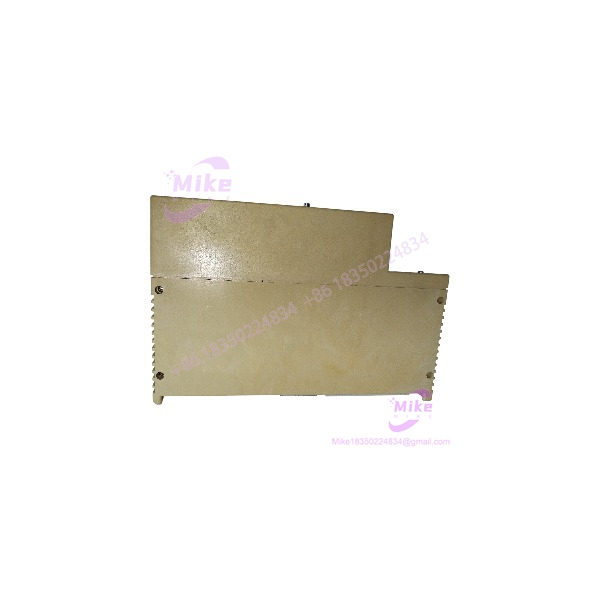
Description
SCHENCK FNT L001 | MULTICONT Industrial Power Supply
Dynamic Product Introduction
Power-supply failures on older weighing and material-handling systems are rarely convenient. The controller may still be perfectly serviceable, the I/O may pass inspection, and the field wiring may be intact—yet a degraded supply can leave the entire control station dead or unstable. That is where the SCHENCK FNT L001 earns its place in a maintenance inventory.
The FNT L001 is a Schenck industrial power-supply module associated with MULTICONT equipment. The documented identification is FNT L001, also seen as FNTL001, with K002070.01 used as the associated part number. Available product information specifies a 100 W / 2 A / 230 V / 47–63 Hz configuration.
This matters when maintaining an installed Schenck weighing or feeding system where replacing the entire control architecture would create unnecessary engineering work. A correctly matched FNT L001 can be a much more practical maintenance path than trying to adapt an arbitrary modern power supply without verifying the original electrical requirements, connectors, protection scheme, and downstream load.
In field maintenance, the important question is not simply, “Does the replacement produce 24 volts?” It is whether the replacement behaves correctly inside the actual Schenck system.
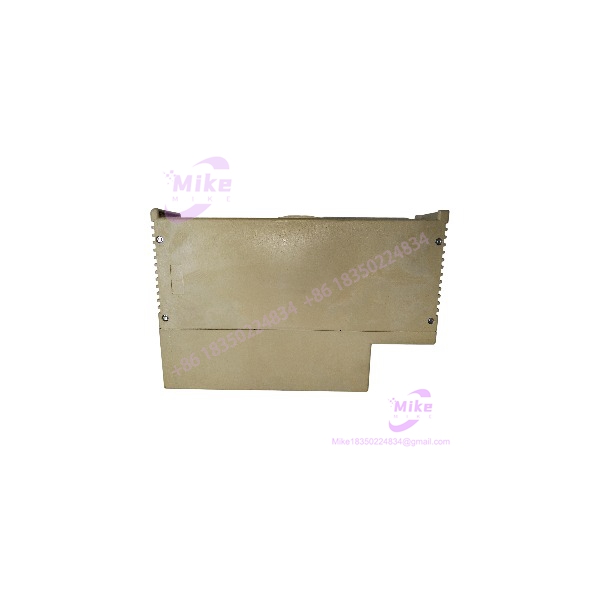
FNT L001
Key Technical Specifications
- Manufacturer: Schenck
- Model: FNT L001
- Alternate Model Notation: FNTL001 / FNT-
- Associated Part Number: K002070.01
- Product Type: Industrial power supply / power module
- Rated Power: 100 W
- Rated Current: 2 A
- Input Voltage: 230 VAC
- Input Frequency: 47–63 Hz
- System Association: MULTICONT
- Application: Industrial weighing, feeding, measurement, and associated control equipment
- Typical Procurement Status: Legacy/maintenance spare; verify exact revision before substitution
The 100 W, 2 A, 230 V and 47–63 Hz figures are stated in available product listings for the FNT . Do not extrapolate additional output-rail specifications from the model number alone; the exact terminal assignment and output characteristics should be verified against the installed system documentation before energizing a replacement.
Global Sourcing & Live-Test SOP
Inbound Verification
For an FNT arriving as surplus, used, or refurbished stock, start with identification rather than power-up.
Record:
- FNT model marking
- K002070.01 part-number marking
- Serial number and revision information, if present
- Manufacturer labels
- Terminal and connector condition
- Fuse condition and rating
- Evidence of PCB repair
- Capacitor leakage or swelling
- Burn marks around input and switching sections
- Corrosion, contamination, or moisture damage
- Signs that the enclosure or terminal hardware has been modified
Compare the physical unit against the purchasing record. FNT , FNTL001, FNT-, and K002070.01 should not be treated as interchangeable identifiers without checking the actual nameplate and electrical configuration.
Live Simulation
Do not immediately connect an unknown used power supply to an expensive Schenck controller.
First perform a controlled bench inspection. Use an appropriate isolation and current-limiting arrangement for the AC input stage, then verify the supply under controlled conditions. Confirm that the input configuration matches the required 230 VAC supply.
Where the correct Schenck test hardware is available, the preferred procedure is to test the FNT with the appropriate system load or an approved equivalent load. This reveals problems that a no-load voltage measurement can miss.
Diagnostics
A practical test sequence should include:
- Visual inspection and insulation/safety checks.
- Controlled AC energization.
- Input-current measurement.
- Verification of expected DC output rails.
- Output-voltage stability at no load.
- Controlled resistive or electronic load testing.
- Ripple/noise measurement with an oscilloscope.
- Startup and shutdown behavior.
- Recovery after load changes.
- Thermal observation during extended operation.
A Fluke multimeter is suitable for basic voltage/current verification; an oscilloscope is preferable when investigating excessive ripple, switching instability, or intermittent resets.
For a maintenance-grade unit, a 24-hour heat run under a representative load provides considerably more confidence than a five-minute bench power-up.
Final Preparation
Before shipment or installation:
- Record the tested input configuration.
- Photograph the nameplate and terminal layout.
- Record measured output values.
- Document test-load conditions.
- Record firmware information where applicable to the connected control system.
- Clean the enclosure without disturbing labels or adjustment components.
- Package using ESD-safe materials where electronic assemblies are exposed.
For a legacy power module, traceability is part of the test result.
Field Engineer’s Pitfall Guide
❗ Do not substitute by wattage alone
A 100 W modern industrial power supply may appear to be an obvious replacement for the , but matching wattage is only the beginning. Output voltage, current capacity, startup behavior, protection thresholds, grounding, connector assignment, and transient response all matter.
I have seen legacy control cabinets “repaired” with a supply that worked perfectly on the bench and still caused controller resets once the complete load was connected. The problem was not the nominal wattage. It was how the supply behaved under the real load.
❗ Verify the 230 VAC input requirement before energizing
The available identification for this FNT configuration specifies 230 V and 47–63 Hz.
Do not assume that every FNT-series unit uses the same mains arrangement. Check the actual nameplate, wiring documentation, and cabinet schematic. A wrong mains assumption turns a sourcing problem into a hardware-damage event very quickly.
❗ Inspect the downstream circuit before condemning the power supply
A failed FNT is not always the original fault.
A shorted downstream module, damaged field interface, contaminated connector, or aging capacitor can overload a previously healthy supply. If a replacement FNT immediately trips, overheats, or exhibits abnormal output behavior, disconnect the downstream load and isolate the fault before installing another unit.
Intent-Driven FAQ
What is the SCHENCK FNT ?
The SCHENCK FNT is an industrial power-supply/power-module assembly associated with Schenck MULTICONT equipment. It is also identified as FNTL001 and K002070.01 in available product information.
What are the main electrical specifications of the FNT ?
Available identification specifies 100 W, 2 A, 230 VAC, and 47–63 Hz. These figures should be treated as configuration-specific; verify the nameplate on the physical unit before installation.
Is FNT a PLC CPU or I/O module?
No. The FNT is a power-supply/power-module component, not a PLC processor or conventional I/O card. Equipment documentation specifically associates FNT- with the MULTICONT power architecture.
Can I replace the FNT with a generic 100 W power supply?
Technically possible in some engineered retrofit situations, but it should not be considered a direct replacement without verification. The replacement must satisfy the required input, output, current, protection, grounding, terminal, mechanical, and load characteristics.
For a production machine, an exact FNT / K002070.01 replacement is normally the lower-risk maintenance choice.
Is the FNT suitable for a legacy Schenck system?
Yes, that is precisely the type of application where this component has value. The FNT is documented as a MULTICONT power module and appears in equipment inventories associated with Schenck weighing/control hardware.
Should a used FNT be installed directly after receiving it?
No. Used industrial power supplies deserve a controlled inspection first. Verify the model and part number, inspect terminals and components, check the AC input requirement, measure the outputs, and test under load before connecting the unit to an operational control system.
What should I verify before purchasing an FNT ?
At minimum, confirm:
- FNT / FNTL001 marking
- part number where applicable
- 230 VAC input configuration
- 100 W / 2 A specification
- Physical connector and terminal arrangement
- Revision and serial information
- Condition of the unit
- Evidence of bench testing
- Actual output-load test results
- Warranty or return terms
Procurement Verdict
The SCHENCK FNT is a legacy industrial power module where exact identification matters more than generic power-supply specifications. The strongest purchasing target is a unit clearly marked FNT / FNTL001, with verified where applicable, and with documented electrical testing.
For maintenance teams supporting older Schenck weighing or MULTICONT installations, keeping one tested FNT available can eliminate a surprisingly long troubleshooting chain. Do not buy it solely because the label says “power supply.” Buy against the complete electrical and mechanical identity of the installed unit—and insist on a loaded functional test when the part is used or refurbished.





