

Description
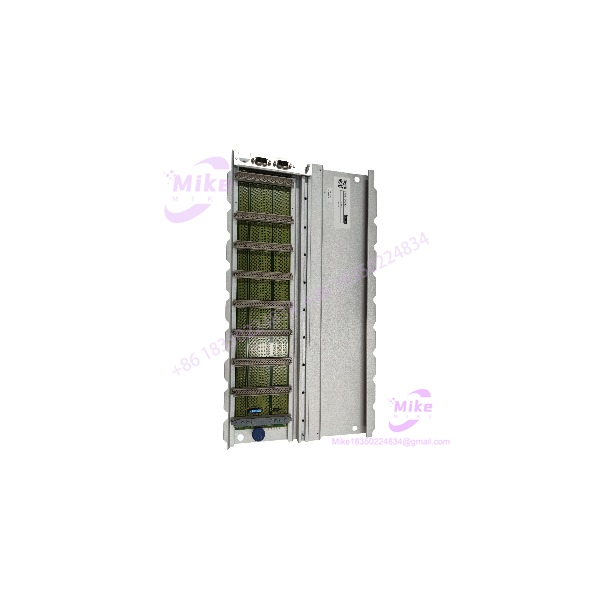
Schenck FGT0200 | ROCK Industrial Control Module
Dynamic Product Introduction
The Schenck FGT0200 is one of those legacy automation components where the part number is more useful than a generic description. Industrial equipment references identify the unit specifically as Schenck ROCK FGT0200, placing it within the older ROCK hardware ecosystem rather than Schenck’s current CONiQ Control platform.
That distinction matters during procurement. Schenck’s current support environment now prominently documents CONiQ Control software for weighing and feeding controllers, including fieldbus configuration files and dedicated software packages for loss-in-weight, static-weighing, and belt-based weighfeeder applications. The FGT0200 should therefore be treated as legacy installed-base hardware, with compatibility determined by the actual ROCK machine architecture rather than by a superficial physical resemblance to newer Schenck controllers.
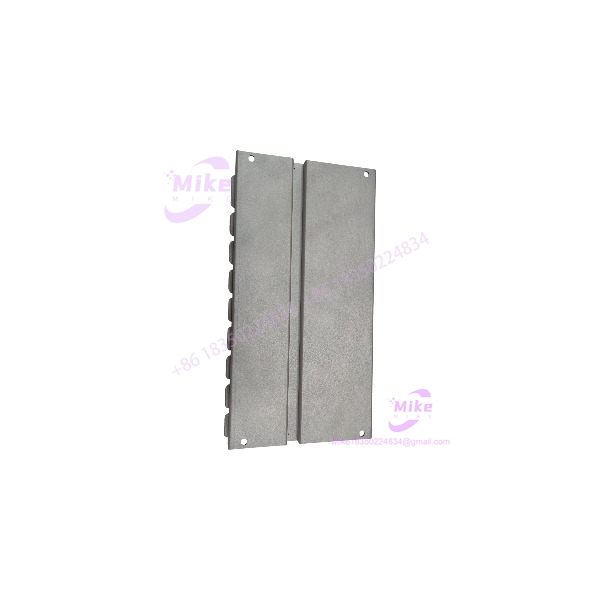
FGT0200
Key Technical Specifications
- Manufacturer: Schenck
- Model: FGT0200
- System Identification: ROCK
- Product Category: Industrial automation / weighing-system hardware
- Application Context: Schenck industrial weighing and process-control equipment
- Hardware Status: Legacy / installed-base component
- Known Associated Hardware: FSB U001 in some FGT0200 assemblies
- Mounting: Verify against the original machine/system configuration
- Communication Interface: Not safely established from the available manufacturer documentation
- Supply Voltage: Not safely established from the available manufacturer documentation
- Power Consumption: Not safely established from the available manufacturer documentation
- I/O Specification: Not safely established from the available manufacturer documentation
I would deliberately leave the last four parameters unclaimed rather than copy generic specifications from unrelated Schenck weighing controllers. Schenck has multiple generations of weighing electronics, and current documentation covers newer systems such as CONiQ Control and DISOMAT Tersus.
System Context
The should be evaluated as part of the complete Schenck ROCK installation.
This is especially important because Schenck’s product portfolio contains several distinct functions around weighing, feeding, measurement acquisition, memory, power supply, and system interfacing. Secondary references list other ROCK-era components alongside the , including the FSE L003 System Unit, FSM V004 Multi Memory Module, FME 0066 Measured Data Acquisition Unit, FNT 0050 Connection Module, and FNT L001 Power Supply Unit.
Do not assume those components are interchangeable or that an can operate independently simply because it has its own model number.
Global Sourcing & Live-Test SOP
1. Inbound Verification
For an procurement, identification should begin with the physical nameplate.
Verify:
- SCHENCK manufacturer marking
- model designation
- ROCK system identification where present
- Serial number
- Hardware revision
- Connector condition
- PCB and housing condition
- Evidence of previous repair or modification
Photograph the nameplate before removing packaging. For legacy Schenck hardware, that record can become important when matching the spare against an installed machine.
2. Configuration Verification
Do not substitute an merely because another Schenck module appears mechanically compatible.
Match the replacement against:
- Existing ROCK system architecture
- Machine model
- Connected weighing equipment
- Associated system modules
- Original wiring documentation
- Existing software/configuration records
If the installation uses an FSB U001 or another companion module, verify that the exact combination matches the machine documentation. A current secondary-market listing shows supplied together with an FSB U001, but that does not establish that FSB U001 is universally required for every installation.
3. Live Functional Test
The correct test is system-level whenever possible.
A useful evaluation should confirm:
- Power-up behavior
- Module recognition
- Status indication
- Communication with the associated ROCK equipment
- Correct response from connected weighing hardware
- No persistent diagnostic or system fault
A bench power-up by itself should not be described as a complete functional test.
4. Final Preparation
Before shipment:
- Record the exact identification.
- Photograph all connectors and labels.
- Record hardware revision and serial information.
- Protect the electronics against ESD.
- Install connector protection where applicable.
- Separate included accessories from the itself in the packing documentation.
If the unit is supplied with an FSB U001, list that item explicitly rather than implying it is automatically part of the .
Field Engineer’s Pitfall Guide
❗ 1. Do Not Confuse ROCK Hardware With Newer CONiQ Control
Schenck’s current documentation covers CONiQ Control, including software for static weighing, loss-in-weight feeding, and belt-based weighfeeder applications. That is a newer product environment.
The belongs to the legacy ROCK ecosystem. A newer Schenck controller should not be treated as a drop-in replacement without an engineering migration review.
❗ 2. Verify the Complete System, Not Just the Part Number
The appears in reference lists alongside other specialized Schenck ROCK components. That is a strong warning against treating it as a generic standalone PLC module.
For an installed machine, identify the surrounding hardware first. The controller, measurement hardware, memory/system unit, power supply, and field connections may all be part of the compatibility equation.
❗ 3. Do Not Publish Unsupported Electrical Specifications
There are numerous low-quality reseller pages that simply describe the as a generic “modular equipment” item without providing verified technical data.
For procurement, that is not enough evidence to state a supply voltage, current consumption, protocol, I/O count, or environmental rating. Those values should be taken from the original Schenck documentation or from the actual hardware label/manual for the specific revision.
Intent-Driven FAQ
What is the Schenck ?
The is identified in industrial equipment references as a Schenck ROCK system module associated with Schenck’s legacy industrial weighing/control equipment.
Is a PLC?
It should not be advertised simply as a conventional PLC CPU. Available references identify it as Schenck ROCK system hardware, and the exact role depends on the associated ROCK installation.
Is still a current Schenck product?
It appears to be a legacy product. Schenck’s current support resources prominently cover newer CONiQ Control and other current-generation weighing technologies.
Does include an FSB U001?
Not automatically. Some current secondary-market assemblies are explicitly sold as , demonstrating that the two can be supplied together, but the accessory should be confirmed from the specific inventory being purchased.





