

Description
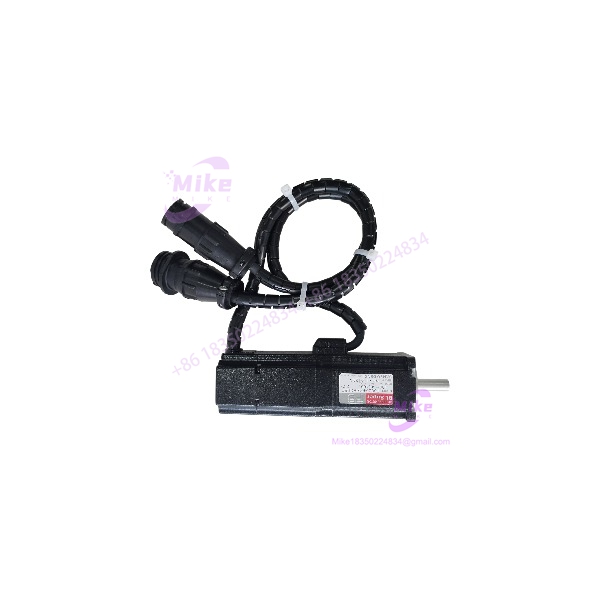
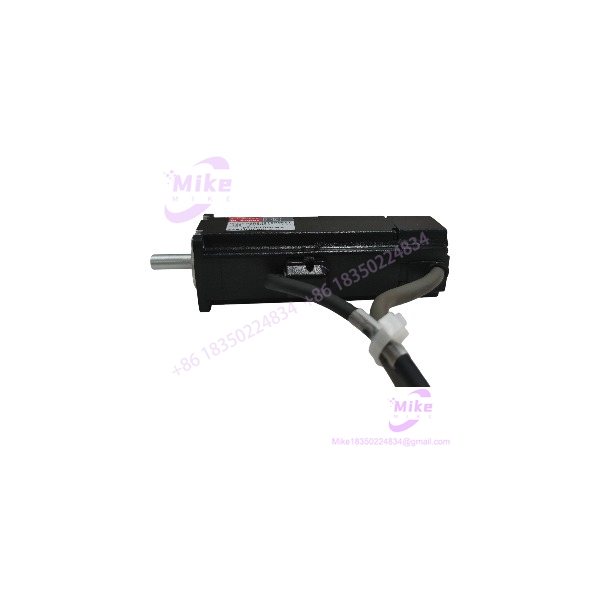
SANYO DENKI P30B04010PCKST 100W AC Servo Motor
Product Introduction
Compact servo motors are often used on machine axes where precise positioning, repeatable movement, and controlled stopping are more important than high output power. The P30B04010PCKST belongs to Sanyo Denki’s P3 Super BL family and is intended for closed-loop motion systems using a compatible servo amplifier and feedback interface.
The integrated holding brake is particularly relevant to applications where the shaft must remain stationary when the motor is not energized. However, a holding brake is designed to hold a stationary load; it should not be assumed suitable for routine dynamic braking unless the manufacturer’s specifications explicitly permit it.
Radwell identifies the part as discontinued by the manufacturer. That makes the exact nameplate, tested condition, and documented compatibility especially important when sourcing surplus or refurbished inventory.
P30B04010PCKST
Key Technical Specifications
| Parameter | Published specification |
|---|---|
| Manufacturer | SANYO DENKI |
| Model | P30B04010PCKST |
| Product family | P3 Super BL |
| Motor type | Brushless AC servo motor |
| Rated output | 100 W |
| Rated voltage | 100 VAC |
| Rated current | 2.7 A, as reported by supplier listings |
| Rated speed | 3,000 RPM |
| Maximum speed | 4,500 RPM |
| Rated torque | Approximately 0.32 N·m, reported for the related P30B04010 motor family |
| Holding brake | Listed as equipped |
| Brake voltage | 24 VDC, per supplier listing |
| Shaft diameter | 8 mm, per supplier listing |
| Mounting flange | Approximately 40–42 mm, reported by supplier |
| Feedback device | Verify exact encoder type and resolution |
| Manufacturer lifecycle | Listed as discontinued by a surplus supplier |
Sources:
Specification caution: Some supplier records mix motor-family specifications with exact-model data. Confirm rated torque, flange dimensions, encoder details, and brake wiring using the original nameplate and applicable Sanyo Denki documentation before engineering a replacement.
Application Scenarios & Pain Points
- Precision positioning: Compact rotary axes requiring controlled speed and repeatable stopping.
- Automated assembly: Small indexing mechanisms and actuator drives paired with a compatible servo amplifier.
- Packaging and material handling: Motion axes requiring repeatable movement and controlled standstill.
- Vertical or gravity-loaded axes: Potential use of the holding brake to retain a stationary load, subject to the machine’s safety design and brake rating.
- Legacy machine maintenance: Replacement of a failed P3-series motor while preserving the existing motion-control architecture.
Typical symptoms of a motor or servo-system problem include encoder alarms, unstable positioning, excessive vibration, unexpected heating, and overcurrent faults. These symptoms can also originate in the amplifier, feedback cable, mechanical coupling, or machine load.
QA & Live Testing SOP
- Confirm the part number. Check the full
P30B04010PCKSTdesignation and photograph the nameplate. - Verify the voltage class. Confirm that the intended amplifier supports the 100 VAC motor configuration. Do not substitute a 200 V-class motor or drive based on output power alone.
- Inspect the brake. Check the brake leads and connectors, and verify the required 24 VDC brake supply from the applicable documentation.
- Inspect the mechanics. Check the shaft, mounting face, bearings, and connector housing for damage, corrosion, or signs of repair.
- Verify feedback compatibility. Confirm encoder type, resolution, wiring, and amplifier support before powering the system.
- Perform electrical checks. Qualified personnel should test winding integrity and insulation using manufacturer-approved methods. Avoid applying inappropriate high-voltage tests to feedback electronics.
- Run a controlled functional test. Use a compatible drive and safe test setup. Verify rotation direction, feedback operation, abnormal noise, and stable low-speed movement.
- Test brake operation separately. Follow the manufacturer’s procedure to confirm release and holding behavior. Do not test holding capacity by creating an uncontrolled suspended load.
- Record the results. Document test conditions, measured values, brake function, encoder behavior, and any limitations.
For used or refurbished stock, request a test report that identifies the actual motor tested—not merely a generic certificate for the P3 series.
Field Engineer’s Pitfall Guide
- Voltage mismatch: The PCKST is listed as 100 VAC. A similar-looking 200 V-class model is not automatically compatible.
- Brake supply errors: The motor’s holding brake is listed at 24 VDC. Verify the brake circuit separately from the motor power circuit.
- Assuming the suffix is unimportant: P3 model suffixes can identify different electrical, feedback, or mechanical configurations.
- Encoder incompatibility: An incorrect feedback interface can prevent the servo amplifier from initializing or controlling the motor correctly.
- Using the brake for emergency stopping without approval: Confirm whether the brake is rated for dynamic braking or only static holding.
- Ignoring lifecycle status: Because the model is listed as discontinued, verify inventory condition, warranty, and return terms before ordering.
- Replacing by wattage alone: Confirm shaft dimensions, flange, wiring, feedback, and drive compatibility—not just the 100 W rating.
Intent-Driven FAQ
Q1: What is the SANYO DENKI P30B04010PCKST?
It is a P3 Super BL brushless AC servo motor listed with 100 W output and a 3,000 RPM rated speed.
Q2: What voltage does this motor use?
Supplier listings identify it as a 100 VAC motor. Confirm the nameplate and compatible amplifier before installation.
Q3: Does it include a holding brake?
Yes, supplier data lists a holding brake with a 24 VDC brake supply. Confirm the brake configuration on the actual unit.
Q4: What is the rated speed?
The listed rated speed is 3,000 RPM, with a maximum speed of 4,500 RPM. The permitted speed in a specific application also depends on the drive, load, and operating conditions.
Q5: Is the PCKST interchangeable with P30B04010DXS8FM?
Do not assume so. The PCKST is listed as 100 VAC, while the DXS8FM has been listed as a 200 V-class model. Confirm the full electrical, feedback, mechanical, and brake specifications before considering substitution.
Q6: Is the model still manufactured?
Radwell lists it as discontinued by the manufacturer. Current availability may therefore depend on surplus, unused inventory, or refurbished stock.
Q7: What should be checked before purchasing a used unit?
Request a clear nameplate photo, condition details, encoder and brake test results, and written warranty or return terms.





