

Description
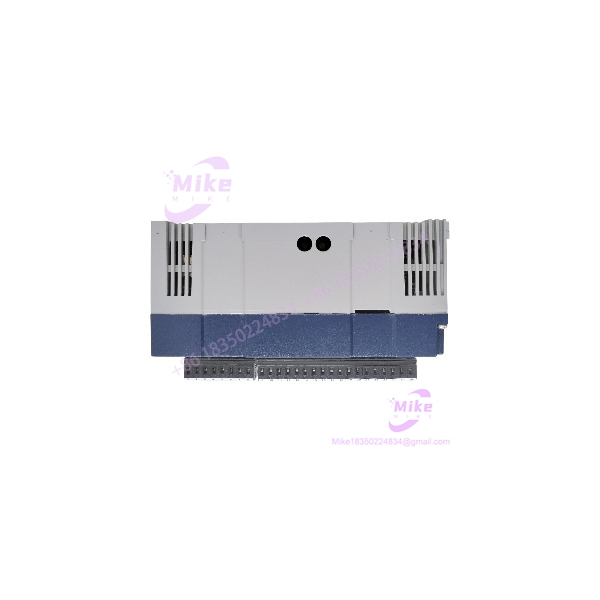
Rolls-Royce RRDIO15 | Remote Digital I/O Module | In-Stock
Dynamic Product Introduction
Managing critical discrete alarms and interlocking commands across marine propulsion and auxiliary machinery requires digital I/O hardware built to withstand relentless vibration and electrical noise. The Rolls-Royce RRDIO15 serves as a core remote discrete processing card, handling digital status signals and alarm switching across distributed vessel control architectures. Replacing aging or faulted discrete modules with a fully tested RRDIO15 restores reliable alarm annunciation and command execution without requiring costly full-panel wiring rewrites.
Engineered specifically for heavy marine service, the Rolls-Royce RRDIO15 features conformal-coated PCB assemblies and optical isolation to prevent localized ground faults or switching transients from feeding back into central processor racks. Its fast response times ensure immediate trip and alarm feedback across engine room monitoring and bridge automation workstations. For marine electrical engineers, dockside technicians, and system integrators performing scheduled vessel refits, deploying this verified hardware card guarantees continuous uptime under strict maritime classification rules.
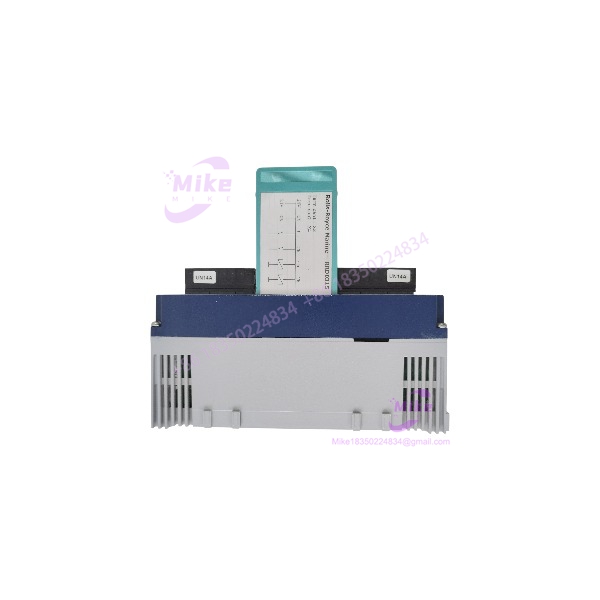
RRDIO15
Key Technical Specifications
- Model Identification: Rolls-Royce RRDIO15 (Weidmüller OEM manufacturing)
- Module Type: Remote Digital Discrete Input/Output Card
- Operating Voltage: 24 V DC nominal (18 V DC to 32 V DC operational range)
- Signal Isolation: 1500 V RMS optical galvanic isolation between field channels and internal bus logic
- Operating Temperature: -15°C to +70°C (5°F to 158°F)
- Mounting Configuration: Baseplate / Rack chassis mounting within marine control enclosures
- Enclosure Protection: Conformal coated against salt mist and high humidity
Global Sourcing & Live-Test SOP (Transparency Core)
To ensure zero-defect operation prior to installation on commercial vessels, every unit undergoes a strict multi-point physical and electrical testing protocol before dispatch:
- Inbound Verification: Serial numbers are verified against OEM marine hardware logs, solder joints undergo micro-optical inspection, and circuit board conformal coating is checked under UV light.
- Live Simulation: The module is installed into an authentic test rack to verify protocol initialization and real-time controller polling handshakes.
- Diagnostics: Multi-channel switching tests are conducted across all digital input and output points while injecting high-frequency noise to confirm optical isolation integrity and switching speed.
- Environmental Heat Run: The unit undergoes an 18-hour continuous burn-in cycle at 55°C inside an environmental chamber while carrying full-scale discrete switching loads.
- Final Prep: Terminal edge connectors receive anti-corrosion treatment, static-shielding covers are inspected, and the module is sealed inside static-barrier packaging with fresh moisture desiccants.
The Field Engineer’s Pitfall Guide
Marine Auxiliary Power & Earthing Hazard
Verify that incoming 24 V DC power supplies and cable shield planes maintain a clean, single-point ground connection. Unbalanced marine earth grounds can induce common-mode switching chatter across discrete input channels.
❗ Incorrect Common-Side Voltage Wiring: Supplying external voltages that exceed the module’s rated discrete input threshold can damage internal optocouplers. Always verify that field sensor common lines match the internal power plane configuration.
❗ Un-torqued Terminal Contacts in High-Vibration Spaces: Mechanical vibration in engine room and thruster compartments can back out terminal screws over extended sea voyages. —In field deployments, I’ve seen an alarm annunciation loop drop out during sea trials simply because a technician failed to check terminal screw torque after swapping an I/O card.
❗ Hot-Swapping Without Main Bus Isolation: Unseating the module while the main 24 V DC power rail is active risks arcing across the edge connector pins, potentially corrupting active communication frames on adjacent rack cards.
Intent-Driven FAQ
What is the primary application of the Rolls-Royce RRDIO15 module?
The Rolls-Royce RRDIO15 is utilized in marine automation suites for engine room discrete alarm monitoring, machinery status interlocks, and digital command signal routing.
Can the digital input channels handle both sourcing and sinking sensor configurations?
Input compatibility depends on the specific hardware suffix variant. Always verify whether your field sensors require PNP (sourcing) or NPN (sinking) logic matching before wiring input terminals.
How do I troubleshoot a digital output channel that fails to switch?
Measure control voltage across the output terminal points using a calibrated multimeter while triggering the software command (Verification: Terminal voltage should drop or rise cleanly to 24 V DC upon activation; persistent intermediate voltage indicates a blown output transistor or faulted relay driver).
Is the Rolls-Royce RRDIO15 interchangeable with other marine automation card series?
While hardware layouts share common OEM origins, ensure the exact model number and firmware suffix match your system’s hardware configuration file to prevent communication timeouts.
What standard warranty is included on reconditioned surplus modules?
All reconditioned and factory-sealed units include a comprehensive 1-year replacement warranty covering internal processor logic, switching optocouplers, and power rail stability.