

Description
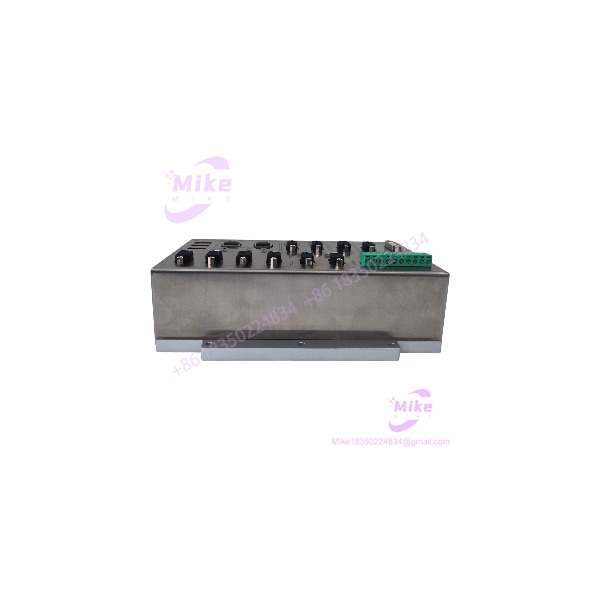
Rolls-Royce H1111.0103 | 24VDC Marine Controller
Product Introduction
The Rolls-Royce H1111.0103 is a specialized marine controller used within Rolls-Royce vessel automation architectures. Current industrial records identify it as part number 75669, with listings also specifying PIC Code Revision 2.2. It is generally described as a central processing/control module rather than a simple I/O expansion card.
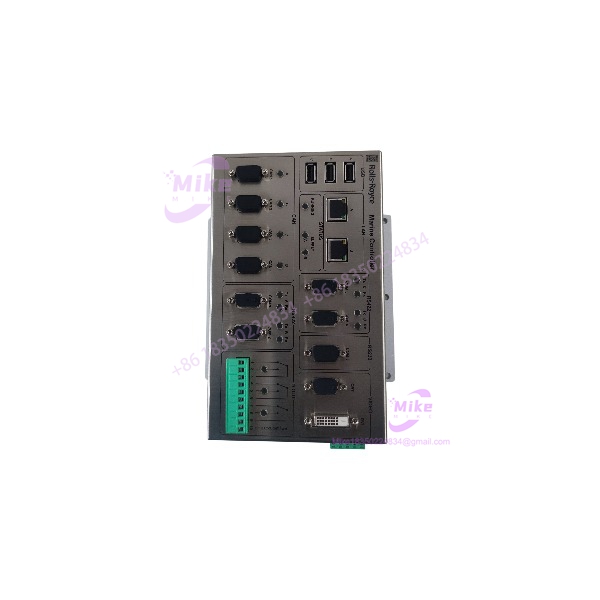
The hardware is associated with marine propulsion, machinery monitoring, and integrated ship-control applications where the controller has to exchange real-time data with distributed equipment. Available records identify 24 VDC operation and Ethernet, CAN-bus, and RS-485 interfaces, although the precise port population should be verified from the physical unit before procurement.
This is an important distinction for replacement work: H1111.0103 is not a generic 24 VDC PLC that can simply be substituted by matching voltage and connector dimensions. The installed firmware, PIC revision, application configuration, communication topology, and vessel-specific control database can determine whether a replacement is actually usable.
H1111.0103
Key Technical Specifications
- Model: H1111.0103
- Rolls-Royce part number: 75669
- PIC code: Reported as Rev. 2.2
- Product category: Marine controller / processing module
- System: Rolls-Royce Marine CCS / Damatic-related control architecture
- Supply voltage: 24 VDC nominal
- Processor: Reported as 300 MHz RISC
- Communications: Reported dual 10/100 Ethernet, RS-485, and CAN bus
- Memory: Flash application storage plus RAM is reported by secondary sources; exact capacity is not reliably published
- Operating temperature: Secondary documentation reports approximately -15°C to +70°C
- Dimensions: Approximately 180 × 135 × 65 mm according to secondary listings
- Weight: Approximately 1.4 kg according to secondary listings
- Control role: Real-time marine automation and system processing
- Installation: Vessel control/automation equipment, configuration-dependent
The 300 MHz, dual Ethernet, RS-485, and CAN-bus specifications appear repeatedly across industrial-part records, but I could not locate a sufficiently authoritative OEM datasheet confirming the complete electrical specification. They should therefore be treated as procurement-reference data rather than guaranteed acceptance criteria.
Global Sourcing & Live-Test SOP
1. Inbound Verification
For a legacy marine controller, start with physical identification.
- Confirm H1111.0103 on the original label.
- Confirm 75669 where present.
- Photograph the complete nameplate.
- Record PIC revision.
- Record hardware revision and serial number.
- Photograph every connector and LED.
- Inspect connector pins for corrosion or deformation.
- Check the housing for salt contamination or evidence of moisture ingress.
- Verify that the unit has not been refurbished from a different H1111-series variant.
One repair record independently identifies .0103 as part number 75669, supporting the relationship between the model and part number.
2. Power-Supply Verification
Before applying power:
- Verify the actual nameplate voltage.
- Use a regulated 24 VDC bench supply with adequate current capacity.
- Confirm polarity.
- Inspect protective grounding.
- Check for abnormal resistance between supply terminals and chassis.
- Inspect internal power components for corrosion or overheating.
Do not rely solely on reseller specifications when determining the allowable supply range.
3. Communications Test
Test each populated interface independently:
- Ethernet link
- Ethernet-to-controller communication
- RS-485 transmit/receive
- CAN bus physical-layer operation
- Connector continuity
- LED status behavior
For RS-485 and CAN, use an isolated test network rather than connecting an unverified controller directly to a vessel’s operational control network.
4. Firmware and Application Verification
Record:
- PIC revision
- Firmware version
- Bootloader information where accessible
- Application software version
- Configuration database
- Network addresses
- CAN node configuration
- Serial communication parameters
A replacement controller with different firmware may power up normally while remaining incompatible with the installed vessel automation software. Secondary documentation specifically warns that firmware matching should be checked before installation.
5. Functional Simulation
Where the original engineering documentation is available, reproduce the controller’s normal communication environment on a bench.
Verify:
- Startup sequence
- Status LEDs
- Ethernet communication
- CAN communication
- RS-485 communication
- Controller diagnostics
- Application loading
- I/O data exchange
- Watchdog/fault behavior
- Redundant-controller synchronization, if applicable
Do not connect simulated signals to propulsion actuators during an initial test. Validate the controller’s communications and logic first.
6. Extended Test
For critical marine-spare inventory, perform a prolonged powered test.
Monitor:
- Supply current
- CPU/system temperature
- Communication errors
- CAN error counters
- Ethernet link stability
- RS-485 communication
- Unexpected resets
- Watchdog events
- Diagnostic alarms
Record the test results with the controller’s serial number.
Field Engineer’s Pitfall Guide
❗ Firmware Compatibility Comes Before Physical Fit
A replacement can have the correct housing and connector arrangement yet still fail to operate correctly because its firmware or vessel-specific application configuration does not match the installed system.
Match the PIC revision and application image before commissioning. Secondary procurement records identify Rev. 2.2 as a configuration associated with this part number.
❗ Do Not Assume Every .0103 Has the Same Port Configuration
Several reseller records list dual Ethernet, RS-485, and CAN interfaces, but the public evidence does not establish every hardware revision or connector population.
Photograph the rear/connector panel and compare it with the failed controller before ordering. A connector that looks similar can still have different pin assignments or bus functions.
❗ Marine Environment Changes the Acceptance Test
A controller removed from a vessel can look electrically clean while having spent years exposed to vibration, humidity, salt contamination, and repeated thermal cycling.
Inspect connector plating, enclosure seals, PCB contamination, and mounting hardware. If the controller is intended for a redundant pair, test the synchronization and failover behavior rather than accepting a simple boot test as proof of serviceability.
Intent-Driven FAQ
What is Rolls-Royce .0103?
It is a Rolls-Royce Marine automation controller / processing module, commonly identified with part number 75669 and PIC revision 2.2 in industrial inventory records.
Is .0103 a PLC?
It is better classified as a specialized marine controller than as a generic commercial PLC. Its intended system integration, firmware, communications, and application configuration are tied to Rolls-Royce marine automation architectures.





