

Description
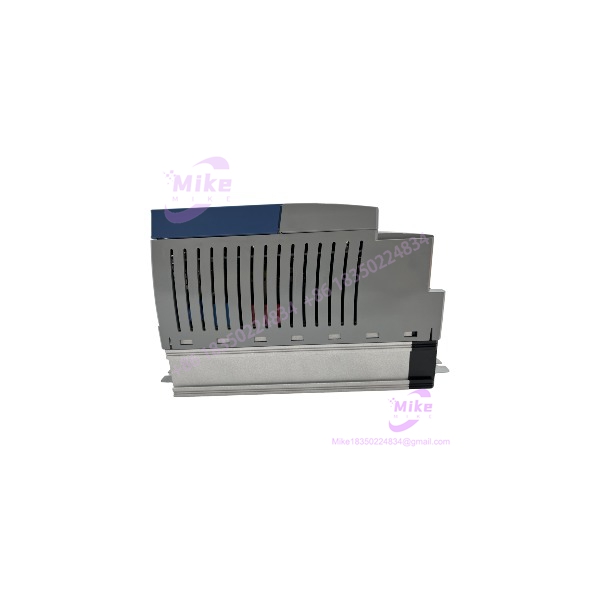
Rexroth FCS01.1E-W0011-A-04-NNBV | 5.5A IndraDrive Fc
Dynamic Product Introduction
The FCS01.1E-W0011-A-04-NNBV is a straightforward industrial drive in the good sense: it is built around the job of regulating a three-phase motor without turning the cabinet into a science project. This particular configuration is the 400 V, 2.2 kW version of the Bosch Rexroth IndraDrive Fc family, intended primarily for open-loop motor control.
The drive accepts 380–480 VAC three-phase input and produces a variable three-phase output for a motor rated around 2.2 kW. The published operating range reaches 0–400 Hz, while the drive supports both V/f and sensorless vector control. Its overload capability is specified at 150% for 60 seconds and 200% for 3.5 seconds, which is useful when the motor has a demanding acceleration or transient load requirement.
The suffix matters here. “-04” identifies the 3-phase 380–480 V mains class, while “W0011” corresponds to the 11 A maximum-current designation in the FCS01 type-code system. Do not substitute another FCS01 model merely because it looks identical; the motor rating, current class, mains voltage and braking requirements all change across the family.
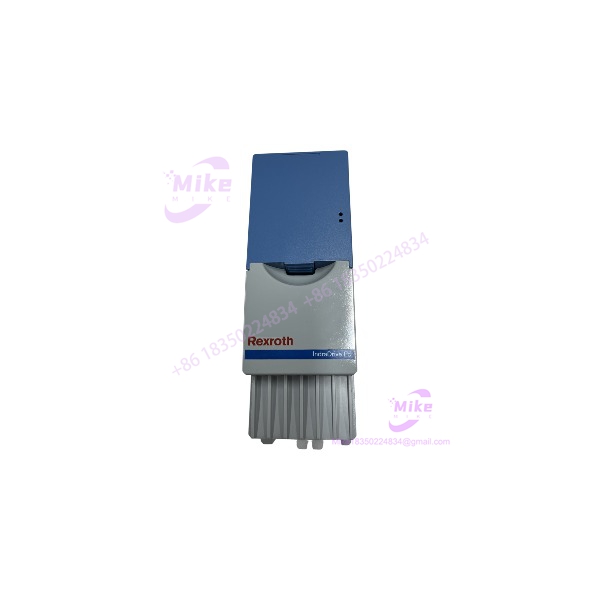
FCS01.1E-W0011-A-04-NNBV
Key Technical Specifications
- Manufacturer: Bosch Rexroth
- Series: IndraDrive Fc
- Exact Type: FCS01.1E-W0011-A-04-NNBV
- Order Number: R911311065
- Product Type: Frequency converter / AC drive
- Rated Motor Power: 2.2 kW / 3 HP
- Mains Supply: 3-phase AC
- Input Voltage: 380–480 VAC
- Input Voltage Tolerance: -20% / +10%
- Mains Frequency: 47–63 Hz
- Rated Output Current: 5.5 A RMS
- Maximum Current Class: 11 A
- Output Voltage: 3-phase AC, from 0 V up to mains voltage
- Output Frequency: 0–400 Hz
- Control Modes: V/f and sensorless vector
- Overload Capacity: 150% for 60 seconds; 200% for 3.5 seconds
- Minimum Braking Resistance: 130 Ω
- Protection: IP20
- Dimensions: approximately 73 × 153 × 226 mm
- Height with wall brackets: approximately 260 mm
- Weight: approximately 1.8 kg
- Cooling: Temperature-controlled fan cooling for this size class
- EMC: Integrated EMC filter for the specified industrial application
The 400 V FCS01.1E technical data confirms the 2.2 kW W0011 rating, 5.5 A output current, 7.7 A typical input current, 130 Ω minimum braking resistance and fan-cooled design.
Global Sourcing & Live-Test SOP
1. Inbound Verification
Before applying power, verify the complete type code:
.1E-W0011-A-04-NNBV
Do not accept “.1E” as sufficient identification.
Record:
- Complete type code
- R911311065 order number
- Serial number
- Hardware/revision information
- Nameplate voltage and current
- Terminal condition
- Cooling fan condition
- DC-bus terminal condition
- Evidence of moisture, contamination, overheating or previous repair
- Mounting brackets and hardware
The exact suffix is important because .1E covers multiple motor-power and voltage variants.
2. Live Simulation
A proper test should use a controlled three-phase drive test bench with a compatible induction motor.
Verify:
- Correct mains-voltage recognition
- Drive initialization
- Parameter access
- Motor data configuration
- Start/stop command
- Forward/reverse operation where applicable
- Frequency reference response
- Acceleration/deceleration
- Current behavior under load
- Fault detection
- Cooling fan operation
- Stable operation at representative speed
Do not connect a motor immediately at full load. Start with controlled low-frequency operation and increase the load progressively.
3. Diagnostics
A competent acceptance test should capture:
- Input voltage
- Output voltage
- Output current
- Commanded frequency
- Actual motor response
- Drive fault history
- DC-bus behavior
- Cooling fan operation
- Stop/restart behavior
The platform supports PC-based parameterization through IndraWorks, and the drive family provides RS-232/RS-485 communication interfaces.
For a used unit, clear the existing fault history only after recording it. Old fault codes can reveal an intermittent overtemperature, DC-bus, motor-current or communication problem that would otherwise disappear during inspection.
4. Final Preparation
Before shipment:
- Photograph the nameplate
- Record the complete type code
- Record serial number
- Record tested motor power
- Record input and output measurements
- Preserve the drive parameter backup where available
- Protect power and control terminals
- Package with ESD-conscious handling
- Prevent fan and heatsink damage during transport
If the unit is sold as tested, retain the actual test record. “Power tested” and “motor tested under load” are two different procurement claims.
Field Engineer’s Pitfall Guide
❗ Do Not Confuse the 5.5 A Rating With the 11 A Code
This part contains a common Rexroth nomenclature trap.
The type-code designation represents the 11 A current class, while the technical data for this 2.2 kW / 400 V configuration specifies 5.5 A rated output current. Do not use “11 A” as the continuous motor-current rating simply because it appears in the model code.
❗ The “-04” Version Is Not a Universal Input Drive
The -04 configuration is the three-phase 380–480 VAC version.
Do not substitute a 230 V model because the enclosure and general product family look similar. The mains connection is part of the exact type-code definition.
A field mistake I have seen repeatedly with legacy drives: someone matches the horsepower and physical size, then discovers during commissioning that the replacement belongs to the wrong mains class. The nameplate should be checked before the box leaves receiving inspection.
❗ Braking Resistor Selection Must Match the Drive
The published minimum braking resistance for the 400 V unit is 130 Ω. An external braking resistor is not automatically included with the drive.
Do not connect a resistor based only on wattage or physical appearance. Check the resistance value, pulse-duty requirement, braking frequency and the actual machine’s regenerative energy before commissioning.
Intent-Driven FAQ
What is Bosch Rexroth .1E–A-04-NNBV?
It is a Bosch Rexroth IndraDrive Fc AC frequency converter, order number R911311065, designed for approximately 2.2 kW / 3 HP three-phase motor applications at 400 V.
What voltage does .1E–A-04-NNBV use?
This specific version uses 3-phase 380–480 VAC, with a specified tolerance of -20% / +10%. The rated mains frequency range is 47–63 Hz.
What motor size is it rated for?
The published rating is 2.2 kW / 3 HP for a standard 4-pole 400 V motor.
What is the output frequency range?
The platform provides an output-frequency range of 0–400 Hz. Actual usable motor speed depends on motor characteristics, control mode, parameterization and mechanical limitations.
Does this drive support sensorless vector control?
Yes. The configuration supports V/f and sensorless vector control.
Does it have an integrated braking transistor?
Yes. The NNBV type-code configuration identifies an integrated brake transistor, allowing an external braking resistor to be connected where the application requires it. The technical data specifies a 130 Ω minimum braking resistance.
Is .1E- still a current product?
Available industrial references classify this exact configuration as obsolete, so it should be treated as legacy drive hardware when planning procurement. That makes exact part-number matching and functional testing more important than simply sourcing another drive from the same family.
Procurement Verdict
.1E- is a 2.2 kW, 400 V-class Bosch Rexroth IndraDrive Fc frequency converter—not a generic servo amplifier.
For a replacement, verify these items in this order:
- .1E-
- R911311065
- 3-phase 380–480 VAC supply
- 2.2 kW / 3 HP motor rating
- 5.5 A rated output
- V/f or sensorless-vector control requirement
- Existing braking-resistor arrangement
- Control wiring and I/O configuration
- Communication/function-module requirements
- Motor parameters and application-specific drive settings
The biggest sourcing mistake would be matching only “IndraDrive Fc 2.2 kW.” The exact configuration determines the electrical class and installation requirements. For a legacy machine, an exact tested R911311065 replacement is generally a much safer procurement decision than an approximate family substitute.





