

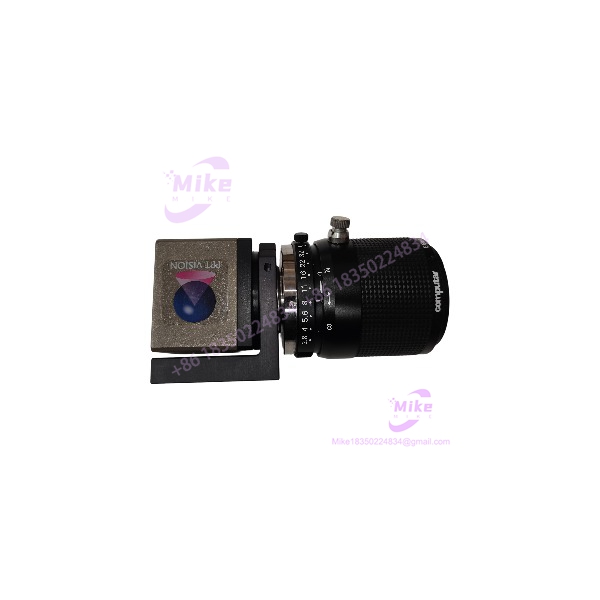
Description
PPT Vision PPT 5200 | Industrial Vision Sensor, New In Stock
Architect’s Product Breakdown
The PPT Vision PPT 5200 operates as a high-density machine vision sensor designed to execute automated quality inspection, presence/absence checking, and precision alignment directly at line speed. Originally developed by PPT Vision (later integrated under Datalogic’s IMPACT software platform), this unit combines sensor capture and preliminary signal processing within a ruggedized enclosure, reducing latency during high-cycle part detection. It offloads complex image calculation routines from centralized PLCs, providing discrete pass/fail outputs via hardware trigger loops.
Deploying the PPT 5200 requires precise optical alignment and software license matching within the host system setup. Because legacy vision networks rely on deterministic trigger timing and strict communication timing windows, drop-in replacement units must mirror the exact IP configuration, exposure setting profiles, and firmware builds of the host architecture. Panel integrators should also account for stable lighting drive circuitry and ambient thermal shielding, as unfiltered electrical noise on strobe output channels or excessive heat build-up will introduce image variance and false rejection rates.
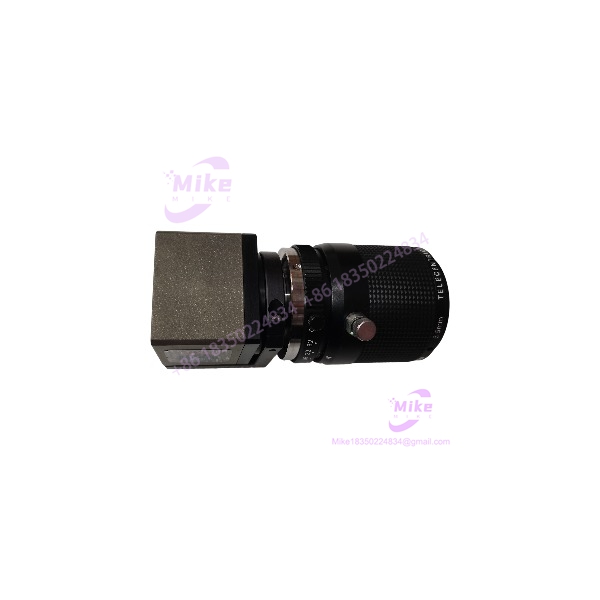
PPT 5200
Key Technical Specifications
| Parameter | Specification Details |
| Sensor Type | Monochrome CCD Matrix |
| Resolution | Up to 1600 \times 1200 pixels (model dependent) |
| Supply Voltage | 24 VDC (\pm 10\%) |
| Communication Interface | Fast Ethernet (RJ45), RS-232 serial |
| Digital I/O | Optically isolated triggers & strobe outputs |
| Software Platform | PPT Vision System Software / IMPACT suite |
| Operating Temperature | 0°C to +50°C (32^\circF to 122^\circF) |
| Enclosure Rating | IP67 sealed industrial housing |
| Lens Mount | Standard C-Mount |
Field Engineer’s Pitfall Guide (Unique Value)
- Exposure Timing and Strobe Output Jitter: Connecting the PPT 5200 to an external LED strobe without proper optocoupler isolation causes high-frequency noise spikes. I once spent an entire graveyard shift debugging a line where the vision camera randomly dropped inspection frames, only to discover ground loops on the 24V trigger input were resetting the image acquisition buffer.
- IMPACT Software Configuration Locks: Swapping a damaged unit for a new surplus model without extracting the original task file (.vpp or job profile) will halt production. The replacement hardware will not auto-upload settings from the master PLC; job configurations must be explicitly pushed via the vision environment software.
- C-Mount Back Focal Distance Shift: When remounting optical lenses onto the C-mount thread, always check lock-ring alignment. Over-tightening or missing spacer rings can alter the focal plane by micro-millimeters, creating subtle image blur that causes edge-detection algorithms to fail sporadically.
QA & Testing SOP (Transparency)
- Visual & Origin Inspection: Physical evaluation of housing threads, OEM serial tags, optical window integrity, and anti-tamper seals.
- Live Test Environment: Mounting the camera on an optical test rail powered by a regulated 24 VDC bench supply and connected to a dedicated gigabit Ethernet test bench.
- Diagnostics & Calibration: Executing lens focal sweep routines, verifying sensor sensor pixel integrity across dark and light frames, and testing hardware trigger response via external photoelectric sensors.
- Job Retention & Packaging: Documenting firmware and network status, placing protective caps over the optical mount, sealing in static-dissipative bags, and packing inside impact-resistant foam enclosures.
Technical FAQ
- Can I replace a PPT 5200 camera without resetting the entire vision software layout? No. While the physical hardware is hot-pluggable from a power standpoint, the target job configuration and network IP mapping must be re-flashed using the dedicated vision configuration software.
- Does the PPT 5200 support standard Ethernet/IP communication to Rockwell PLCs? Yes, the unit can pass inspection results and pass/fail bit arrays to Allen-Bradley or Siemens PLCs over standard industrial Ethernet or serial protocols.
- What happens if the internal optic lens glass gets contaminated? Clean the optical window using only isopropyl alcohol and lint-free optical wipes. Do not use abrasive shop solvents, as they will degrade the anti-reflective coating on the sensor window.
- Is the camera powered directly over Ethernet (PoE)? No, this model requires a dedicated 24 VDC hardwired power harness to drive both internal processing and high-current external strobe I/O circuits.





